5 Types of Quality Inspection Services: Complete Guide for Importers 2025

When importing products from overseas manufacturers, how can you ensure consistent quality before goods reach your customers? Quality inspection services provide the answer—offering systematic verification at critical production stages to prevent costly defects, protect your brand reputation, and ensure compliance with international standards.
In today’s global supply chain, quality issues can be financially devastating. Research shows that manufacturing defects and product recalls cost businesses billions annually, while damaged brand reputation takes years to rebuild. For importers sourcing from China, Vietnam, and other Asian manufacturing hubs, third-party quality inspection services have become essential risk management tools.
This comprehensive guide explores five core types of quality inspection services, explaining when to use each method, how they integrate with AQL (Acceptable Quality Limit) standards, and best practices for maximizing their effectiveness in your supply chain.
What is Quality Inspection Services?
Quality inspection services is the measurements aimed at checking, measuring, or testing one or more product characteristics and relating the results to the requirements to confirm compliance. This task is usually performed by specialized personnel and does not fall within the responsibility of production workers. and the process ensures manufactured goods meet required levels of quality, safety, and performance before reaching end-users.
Unlike quality control (which encompasses prevention activities throughout production) or quality assurance (which governs overall quality management systems), quality inspection services focus specifically on verification—checking whether finished or in-process products conform to specifications.
Key Components of Professional Inspection Services
Objective Verification: Independent inspectors assess products against buyer specifications, industry standards (like ASTM, EN, ISO), and regulatory requirements—free from supplier or buyer bias.
Statistical Sampling: Professional inspections typically follow ISO 2859-1 standards using AQL (Acceptable Quality Limit) sampling methodology, which determines the maximum acceptable number of defective units in a production batch cost-effectively.
Comprehensive Documentation: Detailed inspection reports include photos, measurements, defect classifications (Critical/Major/Minor), and clear Pass/Fail determinations based on agreed acceptance criteria.
Actionable Insights: Beyond simple Pass/Fail decisions, professional services identify root causes of quality issues and provide recommendations for corrective actions.

Why Should You Conduct a Third-Party Quality Inspection?
Ensure Product Quality and Compliance
Professional inspectors verify that products meet your specifications, safety standards, and destination market requirements—before goods leave the factory. This early intervention prevents:
- Non-compliant products entering your inventory
- Safety hazards reaching consumers
- Regulatory penalties and product recalls
- Brand reputation damage from defective goods
Reduce Supply Chain Costs
While inspection services involve upfront costs, they deliver substantial savings by:
- Preventing Expensive Recalls: Catching defects before shipment costs far less than post-delivery recalls, which include return shipping, customs fees, rework expenses, and lost sales.
- Avoiding Production Delays: Early detection during production inspections allows real-time corrective actions, preventing complete batch failures at final inspection.
- Minimizing Customer Service Issues: Higher quality products mean fewer complaints, returns, and warranty claims—reducing ongoing customer service expenses.
Gain Supply Chain Visibility
Third-party inspectors act as your eyes and ears in distant factories, providing:
- Real-time updates on production progress
- Photographic evidence of product quality
- Verification of production capacity and capabilities
- Insights into supplier manufacturing practices
Maintain Supplier Accountability
Quality inspections put pressure on suppliers and give power to buyers, establishing clear expectations and consequences for quality failures. Regular inspections encourage suppliers to maintain consistent quality standards knowing their work will be independently verified.
Essential Qualities of Third-Party Services
Professional third-party inspection companies must demonstrate:
- Independence: No financial or operational ties to suppliers or buyers beyond inspection services
- Impartiality: Objective assessments based solely on specifications and standards
- Confidentiality: Protection of proprietary designs, specifications, and business information
- Integrity: Honest reporting regardless of pressure from any party
Please download the Inspection Report Sample here for reference and better understand the third-party inspection services.
How many Types of Inspection Services Do You Know?
Generally, there are five types of quality inspection services, and each one corresponds to a particular step in the production process. They are all useful tools for every importer when it comes to China or Asia.
Below we would like to summarise the options available to anyone who would like to know as in a visual manner. Please be noted the management will apply the different situations for types of inspection services.
a. First Article Inspection – FAI
Timing: After manufacturer produces first mass production samples, before full production begins
Purpose: Verify that all engineering, design, and specification requirements are correctly understood, accounted for, verified, and documented.
What FAI Inspects?
- Design Verification: Confirms first production samples match approved prototypes, technical drawings, and specifications exactly—including dimensions, materials, colors, and functional features.
- Production Capability Assessment: Evaluates whether the manufacturer’s processes, equipment, and workforce can consistently produce products meeting specifications at required volumes.
- Documentation Review: Verifies that all production documentation (work instructions, quality control procedures, testing protocols) accurately reflects buyer requirements.
When to Use FAI
- First-time production with a new supplier
- Introducing new products or significant design changes
- High-complexity products requiring precise specifications
- Products where early defects could cascade through entire production
Benefits of FAI
- Catches misunderstandings before mass production begins
- Prevents costly full-batch rejections
- Provides opportunity to refine processes before investment in full production
- Establishes baseline quality standards for future production
b. Pre-Production Inspection (PPI)
Timing: Before production starts, typically at raw material stage
Purpose: Verify which raw materials and components will be used in production, as factories often lower costs by purchasing substandard materials.
What PPI Inspects
Raw Material Verification:
- Physical properties (weight, dimensions, color, texture)
- Material composition (using basic tests or certificates of analysis)
- Quantity on hand versus planned production volume
- Storage conditions preventing degradation
Component Quality: For products using purchased components (electronics, hardware, packaging materials):
- Authenticity verification (preventing counterfeit parts)
- Specifications matching (correct models, ratings, certifications)
- Condition assessment (no damage, proper storage)
Production Preparation:
- Equipment setup and calibration
- Tooling and molds matching approved samples
- Worker training completion
- Quality control procedures in place
When to Use PPI
- Products where material substitution severely impacts quality (electronics, textiles, safety equipment)
- High-value orders where material costs are significant
- Suppliers with history of material substitution
- Products requiring certified materials (food-grade, medical-grade, fire-resistant)
Real-World Example
Scenario: An electronics importer orders 5,000 Bluetooth speakers specifying Qualcomm chipsets. During PPI, inspector discovers supplier substituted with cheaper, uncertified chips.
Outcome: Production halted, correct chips sourced, preventing entire batch rejection at final inspection—saving $15,000 in rework costs and 3-week delay.
c. During Production Inspection (DPI/DUPRO)
Timing: When 20-50% of finished products have been completed
Purpose: Provide early indication of average product quality in the production cycle, allowing corrections before completion.
What DPI Inspects?
Finished Product Sampling: Random sampling of completed units using AQL standards to identify:
- Workmanship quality (stitching, assembly, finishing)
- Functional performance (operation testing)
- Appearance defects (scratches, stains, color variation)
In-Process Production:
- Assembly line observations
- Worker adherence to procedures
- Quality control checkpoint effectiveness
- Packaging process verification
Production Progress:
- Actual completion percentage versus planned schedule
- Remaining raw material quantities
- Identified bottlenecks or delays
When to Use DPI
- Large production runs where early detection provides significant savings
- Complex products with multiple assembly stages
- New supplier relationships requiring closer monitoring
- Products with history of quality issues in previous orders
- Time-sensitive shipments where delays must be minimized
Why DPI is Often Underutilized
DPI is the most useful and most under-rated tool at importers’ disposal, who often rely only on final inspections. Many importers skip DUPRO to save inspection costs, but this false economy often leads to expensive surprises:
- Without DPI: Defects discovered at 100% completion require full batch rework, 2-3 week delays, and re-inspection costs.
- With DPI: Issues caught at 30% completion allow immediate corrections on remaining 70%, minimal rework, and on-time delivery.
d. Pre-Shipment Inspection (PSI)
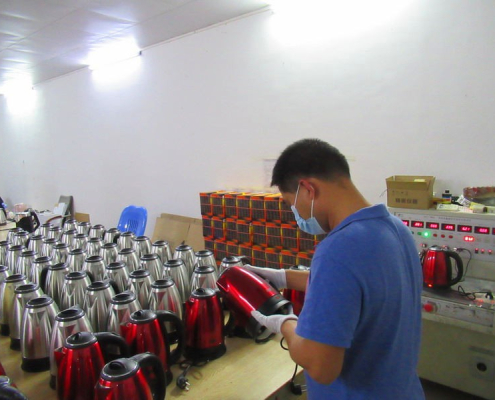
You can call PSI a Final Random Inspection. By far, it’s the most common type of quality inspection service based on AQL standards. (Click here to find the right AQL Sample size)
Timing: When 100% of order quantity is finished and at least 80% is packed
Purpose: Confirm shipment quality rather than catch issues early, using AQL standards for statistical sampling.
What PSI Inspects?
Random Product Sampling: Following AQL Level II standards (typically AQL 2.5 for minor defects, AQL 1.5 for major defects, AQL 0 for critical defects):
- Appearance and workmanship
- Dimensions and specifications
- Functionality and performance
- Labeling and packaging compliance
- Quantity verification
Packaging Assessment:
- Inner packaging protection adequacy
- Outer carton strength and sealing
- Shipping marks and labels accuracy
- Palletization and containerization readiness
Documentation Review:
- Packing lists match actual goods
- Product labels meet destination requirements
- Certifications and test reports present
- User manuals and warranty cards included
When to Use PSI
PSI is the most common inspection type, suitable for:
- Standard products with established quality history
- Moderate-risk orders where production monitoring isn’t justified
- Suppliers with generally good quality records
- Budget-conscious buyers seeking cost-effective verification
PSI Limitations
PSI’s objective is confirming shipment quality rather than catching issues early. By final inspection, corrective options are limited:
If Defects Found:
- Accept with concessions (price reduction)
- Rework entire batch (costly, time-consuming)
- Reject and re-produce (major delays)
Best Practice: Combine PSI with at least one earlier inspection (PPI or DUPRO) for comprehensive risk management.
(Remark: ANSI/ASQ Z1.4-2003 (R2018): Sampling Procedures and Tables for Inspection by Attributes is an acceptance sampling system to be used with switching rules on a continuing stream of lots for Acceptance Quality Limit (AQL) specified. It provides tightened, normal, and reduced plans to be applied for attributes inspection for percent nonconforming or nonconformities per 100 units.)
e. Container Loading Supervision (CLI/CLS):
(Also called Container loading inspection) Ensures that the correct styles, sizes, and quantities have been loaded correctly, and safely onto the container.
Timing: During actual loading of finished goods into shipping containers
Purpose: Ensure correct products, quantities, and loading methods prevent damage during transit.
What CLS Supervises
Product and Quantity Verification:
- Correct SKUs loaded (no substitutions)
- Accurate quantities per packing list
- Proper product mix (for multi-product shipments)
- Container seal integrity before and after loading
Loading Quality:
- Weight distribution for stability
- Fragile items protection
- Proper stacking preventing crushing
- Adequate dunnage and securing
- No overloading exceeding weight limits
Container Condition:
- Interior cleanliness (no moisture, odors, debris)
- Structural integrity (no holes, rust, damage)
- Door seals functioning properly
- Correct container type for product
When to Use CLS
Container loading supervision is valuable for:
Complex Loading Requirements: Products requiring precise loading plans (heavy machinery, fragile goods, temperature-sensitive items)
Mixed Shipments: Consolidations from multiple suppliers where SKU mix-ups are risks
High-Value Cargo: Where loading damage could result in significant financial loss
Low-Trust Situations: New suppliers or those with past loading issues
Regulatory Requirements: Products requiring sealed container documentation (pharmaceuticals, food products)
Real-World Scenario:
Case: Furniture importer consolidating three suppliers’ goods into one container. CLS inspector discovers:
- Supplier A attempting to load wrong SKU
- Supplier B’s cartons damaged, creating transit risk
- Improper weight distribution creating tipping hazard
Outcome: Loading stopped, issues corrected, preventing $8,000 damaged goods claim and customer delivery failures.
How to Choose the Right Inspection Type
Selecting appropriate inspection services depends on multiple factors including risk assessment, product complexity, supplier relationship, and budget constraints. here are strategy suggestions:
Risk-Based Inspection Strategy
High-Risk Scenarios (Multiple Inspections Recommended):
- First order with new supplier → FAI + DUPRO + PSI
- Complex technical products → FAI + PPI + PSI + CLS
- Previous quality failures → PPI + DUPRO + PSI
- High-value orders → Full inspection coverage
Medium-Risk Scenarios (2-3 Inspections):
- Established supplier, new product → FAI + PSI
- Standard products, moderate order value → DUPRO + PSI
- Material substitution concerns → PPI + PSI
Lower-Risk Scenarios (1 Inspection):
- Proven supplier, repeat order → PSI only
- Low-complexity products → PSI
- Small order values → PSI
Product Type Considerations
| Product Category | Recommended Inspections | Rationale |
| Electronics | PPI + DUPRO + PSI | Material authenticity critical, functional testing needed |
| Textiles/Apparel | PPI + PSI | Fabric quality crucial, workmanship verification needed |
| Mechanical Products | FAI + DUPRO + PSI | Specifications precision critical, assembly complexity |
| Consumer Goods | DUPRO + PSI | Standard approach balancing cost and risk |
| High-Value Items | All + CLS | Comprehensive protection justified by value |

Budget Optimization
Inspection services represent 0.5-2% of order value. Optimize spending by:
- Combining Inspections: When timing allows, combine PPI with FAI or DUPRO with PSI to reduce travel costs.
- Volume Discounts: Establish regular inspection schedules with single provider for better rates.
- Selective Sampling: For multi-SKU orders, focus intensive inspection on highest-risk or highest-value items.
- Gradual Reduction: As supplier proves consistent quality over multiple orders, reduce inspection frequency (but maintain random verification).
AQL Standards in Quality Inspection Services
The sampling method used in quality inspections follows ISO 2859-1 standard called AQL (Acceptable Quality Limit), which determines the maximum acceptable defective units in production batches.
Understanding AQL Levels
Professional inspection services typically employ these standards:
AQL 0 (Critical Defects):
- Safety hazards
- Regulatory non-compliance
- Functional failures making product unusable
- Zero tolerance—any critical defect fails batch
AQL 1.5/2.5 (Major Defects):
- Significantly impacts usability or appearance
- Likely to cause customer complaints
- Affects product performance
- Maximum 1.5/2.5% defective units acceptable
AQL 2.5 (Minor Defects):
- Cosmetic flaws not affecting function
- Small deviations from specifications
- Unlikely to cause returns
- Maximum 2.5% defective units acceptable
AQL 4.0 (Minor Defects):
- Non-critical cosmetic issues
- Very minor appearance variations
- Defects not visible during normal use
- Maximum 4.0% defective units acceptable
- Used for lower-risk products or cost-sensitive orders
Learn more about How to choose different AQL Level for Inspection?
Important Note: AQL levels should be agreed upon between buyer and supplier BEFORE production begins and clearly stated in purchase orders. Changing AQL standards mid-production can lead to disputes.
Additional Quality Control Services
Beyond the five standard inspection types, specialized services address specific situations:
100% Inspection (Defect Sorting Service)
When Needed:
- Post-failure remediation when batch fails inspection
- Critical product categories (medical devices, safety equipment)
- E-commerce platforms requiring zero-defect tolerance (Amazon FBA)
- High-value items where sampling risk is unacceptable
Process: Every single unit is individually inspected, with defective items separated for rework or disposal. While expensive (typically 5-15% of product cost), this ensures only conforming products ship.
Learn more about When you need a Full Inspection Service (100% Defect Sorting Service)?
Factory Audit Services
Comprehensive evaluation of supplier:
- Quality management systems
- Production capabilities
- Compliance with social/environmental standards
- Financial stability and business practices
Useful before establishing new supplier relationships or for annual supplier performance reviews.
Lab Testing Services
When inspections require technical analysis beyond visual/functional checks:
- Chemical composition testing
- Durability and performance testing
- Safety certification testing
- Environmental compliance testing
Often required for products entering regulated markets (EU, US, Australia).
Conclusion
Quality inspection services form the backbone of successful international sourcing, providing verification, accountability, and peace of mind throughout the supply chain. By understanding the five core inspection types—FAI, PPI, DUPRO, PSI, and CLS—and applying them strategically based on risk assessment, importers can significantly reduce quality failures while optimizing costs.
The key to effective quality management isn’t simply conducting inspections, but choosing the right inspection types at optimal times, working with qualified third-party providers, and acting decisively on inspection findings. Understanding AQL standards (whether using stricter 2.5 or relaxed 4.0 for minor defects) allows buyers to balance quality requirements with budget constraints appropriately.
Whether you’re a first-time importer or managing complex global supply chains, investing in professional quality inspection services protects your brand, satisfies your customers, and builds sustainable business relationships with manufacturing partners.
Additional Resources
- ISO 2859-1: Sampling Procedures for Inspection by Attributes
- ISO 17020: Inspection Body Accreditation Requirements
- ANSI/ASQ Z1.4: Sampling Procedures and Tables
Keywords: China Inspection Services, Inspection Report Sample. Product Inspection Standard
Author: AQI Service as a professional quality control service company in China specialized in providing a complete range of quality inspection and testing certification services in China & Asia for global importers, buyers, retailers, and sellers.