AI Visual Inspection: Why It Still Can’t Replace Human Inspectors in Quality Control
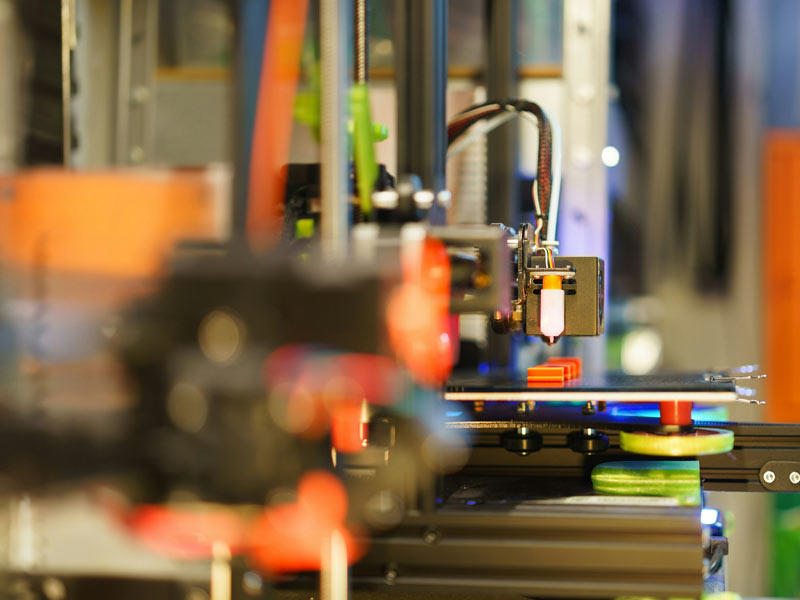
Across the global manufacturing landscape, smart factory initiatives and automated optical inspection systems have generated massive interest. Promoters of industrial artificial intelligence frequently argue that AI visual inspection is poised to completely eliminate human quality control inspectors from the factory floor. From detecting pinhole defects in printed circuit boards to measuring dimensional tolerances in precision machining, automated vision solutions promise unprecedented processing speed, 24/7 non-stop operation, and immunity to physical fatigue.
Driven by these compelling claims, many enterprise procurement executives, brand product managers, and supply chain directors are left asking a critical question: can deploying an AI visual inspection system eliminate the need for traditional manual quality inspection and third-party quality control services? For overseas buyers sourcing goods from complex international supply chains, relying solely on automated algorithms presents substantial financial and operational risks.
While modern machine vision excels at repetitive, highly structured tasks, real-world manufacturing environments reveal clear boundaries. In actual factory settings, an AI visual inspection setup frequently functions as an efficient filtering tool rather than an independent quality decision-maker. Below, we examine the underlying technical flaws, environmental constraints, cognitive limitations, and operational economics that prevent automated vision systems from fully replacing qualified human inspectors in international quality assurance.
What Is AI Visual Inspection? Core Attributes and Scope
To evaluate where automated technology succeeds and where it fails, we must first define the operational logic of AI visual inspection. Modern vision systems integrate high-resolution industrial cameras, custom lighting arrays, graphics processing units (GPUs), and deep learning convolutional neural networks. The primary objective of an AI visual inspection system is to capture images of moving products, extract pixel-level feature maps, compare those features against preset statistical boundaries, and categorize items as either acceptable or defective.
In high-speed, standardized environments – such as high-volume consumer electronics assembly, continuous paper printing, or automated glass sheet manufacturing – automated vision systems outpace the human eye. In these narrow scenarios, AI visual inspection performs thousands of mathematical comparisons per minute without human distraction or eye strain. This high throughput leads many observers to assume that complete automation across all quality control checks is imminent.
However, this mechanical efficiency relies entirely on fixed parameters. Human quality inspectors bring crucial empirical judgment, adaptability, and cross-functional understanding to the factory line. A human quality control inspector does not merely match pixels; they understand material behavior, production history, assembly line dynamics, and buyer expectations. When production shifts from rigid, single-SKU manufacturing to complex, multi-variable consumer goods, the rigid foundation of AI visual inspection begins to deteriorate rapidly.
Technical Limitations of AI Visual Inspection Systems
At its core, every AI visual inspection solution depends entirely on data-driven deep learning models. Unlike human cognition, which generalizes effortlessly from basic concepts, machine vision algorithms require extensive datasets to make reliable predictions. This dependency creates immediate technical bottlenecks in real-world manufacturing environments.
The Defect Sample Bottleneck

Effective machine learning requires balanced datasets containing tens of thousands of positive and negative training examples. However, the operational goal of any modern factory is to minimize defects. Consequently, actual production lines produce an abundance of compliant parts but extremely few defective samples – this scarcity directly limits the capabilities of AI visual inspection algorithms.
While standard, high-frequency defects (large surface scratches, missing screws) can be collected and labeled, rare and unpredictable flaws – subtle subsurface stress cracks, microscopic material inclusions, or unusual chemical discoloration – are rarely present in training sets. When an unmapped defect variant appears on the line, the model often passes defective products as compliant, creating severe quality-escape risk for overseas importers. Mislabeled training data compounds the problem: if factory technicians misjudge ambiguous boundary cases during annotation, the resulting AI visual inspection model inherits those biases into every future production run.
Black-Box Algorithms with No Process Comprehension
Deep learning algorithms operate as statistical black boxes. An AI visual inspection model processes pixel brightness and texture patterns without comprehending the physical mechanics of the product or process – it doesn’t understand *why* a defect occurs or whether a cosmetic variation compromises structural integrity.
In garment manufacturing, for example, natural variations in fabric tension or weave density cause minor pixel variations that don’t affect commercial value. Experienced human inspectors instinctively recognize these harmless traits, while an AI visual inspection algorithm without contextual understanding may flag them as severe defects – driving high false-rejection rates and unnecessary scrap.
AI Visual Inspection Under Real Factory Conditions
In laboratory testing or controlled pilot environments, an AI visual inspection system often demonstrates accuracy rates above 98%. Deployed on an actual factory floor, however, performance degrades significantly, because industrial environments are dynamic, noisy, and subject to continuous physical variables.
Lighting, Reflection, and Glare
Industrial imaging depends fundamentally on lighting consistency. Shifts in ambient sunlight, LED panel degradation, moving shadows, or dust on camera lenses all alter image pixel values and can trigger widespread inspection errors. High-gloss surfaces – polished stainless steel, molded plastic, chrome trim, glass packaging – are especially difficult: reflections create glare and false shadow lines that either mask real scratches or trigger false rejects. A human inspector simply tilts the part or touches the surface to verify; a fixed-angle camera cannot.
High-Mix, Low-Volume (HMLV) Production
Global supply chains increasingly run high-mix, low-volume production to meet customized demand, switching frequently between colors, dimensions, finishes, and packaging. This exposes a major weakness in automated vision: a model trained on matte black smartphone cases cannot be applied to glossy white or metallic silver variants without new image collection, re-annotation, retraining, and threshold recalibration – a process that can take days or weeks. Human inspectors adapt to a new spec sheet or SOP in minutes.
The Human Advantage: Cognitive Depth and Elastic Quality Standards
 Quality inspection is rarely a binary mathematical exercise. In consumer goods manufacturing, quality standards are dynamic and shaped by commercial context, price point, and end-user safety expectations – areas where AI visual inspection alone struggles.
Judging Fuzzy, Subjective Quality Criteria
In handcrafted leather goods, upholstered furniture, or natural wooden cabinetry, no two raw material samples are identical. Natural grain variation and organic surface texture are characteristic of authentic materials, not defects. An AI visual inspection setup enforcing rigid numerical thresholds either over-rejects acceptable items or, if tolerances are loosened, lets genuine flaws pass. Human inspectors trained under ISO 2859-1 statistical sampling standards balance strict criteria with commercial judgment.
Root-Cause Analysis vs. Simple Sorting
When a human inspector finds a defect, their role goes beyond sorting good parts from bad. If an injection-molded housing shows sink marks, an experienced QC professional checks mold temperature, holding pressure, or resin moisture to stop further defective output at the source. An AI visual inspection unit only sorts parts into a scrap bin – it cannot investigate machine parameters or audit operator technique, so it will keep silently rejecting units without ever fixing the root cause.
The Real Cost of AI Visual Inspection: Total Cost of Ownership
A common assumption is that replacing human inspectors with an AI visual inspection system delivers immediate labor savings. A full Total Cost of Ownership (TCO) analysis tells a more complicated story.
- Capital expenditure: Industrial-grade cameras, custom lighting rigs, line-scan sensors, and edge-computing hardware often cost tens of thousands of dollars per station, on top of machine learning engineering and PLC integration work.
- Obsolescence risk: When a product line is redesigned, much of the customized optical hardware and trained model becomes unusable – a serious risk for small and mid-sized contract factories on tight margins.
- Algorithm drift: Real-world production conditions gradually diverge from the original training data, degrading accuracy over time and requiring ongoing data re-labeling and re-tuning.
- Ongoing headcount: The annual cost of the AI data engineers, hardware technicians, and optical specialists needed to keep a system accurate often matches – or exceeds – the wages of a qualified human QC team.
Why Global Brands Still Rely on Human Inspection Alongside AI Visual Inspection
 For brand owners, retailers, and importers sourcing from overseas manufacturing hubs, quality control is more than surface-defect detection – it’s the primary safeguard for brand reputation, regulatory compliance, and customer trust. No AI visual inspection camera can perform the following:
- Tactile and sensory checks – zipper smoothness, fabric hand-feel, joint tightness, ergonomic comfort
- Functional and mechanical testing – drop tests, torque checks, hinge endurance, fitting tests
- Electrical and safety compliance – insulation resistance, grounding continuity, hi-pot testing, battery performance
- Packaging validation – carton drop strength, barcode readability, warning labels, moisture content
These are exactly the checks covered in a standard pre-shipment inspection service.
It also can’t audit factory sanitation, verify raw-material storage conditions, or evaluate a supplier’s labor and quality-management systems – the job of independent third-party factory audits. And it can’t detect regulated hazards such as heavy metals in paint, phthalates in plasticizers, or flammable finishes on textiles, which require lab compliance testing against standards like REACH, CPSIA, or RoHS.
The Hybrid Model: How AI Visual Inspection and Human QC Work Together
None of this means automated vision has no place on the factory floor. The future of quality control isn’t AI visual inspection *replacing* human inspectors – it’s the two working together.
In a well-designed QC ecosystem, AI visual inspection acts as a high-speed preliminary filter, flagging gross dimensional errors, obvious color mismatches, or missing components at line speed and removing repetitive sorting work from human staff. Human inspectors then focus on the tasks that require judgment:
- 1. Reviewing ambiguous or borderline flags raised by the vision system
- 2. Running AQL statistical sampling (ISO 2859-1) on finished goods before packing
- 3. Conducting root-cause failure analysis on recurring defect trends
- 4. Performing functional, electrical, sensory, and packaging compliance testing
- 5. Conduct pre-shipment inspection and container loading supervision
This hybrid approach captures the raw processing speed of AI visual inspection for high-volume screening while preserving the reasoning, adaptability, and physical verification only trained inspectors can provide.
FAQ: AI Visual Inspection
Can AI visual inspection fully replace human quality inspectors?
No. AI visual inspection is highly effective for repetitive, high-speed surface-defect screening on standardized products, but it can’t perform tactile, functional, electrical, or sensory checks, and it struggles with rare defects, glossy surfaces, and frequent product changeovers – all areas where human inspectors remain essential.
#1 What are the biggest limitations of AI visual inspection in factories?
The main limitations are scarce defect training data, “black-box” decision-making with no understanding of root cause, sensitivity to lighting and glare, and slow retraining cycles when products change (high-mix, low-volume production).
#2 Is AI visual inspection worth the investment for small factories?
It depends on production volume and SKU stability. High-volume, single-SKU lines see strong ROI; factories with frequent product changeovers often find the retraining and hardware costs outweigh the labor savings.
#3 How do brands protect quality when using AI visual inspection?
By pairing it with third-party pre-shipment inspection, factory audits, and lab compliance testing – a hybrid model where AI handles high-speed screening and trained inspectors handle judgment-based and physical verification.
Conclusion: Balanced Quality Assurance for Overseas Supply Chains
As industrial automation continues to evolve, AI visual inspection will remain an increasingly useful tool for inline sorting and surface-defect detection in highly standardized manufacturing environments. But the claim that automated machine vision can fully eliminate human inspectors from quality assurance is disconnected from the realities of modern global manufacturing.
Dataset scarcity, black-box algorithmic limits, environmental sensitivity, high customization costs, and the inability to perform physical or sensory verification all make standalone AI visual inspection inadequate for complex quality control. For overseas importers, brand managers, and procurement professionals, relying exclusively on factory-installed AI visual inspection creates real risk of product escapes, costly recalls, and brand damage.
To protect international supply chains, businesses need a quality assurance strategy grounded in professional human oversight – pairing AI visual inspection with a trusted third-party quality inspection partner for on-site verification, regulatory expertise, and objective judgment that safeguards product quality and protects margins.
Ready to combine automated screening with expert human oversight? Get a quote for your next inspection.