Alibaba Auto Parts Sourcing: How to Manage Quality, Compliance, and Supplier Risk
For international importers, Alibaba auto parts sourcing remains the dominant procurement channel – and the reasons are straightforward: the supplier base is enormous, pricing is competitive, and the product range now covers everything from legacy ICE components to EV drivetrain hardware. But the platform’s scale cuts both ways. Behind the Gold Supplier badges and high review scores, manufacturing quality, technical accuracy, and regulatory compliance vary significantly from one factory to the next.
For buyers sourcing at volume, one bad batch is expensive. For buyers supplying safety-critical components to repair shops or OEM integrators, the stakes are higher still.
This guide is for importers, procurement managers, and product teams who know how Alibaba works and want to tighten up the quality side of their sourcing operation. We’ll cover supplier qualification, specification management, inspection protocol, and the compliance issues that catch buyers off guard most often.
Get Part Identification Right Before Anything Else
Fitment failures are consistently the leading cause of disputes in Alibaba auto parts sourcing – and most are avoidable. The problem usually isn’t a dishonest supplier. It’s buyers who rely on part names and photos rather than hard technical identifiers.
VIN Decoding and OEM Number Verification
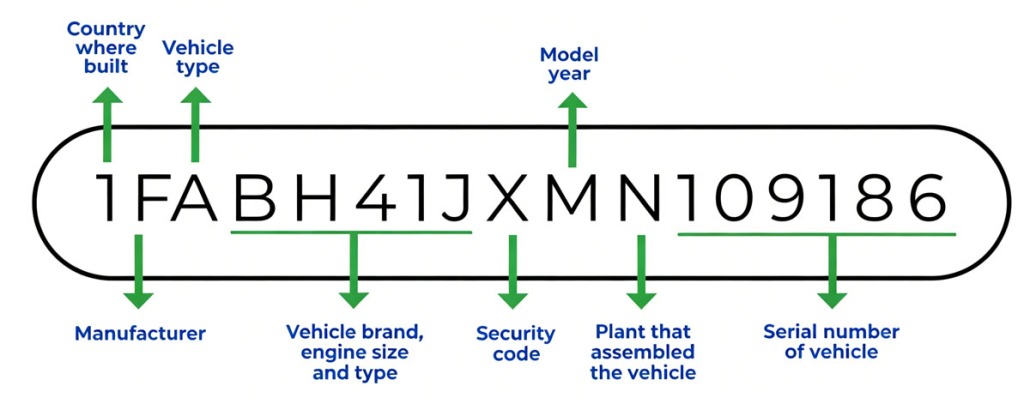
The VIN is the most reliable starting point. A 17-character VIN encodes the manufacturer, model year, engine type, production plant, and serial sequence. Decoding it fully – rather than just pulling the model and year – tells you exactly which variant of a vehicle you’re sourcing for. Many buyers skip this step and discover too late that their “compatible” part was specced for a different regional market or a different production window of the same model.
Once you have the VIN-decoded configuration, work with OEM part numbers rather than generic descriptions. Every component has a manufacturer-assigned OEM code, and that number is the only unambiguous reference when communicating with a supplier. Part names are imprecise; OEM numbers are not.
Ask the supplier to confirm the OEM number they’re manufacturing to and request any technical drawings or dimensional specifications they use in production. Reputable factories will have this documentation readily available. Hesitation to share it is informative.
Know the Difference Between Genuine, OEM-Equivalent, and Aftermarket
These three categories behave very differently from a quality control standpoint, and conflating them creates problems downstream.
Genuine parts carry the vehicle manufacturer’s branding and come through official OEM distribution channels. On Alibaba, genuine parts at below-market pricing should be treated with real skepticism – the legitimate supply chain for genuine automotive components doesn’t typically flow through open B2B platforms.
OEM-equivalent parts are manufactured by Tier 1 or Tier 2 suppliers that actually produce components for vehicle manufacturers. Companies like Denso, Bosch, and ZF supply both automakers and the aftermarket. Sourcing from a factory with documented supply relationships with these companies means production-equivalent quality without the brand markup.
Aftermarket parts cover a wide spectrum – from well-engineered alternatives to low-cost copies. The quality range within this category is substantial, and this is where third-party inspection adds the most value in any Alibaba auto parts sourcing program.
Supplier Qualification – What to Actually Look For
Manufacturing Certifications That Matter
IATF 16949 is the relevant quality management standard for automotive component manufacturing. It covers process control, defect prevention, measurement systems, and supplier management in ways that ISO 9001 doesn’t. A factory with a current IATF 16949 certificate isn’t guaranteed to produce good parts – but it has the management infrastructure to do so consistently. A factory without it is running on informal controls.
For products entering European markets, E-Mark certification is legally required for safety-relevant components including lighting, braking hardware, and glazing.
For the U.S. market, DOT compliance markings are required on tires, lamps, and glazing. These aren’t optional – importing non-certified versions of regulated components exposes buyers to customs seizure and potential liability.
Request current, valid certificates and verify them directly where possible. IATF certificates include a certificate number that can be confirmed through the IATF Global Oversight database.
Reading Critically
Alibaba’s supplier metrics are useful, but some numbers mean more than others.
The repeat purchase rate is the most meaningful signal. It tells you how many buyers returned after their first order. A high rate from professional buyers is stronger evidence than a high review score, which can be skewed by low-volume consumer transactions.
Dispute rate is a red flag metric – look at both the rate and the nature of disputes. A supplier with a pattern of quality-related disputes represents a very different risk profile from one with occasional logistics issues.
Communication quality during pre-order conversations is also genuinely predictive. Suppliers who answer technical questions clearly and promptly tend to handle problems better than those who respond vaguely or slowly.
Define Specifications That Can Actually Be Inspected
One of the most common gaps in Alibaba auto parts sourcing is the space between what a buyer thinks they specified and what the supplier understood. This gap becomes visible during inspection – and the earlier it’s closed, the better.
Material and Manufacturing Specifications
Generic descriptions create ambiguity that tends to resolve in the supplier’s favor when margins are tight.
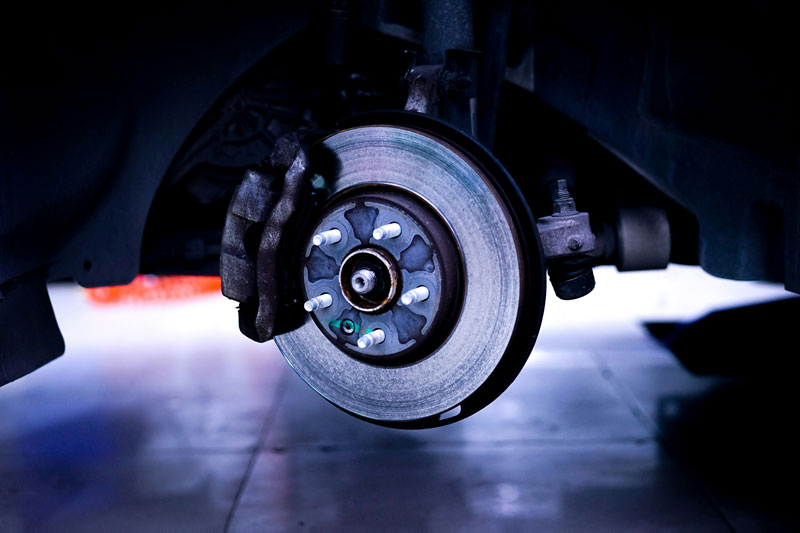
Instead of “brake rotor,” specify grade G3000 grey cast iron, minimum hardness HB190, with dimensional tolerances referenced to the OEM drawing. Instead of “suspension arm,” specify whether the component should be forged or cast, the alloy grade, and the required surface treatment.
Packaging specifications matter more than most buyers realize. Metal components are vulnerable to oxidation during shipping – particularly in humid conditions or on long sea freight transits. VCI (Volatile Corrosion Inhibitor) packaging is the standard for metal parts. It releases a protective vapor that inhibits rust without direct contact. Specify this in writing and verify it during inspection.
Electronic Components Need Extra Specification Depth
For electronic components, firmware and software compatibility deserves the same attention as mechanical specifications. An oxygen sensor or fuel injector that tests within electrical tolerances but carries firmware configured for a different regional market can still fail to integrate with the target vehicle’s ECU. Confirm firmware version and regional configuration explicitly before any volume order.
Payment Structure That Protects Your Investment
The 30/70 payment structure is standard in professional auto parts procurement for a reason – it keeps the supplier’s primary financial incentive aligned with delivering conforming goods. Pay 30% on order confirmation, then hold the 70% balance until after a successful third-party inspection report.
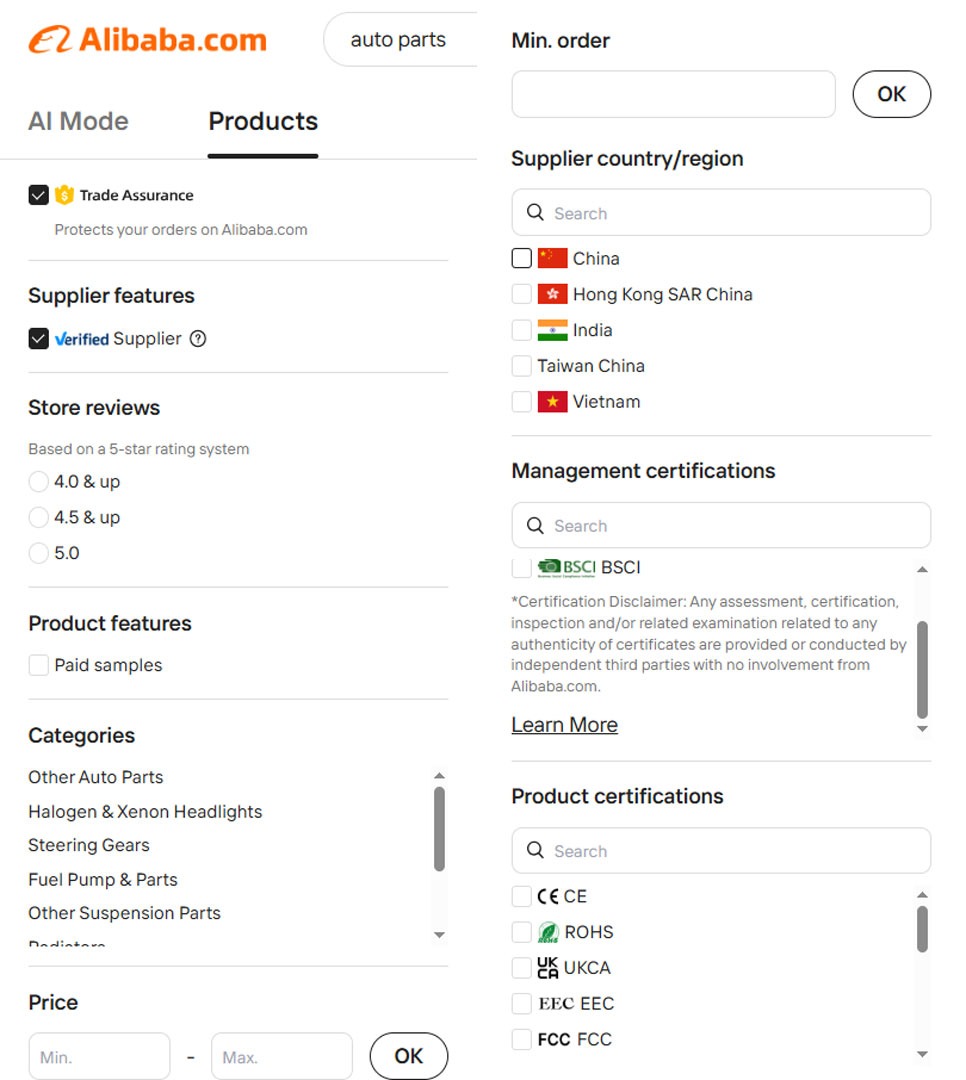
Alibaba Trade Assurance provides a formal mechanism for this. Process all significant transactions through it. Outside of Trade Assurance, your recourse options after shipment are limited and slow.
Pre-Shipment Inspection – What It Should Actually Cover
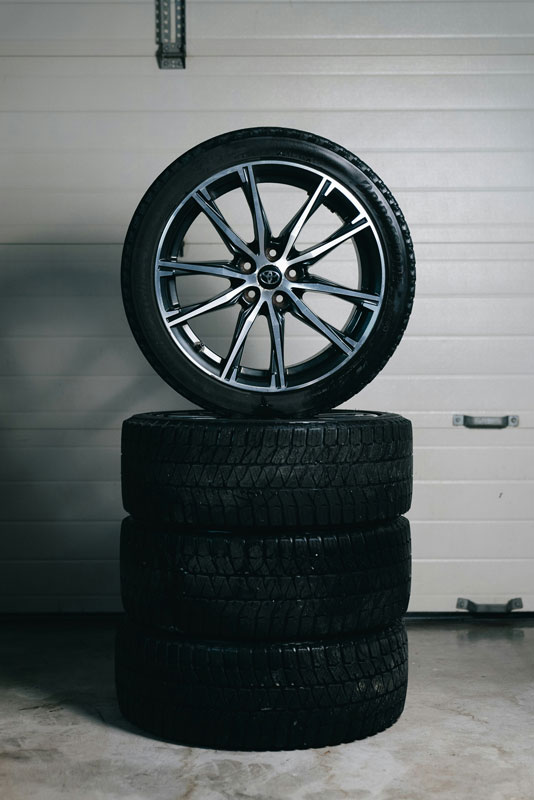
For any meaningful volume order, pre-shipment inspection conducted by an independent third party is the most cost-effective risk management tool available. The cost of returning a defective shipment from the U.S. or Europe to China typically exceeds the inspection cost by an order of magnitude.
Core Elements of an Automotive Pre-shipment Inspection
A pre-shipment inspection for auto parts should go well beyond counting boxes and checking labels. A complete inspection covers:
Quantity and SKU verification: Confirming correct parts in correct quantities, properly identified and matching the packing list and commercial invoice.
Dimensional and visual inspection: Checking critical dimensions against OEM drawings or buyer-supplied specifications, and assessing workmanship across a statistically valid sample. The AQL sampling plan should be agreed with the buyer in advance.
Functional and fitment checks: For mechanical parts, this means verifying mounting points, thread pitches, and interface dimensions. For electronic parts, bench testing against OEM electrical tolerances.
Packaging verification: VCI packaging for metal parts, appropriate cushioning for fragile components, correct labeling, and compliance with any hazmat packaging requirements.
Documentation review: Confirming that test certificates, material certifications, and compliance documents match what was specified in the purchase order.
Inspectors with automotive technical backgrounds should assess components against the same reference data suppliers use in production – not a generic checklist.
When to Go Beyond Pre-Shipment Inspection
For new suppliers, an extensive factory audit before placing the first order is a better investment than inspection alone. An audit assesses whether the manufacturing and quality management infrastructure is actually capable of producing what’s being promised – something a finished goods sample cannot reveal.
For ongoing supplier relationships, production monitoring visits during active manufacturing give buyers visibility into process compliance that pre-shipment inspection can’t provide. This is particularly relevant for high-volume sourcing programs where consistency across production lots matters as much as individual shipment quality.
EV Components – A Different Set of Technical Requirements
The shift toward electric vehicles has introduced a layer of complexity into Alibaba auto parts sourcing that many buyers aren’t yet fully equipped for.
Battery and Thermal Management Components
Battery management systems (BMS) are safety-critical electronics that require more rigorous qualification than most mechanical components. Firmware compatibility with the target vehicle’s communication architecture – CAN-bus or Automotive Ethernet, depending on the vehicle generation – must be confirmed before any volume order. Request compatibility test documentation from the supplier and verify it independently where possible.
Thermal management components – cooling plates, electric water pumps, coolant hoses – have a particularly consequential failure mode: a leak reaching the battery pack can trigger a thermal event. Pressure testing is not optional for these components. Specify the test pressure, duration, and acceptance criteria in the purchase order.

EV Charger (EVSE) Compliance
Sourcing EV charging equipment adds a layer of electrical safety certification that goes beyond standard automotive compliance:
- Type 1 (SAE J1772) and Type 2 (IEC 62196) connectors are not interchangeable
- UL 2594 certification is required for North American market access
- CE marking with IEC 61851 conformance is required for Europe
Verify that the certification covers the specific model and configuration being ordered – not just the product family. A certificate for a product family that doesn’t explicitly cover your variant provides no protection at customs.
Hazardous and Regulated Goods – Manage This Proactively
Automotive components that seem straightforward can create significant shipping complications. Buyers who don’t manage this proactively end up with delayed shipments, customs holds, and unexpected freight costs.
- Lithium-ion batteries (including hybrid and EV applications) require Class 9 hazardous materials handling under IATA for air freight, and equivalent documentation under IMDG rules for sea freight
- Shock absorbers containing pressurized gas require specific shipping declarations
- High-strength permanent magnets require magnetic field shielding to comply with aviation safety requirements
Post-Arrival Inspection – What to Do in the First 48 Hours
Inspection doesn’t end when goods arrive. What you do in the first 48 hours after delivery determines whether you have a viable claim if something is wrong.
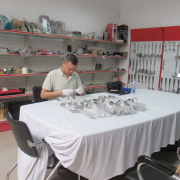
Document everything before unpacking – photograph shipment condition, seal integrity, and any visible damage. Then work through the cargo methodically: visual audit first, dimensional checks on a sample, then functional testing for electronic and mechanical components. Most Alibaba dispute windows run 15 to 30 days from delivery confirmation, and claims submitted without documentation rarely succeed.
Pull a 5% fitment sample if you’re distributing to repair shops. A part that measures correctly can still have an interface problem that only becomes apparent on the vehicle. Finding this before distribution saves significant reverse logistics cost.
Shift Quality Control Earlier in the Process
The single most effective change a buyer can make to their Alibaba auto parts sourcing operation is moving quality control upstream – from post-arrival complaint to pre-shipment verification. The earlier in the process you identify a problem, the more options you have and the lower the cost of resolution.
In practice that means:
- Tighter specifications at the order stage, written to a level that can actually be inspected
- Production-lot inspection before shipment, conducted by an independent third party
- Factory audits for new suppliers before volume orders are placed
- OEM part numbers and VIN verification as standard practice, not an occasional precaution
- Inspection reports used as procurement tools, not formalities
The investment is modest relative to what it protects. A shipment of defective brake components returned from the U.S. to China – including freight, duties, and the cost of sourcing a replacement batch on short notice – can easily run to five figures. An inspection that catches the same problem at the factory costs a fraction of that.
*AQI Service provides pre-shipment inspection, factory auditing, and production monitoring services for importers sourcing auto parts from China and across Asia. Our automotive inspectors work from buyer specifications and destination market compliance requirements – not generic checklists.