Amazon Product Compliance for FBA Sellers: What Actually Gets You Suspended (And How to Fix It Before You Ship)

 Amazon product compliance is one of the biggest operational risks FBA sellers face in 2025. One failed compliance check, and your listing disappears. Miss a second one, and your account could be suspended entirely. The frustrating part? Most of these problems existed long before Amazon flagged them – they just weren’t caught at the right stage.
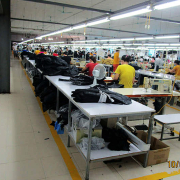
At AQI SERVICE, our Amazon FBA inspection teams work at factories across China, Vietnam, and Southeast Asia every week. The same compliance failures come up repeatedly: wrong CE mark, missing CPC certificate, FBA barcodes placed where packaging tape covers them. These aren’t unusual edge cases. They’re standard mistakes that a proper pre-shipment inspection would have caught before the container shipped.
This guide covers what Amazon product compliance actually requires for the US and EU markets, where the process breaks down, and how to build an inspection workflow that protects your account before inventory reaches Amazon’s warehouse.
Why Amazon Product Compliance Failures Happen Late
Most sellers treat compliance as a documentation task, not a production task. They source a product, approve samples visually, and only start gathering certificates when Amazon’s listing workflow asks for them.
By that point, if something is wrong – the lab test used an outdated standard, the factory forgot a required label, the polybag gauge is off – you’re either delaying your shipment or sending non-compliant inventory and hoping for the best.
The root cause is timing. Amazon product compliance needs to be addressed at the factory stage, not the listing stage. And Amazon FBA inspection is the checkpoint that confirms your actual shipment – not just your paperwork – meets the standard.
US Market: Amazon Product Compliance Requirements That Generate the Most Suspensions
For Amazon.com sellers, these are the categories where compliance failures are most common and most costly.
A. Children’s Products: CPSIA and the CPC Certificate
Any product intended for children under 12 requires a Children’s Product Certificate (CPC) backed by testing from a CPSC-accepted laboratory. Amazon enforces this aggressively.
The CPC must reference the specific test standards applied – ASTM F963 for toys, for example. Critically, it must be updated whenever your product, supplier, or manufacturing process changes.
The most common mistake: sellers get a CPC, switch factories six months later to reduce costs, and keep using the old certificate. That certificate is no longer valid for the new production source. Amazon can request re-testing at any time, and if your current product doesn’t match the certified version, you’re exposed.
B. Electronics: FCC Authorization
Any electronic device sold in the US needs FCC authorization before it can be legally marketed. For most consumer electronics – wireless earbuds, smart home devices, Bluetooth accessories – this means FCC Part 15 certification via either Supplier’s Declaration of Conformity (SDoC) or formal certification through a Telecommunication Certification Body (TCB).
What catches sellers off guard: you cannot use another brand’s FCC ID, even if you’re sourcing the same product. The FCC ID is tied to the authorized party. If you’re importing and selling under your own brand, you need your own authorization (FCC ID Database Search)
C. Cosmetics and Food-Contact Products: FDA Requirements
Products that contact food or are applied to the body fall under FDA jurisdiction. Amazon requires FDA facility registration for certain categories and, for OTC drugs like sunscreen, full Drug Facts label compliance.
The labeling rules here are stricter than most sellers expect. Font size minimums, required label statements, ingredient order, net weight placement – Amazon’s algorithm flags inconsistencies between your listing and your product label. Human reviewers catch the rest.
D. California Proposition 65: Applies to All US Sellers, Not Just California
Prop 65 applies to any product sold to US consumers. California represents roughly 12% of US consumer spending, and Amazon treats it as a compliance baseline for the entire marketplace.
If your product contains any listed chemicals above threshold levels – lead, phthalates, BPA, and over 900 others – your listing must carry a specific Prop 65 warning statement. Amazon has tightened enforcement on electronics, jewelry, and home goods significantly over the past year.
EU Market: Amazon Product Compliance Under the New GPSR
For sellers on Amazon’s European marketplaces, 2025 brought a significant regulatory shift. The EU General Product Safety Regulation (GPSR) replaced the older General Product Safety Directive and introduced new requirements that directly affect Amazon sellers.
Under GPSR, sellers must now designate an EU-based Responsible Person, maintain digital product traceability records, and comply with stricter incident reporting obligations. CE marking remains required for electronics, toys, and personal protective equipment – but the compliance infrastructure behind that CE mark now needs to be more formally documented.
Amazon EU has been issuing compliance information requests at a noticeably higher rate since late 2024. Sellers on Amazon.de, Amazon.fr, or Amazon.it without a confirmed Responsible Person and current Declaration of Conformity are running a real risk.
Amazon FBA Inspection: The Checkpoint Most Sellers Skip
 Certification documents answer one question: is this product type approved? Amazon FBA inspection answers a different question: is this specific shipment – the actual boxes going into Amazon’s warehouse – compliant and correctly prepared?
Those are two separate questions. Running only the first check is where most real-world compliance failures originate.
What a Pre-Shipment Amazon FBA Inspection Actually Covers
Product compliance verification Does the physical product match what’s on the certificate? Are required safety labels present, correctly worded, and correctly placed? For children’s products, are CPSIA tracking labels applied to both the product and packaging?
Amazon FBA packaging requirements Polybag thickness must meet Amazon’s minimums – typically 1.5 mil for adult products, 2 mil for children’s. Suffocation warning labels are required on polybags above a certain size. Barcodes must be scannable, unobscured by tape or seams, and correctly placed. FNSKU labels must match the exact product variation. These details generate FC rejection notices and removal orders when missed.
Carton and pallet specifications Box weight limits (50 lbs per carton standard), labeling requirements on all four sides, pallet height restrictions, and shipment ID labels – Amazon’s receiving teams follow these specs closely. Non-compliant shipments get flagged or refused.
AQL sampling Professional Amazon FBA inspections use Acceptable Quality Level sampling – typically AQL 2.5 for major defects and AQL 4.0 for minor defects. This gives a statistically valid picture of the shipment’s overall compliance rate without inspecting 100% of units.
Photo documentation Every inspection should produce a report with photographs of any issues found. When Amazon asks you to explain a compliance problem, a timestamped inspection report with photos is the most credible evidence you can provide in an appeal.
What Amazon’s Own Tools Cover – And Where They Fall Short
Amazon provides useful compliance resources through Seller Central: the Compliance Manager, the Listing Quality Dashboard, and the Global Selling Compliance Center. For a new seller with a small catalog in a straightforward category, these tools cover the basics.
The gap becomes clear when you’re managing multiple SKUs across categories or sourcing from several factories. Amazon’s tools tell you what documentation is required. They don’t verify whether the document you’re uploading actually reflects your current production run, whether your factory applied the right label to this batch, or whether this specific shipment was packed to FBA spec.
That’s the operational gap that Amazon FBA inspection fills.
The cost comparison is straightforward: a pre-shipment inspection typically runs $200–$300. A single removal order, repackaging fee, or account review period costs significantly more – in money, in time, and in lost sales velocity.
Building an Amazon Product Compliance Process That Scales
Sellers with repeated compliance problems usually don’t have a knowledge problem. They have a process problem. They know certifications are required – they just don’t have a system that ensures the right documents are obtained at the right stage and verified against the actual product.
At sourcing: Before placing a production order, confirm which certifications exist, who holds them, and whether they cover your specific product configuration. Get copies. Verify lab accreditation.
At sample approval: For regulated categories – children’s products, electronics, cosmetics, food-contact items – submit samples to an accredited testing lab before you’re committed to a full production run. Changes after production starts are expensive.
At pre-production (for high-risk categories): A pre-production inspection confirms raw materials and components match specifications. For children’s products, catching a materials issue before production begins saves significant cost and time.
At pre-shipment: This is the critical checkpoint. Run a full Amazon FBA inspection against packaging requirements, certification documentation, and product specs. Resolve any issues before the container loads – not after.
Ongoing: Certifications expire. Regulations change. California adds Prop 65 chemicals. The EU updates REACH substance lists. Track expiration dates and renewal deadlines actively. A spreadsheet works at small scale; a compliance management platform works better as your catalog grows.
Choosing an Amazon FBA Inspection Company
Not every inspection company understands Amazon’s specific requirements. A general QC firm that works primarily with retail buyers may not know FBA packaging specifications, may not check for FNSKU label placement, and may not produce reports useful enough to support an Amazon compliance appeal.
When evaluating Amazon FBA inspection partners, ask directly:
- Do they have documented experience inspecting shipments destined for Amazon FBA fulfillment centers?
- Can they verify compliance documents against the physical product – not just review paperwork?
- Do their reports include photographs detailed enough to support an Amazon appeal?
- Do they operate in the factory regions where your suppliers are located?
- What’s the turnaround time on a pre-shipment inspection report?
On accreditation: ISO17020 is the relevant standard for inspection bodies. It covers competence, independence, and operational consistency – a higher bar than general ISO 9001 quality certification.
Common Questions on Amazon Product Compliance
My supplier says they already have certification. Do I still need my own?
It depends on the certification type and your role in the supply chain. For FCC, you generally need your own authorization if you’re the importer of record selling under your brand. For CE marking, a supplier’s Declaration of Conformity may transfer depending on your supply relationship and whether you’re modifying the product. Don’t rely on a supplier’s verbal assurance – get specific confirmation in writing and verify with a compliance specialist.
How long does compliance documentation take?
FCC testing and certification through an accredited TCB typically takes 4–6 weeks. CE RED testing for wireless devices runs similarly. CPSC-required testing for children’s products takes 3–5 weeks depending on lab capacity. Build these timelines into your launch schedule before you finalize production dates.
Amazon is requesting compliance documents for a product I’ve sold for two years. Why now?
Amazon runs periodic compliance sweeps across categories, especially after regulatory updates or customer complaints. If your listing has been live without issues and suddenly receives a compliance request, it’s usually a category-wide enforcement action or a complaint-triggered review. Respond with current documentation – don’t submit expired certificates.
Can I appeal a suspension caused by Amazon product compliance issues?
Yes. But the appeal needs to be substantive. Amazon’s Seller Performance team wants to see: clear acknowledgment of what went wrong, documentation that the issue is corrected (new test reports, updated labels, factory corrective action), and a credible prevention plan explaining how this won’t happen again. Generic appeals don’t work. Specific, documented responses do.
How AQI SERVICE Helps Amazon FBA Sellers
AQI SERVICE provides third-party product inspection and Amazon product compliance verification for FBA sellers worldwide. Our inspection teams operate at factories across China, Vietnam, India, and other major sourcing regions, with reports delivered within 24 hours of inspection completion.
Our Amazon FBA inspection process checks products against FBA packaging requirements, applicable regulatory certifications, and your product specifications – not just visual quality. If we find an issue, you know before the container loads.
For sellers managing larger catalogs, launching in new marketplaces, or recovering from a compliance-related listing suppression, we also offer compliance audits that identify documentation gaps before Amazon does.
To request a quote or learn more, visit aqiservice.com.
AQI SERVICE is an independent third-party inspection and compliance verification company. We are not affiliated with Amazon.com, Inc.