Consumer Electronics Inspection: Your Brand’s Core Defense for Quality and Safety

In an era defined by rapid technological innovation, consumer electronics are no longer just gadgets; they are integral to our daily lives. From the smartphone in your pocket to the smart home devices managing your environment, the complexity and functionality of these products continue to soar. The global market reflects this integration, with projections expecting it to surpass $2.5 trillion.
Within this massive and competitive landscape, how does a brand ensure its products are not just innovative but also safe, reliable, and compliant? The answer lies in robust consumer electronics inspection. This isn’t merely a final checkpoint; it’s a comprehensive strategy woven throughout the product lifecycle, serving as the essential defense for your product’s quality, your brand’s reputation, and your customers’ safety.
This guide will walk you through the critical aspects of consumer electronics inspection, from core classifications and processes to the international standards that govern market access.
A. The Pillars of Consumer Electronics Inspection: A Comprehensive Classification
To effectively manage quality, it’s crucial to understand that consumer electronics inspection is not a single action but a series of specialized evaluations. We can classify these tests based on when, what, and why they are performed.
Classification by Testing Stage: Quality at Every Step
Integrating testing throughout the product lifecycle is the most effective way to mitigate risk and prevent costly errors.
-
Design Verification Testing (DVT):
This occurs during the R&D phase. Before mass consumer electronics production begins, prototypes undergo exhaustive testing to verify that the design meets all performance, safety, and reliability specifications. For example, a new laptop’s thermal design is validated through long-term operation in extreme temperature environments, ensuring it won’t overheat under heavy use.
-
Production Process Testing:
Consumer Electronics Inspection quality control continues on the factory floor. This includes incoming quality control (IQC) for raw materials, real-time monitoring during assembly, and testing of semi-finished products. A practical example is in the manufacturing of mobile phone camera modules, where each lens undergoes rigorous optical performance testing to guarantee imaging quality.
-
Finished Product Sampling Testing:
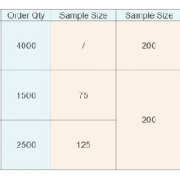
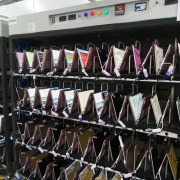
Before products are packaged for shipment, a statistically significant sample is pulled for final verification. These checks look for cosmetic defects, functional failures, and safety issues. Power banks, for instance, undergo charge-discharge cycle tests and overvoltage protection checks to confirm their safety and reliability. we also call it pre-shipment inspection.
-
Market Supervision Testing:
After a product launches, government regulatory bodies or third-party organizations often conduct random inspections on products available in the market. This ensures ongoing compliance with regulations.
Classification by Testing Object: Hardware, Software, and System
-
Hardware Testing:
This focuses on the physical components of a product. It involves evaluating the mechanical structure, electronic components, and circuit systems. Examples include screen hardness tests for smartphones, battery capacity verification, and microscopic inspection of motherboard soldering quality.
-
Software Testing:
This covers the operating systems, applications, and embedded firmware. The goal is to ensure functionality, compatibility, and security. Testers might evaluate the voice interaction features of a smart speaker or the stability of a mobile banking app.
-
System Testing:
This evaluates the product as a cohesive whole, assessing its overall performance and ability to work with other devices. Key examples include interoperability testing for a new smart home ecosystem or evaluating the immersive experience of a virtual reality headset.
Classification by Testing Purpose: Verifying Compliance, Performance, and Safety
-
Compliance Testing:
This is non-negotiable for market access. It ensures products meet the specific legal and technical standards of the regions where they will be sold. This includes certifications like CE for the European Union, FCC for the United States, and CCC for China.
-
Performance Testing:
This assesses how well a product performs its intended functions. It measures key technical indicators, such as a smartphone’s processing speed, a wireless router’s data throughput, or a laptop’s battery life under real-world conditions.
-
Reliability Testing:
This verifies a product’s stability and durability over its expected lifespan. It often involves accelerated life testing, such as subjecting a smartphone to thousands of simulated drops or testing the endurance of a home appliance’s mechanical switches.
-
Safety Testing:
This is arguably the most critical category. It identifies and mitigates risks related to electrical safety (shock, fire), radiation exposure, and hazardous chemical substances. This includes overcharge protection testing for power bank cells and testing for lead or mercury in a children’s smartwatch.
B. The Critical Importance of Consumer Electronics Inspection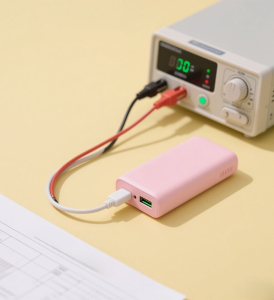
Investing in a thorough testing program isn’t an expense; it’s a strategic investment that delivers returns by protecting your brand, your customers, and your market access.
Safeguarding Consumer Lives and Property
The primary role of testing is to ensure safety. A faulty power bank cell can overheat and cause a fire. Excessive electromagnetic radiation from a mobile device could pose long-term health risks. Strict testing protocols, such as China’s mandatory CCC certification for power banks, are designed to identify these hazards before a product ever reaches the consumer, drastically reducing safety incidents.
Maintaining and Enhancing Brand Reputation
In the fiercely competitive electronics market, your brand’s reputation is its most valuable asset. A single major quality issue or safety recall can inflict devastating and long-lasting damage to consumer trust. The 2025 recall of a major power bank brand, caused by a supplier’s unauthorized change in materials, serves as a stark reminder. The incident led to enormous financial losses and tarnished the brand’s image for years. Conversely, a consistent record of quality and safety builds brand loyalty and acts as a powerful market differentiator.
Enabling and Promoting International Trade
Testing and certification are the “passports” that allow your products to enter international markets. Without demonstrating compliance with regional standards like the EU’s CE mark or the US’s FCC certification, your products will be barred at the border. By proactively testing and certifying products, your business can navigate complex international trade regulations, reduce barriers, and accelerate market access.
C. A Look Inside the Testing Process: From Sample to Report
A professional third-party inspection process is systematic and transparent, ensuring that results are accurate, repeatable, and impartial.
-
Sample Collection:
Based on the test plan, a random and representative sample is selected from production batches.
-
Test Preparation:
This involves clarifying the applicable standards (e.g., IEC 62368-1 for AV and IT equipment), calibrating all testing equipment, and controlling the environmental conditions (temperature, humidity) as required by the standards.
-
Test Execution:
The samples undergo a battery of tests using specialized equipment, such as spectrum analyzers for RF performance, withstand voltage testers for electrical safety, and environmental chambers for reliability.
-
Data Processing and Analysis:
The raw data is collected, analyzed, and compared against the standard’s pass/fail criteria. Statistical methods are used to evaluate the consistency and stability of the product’s performance.
-
Report Issuance:
A detailed report is compiled, outlining the test methods, data, analysis, and final conclusions. This official document serves as the definitive proof of product quality for internal control, regulatory submission, and trade purposes.
The industry is not static. Testing providers and manufacturers must constantly adapt to new technologies, complex supply chains, and evolving consumer expectations.
Challenge: Rapid Technological Updates and Evolving Standards
New technologies like 5G and AI create new testing demands, requiring significant investment in new equipment and expertise.
- Our Solution: We stay ahead of the curve by investing in R&D and participating in standard-setting committees. We provide customized testing solutions that help your R&D team design for future compliance from day one.
Challenge: The Complexity of Globalized Supply Chains
A single product can have components from a dozen different countries, making quality control a significant challenge.
- Our Solution: We advocate for a full-chain testing strategy. By implementing strict supplier audits and conducting inspections at every stage—from incoming raw materials to final assembly—we help you maintain control and transparency over your entire supply chain.
Challenge: Rising Demands for Environmental and Sustainable Practices
Regulations like the EU’s RoHS Directive and a growing consumer focus on sustainability require brands to prioritize green design and production.
- Our Solution: We offer a suite of green testing services, including hazardous substance analysis (RoHS) and carbon footprint verification, helping you meet regulatory requirements and market your products as environmentally responsible.
Challenge: Balancing Testing Costs and Efficiency
Comprehensive testing can be expensive, and market pressures demand fast turnaround times.
- Our Solution: We leverage automated testing systems and optimized workflows to improve efficiency and reduce manual intervention. By integrating multiple tests and sharing resources, we provide cost-effective solutions without compromising on quality.
E. The Future of Consumer Electronics Inspection is Smart, Sustainable, and Integrated
The future of consumer electronics inspection is being shaped by technology. We are moving towards an era of:
-
Intelligent and Automated Testing:
AI-powered systems will predict quality issues before they occur and automate complex test sequences, improving speed and accuracy.For example, AI testing systems can predict potential quality issues by analyzing historical data, enabling preventive testing.
-
Big Data and Cloud Computing:
Centralized cloud platforms will allow for the real-time analysis of massive datasets, uncovering hidden patterns in production quality and enabling remote collaboration.
-
A Deeper Focus on Sustainability:
Growing global attention to environmental issues will make testing more focused on environmental and sustainability requirements. Testing for environmental impact will become as standard as testing for safety, with a focus on recyclability and circular economy principles.
In conclusion, consumer electronics inspection is the bedrock of a successful and sustainable brand. It is your commitment to your customers that the products they bring into their homes are safe, reliable, and of the highest quality. By partnering with a dedicated and expert testing provider like AQI Service, you can navigate the complexities of the global market, protect your reputation, and build a brand that consumers trust for years to come.