Furniture Quality Inspection From Raw Material to Final Shipment: A Complete Guide

Furniture is one of the largest categories in global sourcing, and one of the easiest to get wrong. The global furniture market was valued at roughly $475 billion in 2020 (Fortune Business Insights) and has continued climbing past $600 billion in the years since, with China remaining the largest exporter by a wide margin and the United States the single biggest destination market. Behind those numbers sits a simple reality for importers: furniture is bulky, expensive to ship, and unforgiving of mistakes. A defect caught after the container lands costs far more – in freight, storage, and customer refunds – than the same defect caught on the factory floor.
That’s what furniture quality inspection is for. This guide covers why it matters, the standards that apply, a full furniture inspection checklist, the defects inspectors see most often, and — because a lot of the real work happens deep inside the factory, not just at the loading dock — a look at how quality is actually built in during production, not just checked at the end.
Why Furniture Quality Inspection Matters
Preventing Safety Hazards
Defective furniture is not just a cosmetic problem. Common hazards include collapsing components from poor joints or improper assembly, toxic off-gassing from unsafe paints and adhesives, tip-over incidents involving unstable dressers or bookshelves, and sharp edges or exposed hardware – all of which carry outsized risk when the furniture ends up in a home with young children.
The largest furniture safety recall in U.S. history came in 2016, when IKEA and the U.S. Consumer Product Safety Commission recalled 29 million chests and dressers after tip-over incidents were linked to the deaths of several young children. That case is what eventually led to the STURDY Act and the mandatory federal safety standard for clothing storage units (16 CFR Part 1261), which has applied to dressers, chests, and similar freestanding units manufactured after September 1, 2023. The risk didn’t stop being current once the standard took effect: in May 2026, the CPSC recalled roughly 165,000 Mainstays 9-drawer fabric dressers sold at Walmart, specifically because they violated that mandatory standard. If you’re importing dressers, chests, or similar storage furniture into the U.S., stability testing against 16 CFR Part 1261 isn’t optional – it’s a compliance requirement, and quality inspections exist to catch problems like this before the product ever reaches a home.
Protecting Brand Reputation

Rigorous inspection isn’t just about avoiding disasters – it’s a competitive advantage. Consistent quality builds customer loyalty and supports premium pricing, while a pattern of defects leads to negative reviews, retailer delistings, and returns that quietly erode margin. One bad shipment can undo years of brand-building.
Ensuring Compliance with Regulations
Furniture sold into regulated markets – North America, Europe, Australia – has to meet requirements covering chemical safety, mechanical safety and durability, and flammability. Non-compliance risks fines, import bans, recalls, and consumer injury claims.
Reducing Long-Term Costs
Catching defects early reduces returns, warranty claims, and the risk of a costly recall. It’s an upfront cost that pays for itself the first time it prevents a bad shipment.
Furniture Quality Standards You Should Know
| Standard | Covers |
|---|---|
| BS EN 581-1 / -2 / -3 | Outdoor furniture – general safety, and mechanical requirements for seating and tables |
| EN 1335 | Office work chair dimensions |
| EN 1728 | Strength and durability test methods for domestic seating |
| EN 71 | Safety requirements for children’s furniture and toys, mandatory across the EU under the EU Toy Safety Directive |
| CARB Phase 2 | California’s formaldehyde emissions regulation for composite wood |
| CPSIA | US child safety requirements under the Consumer Product Safety Improvement Act, including furniture aimed at children |
| ANSI/BIFMA | The main US furniture standard, covering office chairs, public seating, desks and tables, storage units, panel systems, and emissions. BIFMA LEVEL certification adds a voluntary sustainability rating on top of the base safety standards. |
Compliance requirements vary by destination market and furniture type, so the right standard to test against depends on where the product is sold and who’s likely to use it.
The Furniture Inspection Checklist
Raw Materials
Verify materials match specification – no quiet substitution of solid oak for veneer or composite, no unauthorized swaps in leather, fabric, or upholstery. Check for knots, cracks, or warping in wood; loose threads, fading, or uneven texture in fabric; scratches or poor tanning in leather. Wood moisture content is checked here too – see the moisture-content table further down for how the acceptable range shifts by production stage.
Structural Integrity
Check that all parts are properly assembled – no loose joints, missing screws, or gaps. For drawers and doors, test that they open and close smoothly. Place the finished piece on a flat surface and gently push or shake it; it shouldn’t wobble or tip. Chairs and stools get a weight-bearing test within their specified limits.
Appearance
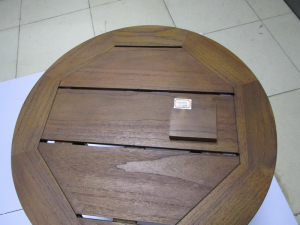
Painted surfaces should be smooth and evenly colored with no drips. Varnish and lacquer should have a consistent sheen with no bubbling. For upholstered pieces, color and pattern should match the approved sample with no visible variation across the item.
Safety
Edges and corners should be rounded or properly covered – sharp edges are a real injury risk, especially for furniture going into homes with children. Where flammability regulations apply, materials need to be tested against them.
Dimensions
Measure the finished piece against the specified size, checking length, width, height, and depth for any significant deviation.
Functionality
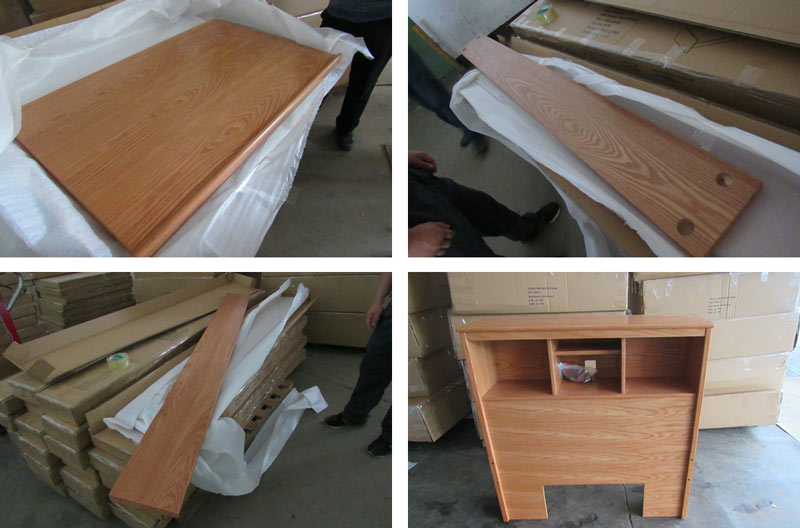 For recliners, adjustable desks, folding furniture, and anything else with moving parts, the mechanism should operate smoothly without resistance or unusual noise. A fatigue test – typically 20 open/close or use cycles unless the client specification calls for more – should leave the mechanism working exactly as it did before the first cycle, with no looseness, sticking, or deformation.
Packaging & Labeling
Barcode and QR code traceability, correct labeling, and cushion foam density where relevant. Export cartons also get a stacking test – commonly stacked to around 2.5 meters for four hours to simulate warehouse storage – and a drop test following a standard sequence such as ISTA 2C, dropping the carton on one corner, three edges, and six faces to confirm the packaging protects the piece through normal handling.
Common Defects to Watch For
Most furniture defects trace back to one of three points in the process, and knowing which one helps you figure out where to tighten control.
The first is the material itself. Wood that’s out of moisture spec, upholstery fabric with inconsistent dye lots, or hardware sourced from a cheaper alternate supplier all show up later as problems that look unrelated to their real cause – a chair that creaks after three months usually had a joint issue at the material stage, not a design flaw.
The second is workmanship during assembly and finishing. This is where you see frame joints that aren’t square, welds with visible burrs, paint that’s been applied too thin or over a poorly prepped surface, and sanding that’s been rushed enough to leave rough edges. These defects are usually inconsistent across a batch rather than present on every unit, which is exactly why sampling-based inspection catches them and a quick visual scan by the factory often doesn’t.
The third is packaging and logistics – barcodes that don’t match the carton contents, missing accessory bags, or cartons that weren’t rated for the product’s actual weight. None of these affect the furniture itself, but they’re the defects most likely to cause a rejected shipment at the distribution center or a support ticket after delivery, simply because they surface at a different point in the supply chain than where they originated.
How Furniture Quality Is Actually Built In – And Where Third-Party Inspection Fits
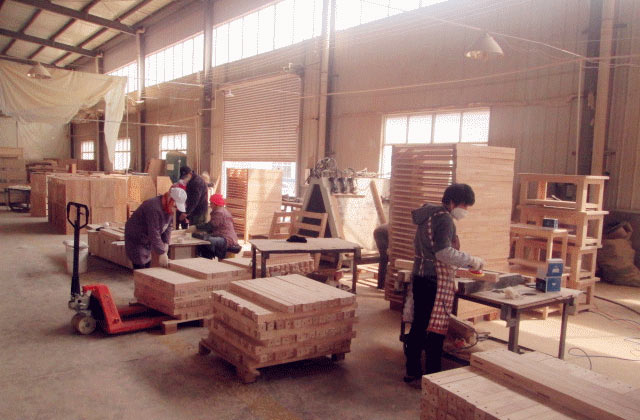 A pre-shipment inspection catches problems at the end of the line, but a lot of what determines final quality is decided much earlier, in stages most importers never see. It’s worth understanding where that upstream work happens – even though third-party inspection, AQI’s included, typically doesn’t reach that far back.
Where Inspection Scope Actually Starts
For wood furniture, the earliest stages – rough mill (cutting and drying raw lumber) and lamination (bonding layers before machining) – are almost always handled entirely inside the factory’s own internal QC process. A during-production inspection doesn’t typically arrive early enough to check kiln moisture readings or lamination grain direction; by the time a third-party inspector is on-site, those parts have usually already moved on to machining. What a DPI can reliably cover starts at the machine department – checking finished part dimensions, post-machining moisture content, and squareness – and continues through assembly, finishing, and packaging.
That earlier upstream detail still matters to you as a buyer, though. Problems seeded at the rough mill or lamination stage – wood that was under-dried, or grain direction that wasn’t reversed correctly – often don’t surface until weeks or months after the piece has already shipped and passed every inspection along the way. Knowing what “good” looks like at each stage is mainly useful for sharper questions during a factory audit or supplier vetting, not something a routine inspection will verify directly.
Moisture Content: Why the Number Changes by Stage
Moisture content is checked and re-checked at several points in production, and the acceptable threshold gets tighter as the part gets closer to final assembly. Wood that’s still fine at an earlier stage can cause splitting, warping, or joint failure later if it isn’t re-dried before machining:
| Production Stage | Moisture Check | Typically Covered By |
|---|---|---|
| Rough Mill | Lumber checked in the kiln; rough-cut plywood parts checked before machining | Factory’s internal QC only |
| Lamination | Re-checked after lamination | Factory’s internal QC only |
| Machine Department | Re-checked; parts above 8% should be re-dried | Third-party DPI, if timed at this stage |
| Finished Product (final QC) | 7–14% acceptable range | Third-party PSI / final inspection |
In short: 8% is an in-process ceiling used to protect machining accuracy, while 7–14% is the final acceptable range for a completed piece. They’re two checkpoints in the same process, not conflicting numbers – the earlier one is intentionally stricter.
Rough Mill (factory-internal – for buyer context)
- Confirm rough-cut parts are the correct length, width, height, or thickness to allow for later machining
- Check for dead knots (not acceptable) versus live knots within spec
- Inspect for wind shake, splits, honeycombing, and cracking
Lamination Department (factory-internal – for buyer context)
- Confirm parts to be laminated are laminated on both sides before clamping
- Confirm grain direction is reversed on all laminated parts
- Verify rough-cut sizes allow for machining tolerances
Machine Department (where third-party DPI can pick up)
- Check all parts for correct size and machining against spec
- Confirm no splitting, cracking, or open grain
- Check parts for square fit, right angles, and proper rabbet depth
- Inspect door styles, side panels, and parting rails for warping using a straight edge
- Check all bored and mortised parts, miters, and hardware boring for consistency
Leather & Wood Chair Assembly
- Check that carving is consistent across matching parts
- Confirm parts fit properly before assembly, and that all sanding and edge-breaking is complete
- At assembly: check joints are glued and screwed properly, the frame sits level and square, drawer and door compartments are square, corner blocks are glued and screwed, and shelf fitting has proper clearance
- Check for gouges, scratches, dents, or splintering on the finished piece
Wooden Chair Accessories
- All drawer and door edges should be rounded (hand-sanded)
- Overlays properly aligned, glued, and nailed
- Solid or veneered panels use proper floating panel construction
- Legs checked for chamfer and rounding
- Feet glued and screwed; back panels square and screwed, not glued
- Tops properly installed, fitted, and screwed
Choosing a Professional Furniture Quality Inspection Partner
Third-party inspection matters most when you’re not the one standing in the factory. A good partner should offer accredited lab testing for the standards above (not just visual checks), supplier audits covering ethical sourcing and supply chain transparency, product-specific checklists – furniture defects differ enormously between a flat-pack bookshelf, a leather sofa, and an outdoor patio set, and a generic checklist misses what’s specific to each – and on-site inspectors who can catch the difference between a showroom sample and the item actually being mass-produced. Ask how they sample the order, too: a defensible inspection should pull units at random using an AQL (Acceptable Quality Limit) sampling plan rather than letting the factory hand-pick which pieces get checked.
AQI Service inspects the full range of furniture – tables, chairs, sofas, patio furniture, desks, cabinets – at every stage from supplier vetting through pre-shipment sign-off, with reports covering appearance, specifications, function, and safety against US, EU, and other international standards. For a closer look at what an inspection actually covers stage by stage, see our Furniture Inspection Services page.
When to Inspect
Most importers space their inspections across three points. Material and specification approval happens before production starts – worth pairing with a factory audit if it’s a new supplier, since that evaluates the factory itself rather than the product. A during-production inspection then picks up once parts are being machined and assembled, typically once 20–30% of the order is complete. The final checkpoint is a pre-shipment inspection, covering the finished, packaged order right before it’s loaded for export.
Frequently Asked Questions
How often should furniture be inspected during production?
Most importers inspect at three points: pre-production (material approval), during production (batch sampling once 20–30% of the order is complete), and pre-shipment (final sign-off before loading). Higher-risk or first-time factories often warrant an additional in-process check.
What’s the difference between a factory audit and a pre-shipment inspection?
A factory audit evaluates the supplier itself – production capacity, working conditions, quality management systems – usually before placing an order. A pre-shipment inspection evaluates the finished goods themselves, checked against your specification just before they’re loaded for export.
How much does a furniture quality inspection cost?
Cost depends on the product’s complexity, order size, number of SKUs, and which inspection stage you’re booking. Contact AQI Service for a quote specific to your order.
What furniture defects are most commonly found during inspection?
The most frequent findings are moisture-related warping or cracking, unstable or wobbly assembly, finish issues like uneven paint or poor sanding, and packaging or labeling errors. See the “Common Defects” section above for the full breakdown.
Need an Inspection Partner?
Furniture quality inspection works best when it’s built into your production timeline, not bolted on at the last minute. Contact AQI Service today for factory audits, lab testing, and compliance reports covering your furniture order from raw material to final shipment.