Garment Defect Identification and Remediation: What Importers Need to Know Before the Shipment Leaves
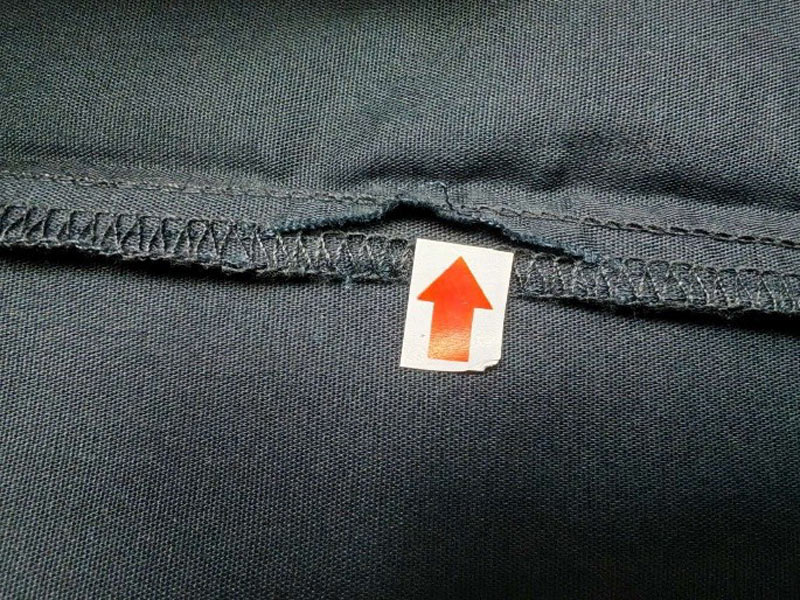
Most garment quality failures don’t happen because factories don’t care. They happen because garment defects go undetected too late in the production cycle – sometimes not until goods are already loaded on a container. By that point, the costs aren’t just financial. Chargebacks, urgent rework negotiations across time zones, customer complaints, and missed retail windows all follow.
For importers sourcing from Asia or other manufacturing hubs, understanding how garment defects are identified and remediated – and knowing when to bring in a third-party inspection partner – is one of the most practical steps you can take to protect your margins and your brand. This guide covers how professional inspection teams approach garment defect work, what remediation actually looks like in practice, and where the gaps are that most in-house QC programs miss.
The Real Cost of a Garment Defect
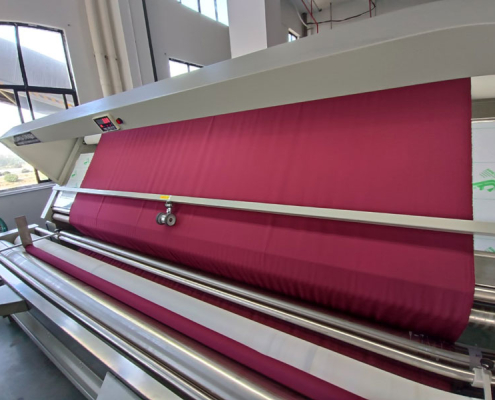 Here’s what importers often underestimate: garment defects in a production batch rarely occur in isolation. A skipped stitch pattern on a sewing line, an off-spec fabric lot, a misconfigured zipper attachment jig – these are process-level problems that replicate across hundreds or thousands of units before anyone catches them.
Fabric alone accounts for 60–70% of the total cost of a garment, which means any compromise in fabric quality has an outsized impact on the order’s overall value. Industry data suggests defect-related production waste accounts for 8–12% of output in mid-sized apparel factories, and that number climbs higher in smaller workshops without structured QC programs. Defects identified during production typically cost 50–70% less to correct than those discovered post-packaging or, in the worst case, post-shipment.
That’s why the timing of inspection matters as much as the inspection itself. Third-party inspectors are typically brought in at three critical points: during production (DPI), at the pre-shipment stage, or for container loading supervision. Each stage catches different garment defect profiles – and skipping any of them is a calculated gamble.
Garment Defect Categories That Matter Most in Trade Inspections
Garment defects are physical imperfections that occur during the manufacturing process, classified by their impact on safety, usability, and brand standards into three categories: critical, major, and minor. Not all defects carry the same weight. Inspection teams classify them carefully because classification directly affects shipment decisions under AQL frameworks.
Critical Defects – Immediate Rejection
A critical garment defect is one that presents a safety hazard to the user, risks property damage, or exposes the brand to liability. A single critical defect found in a single unit typically results in rejection of the entire order – because it puts consumers at risk of bodily harm, threatens the reputation of every party in the supply chain, and creates recall exposure.
Practical examples include a sewing needle or sharp object embedded in finished goods – a real risk given the cutting and sewing processes involved in garment manufacturing. Blood or mold contamination also fall into this category. Mold deserves particular attention for importers sourcing from Southeast Asia: the humid climates of countries like Vietnam, Indonesia, and Cambodia make garments stored in poorly ventilated factories significantly more vulnerable to mold during packaging and storage.
Major Defects – Rejection or Rework Decision
Major garment defects don’t pose a safety threat but fail to meet the importer’s specifications or approved golden sample. They lower the product’s value, hurt salability, and typically drive customer returns. Under the AQL 2.5 standard – the most widely adopted threshold for major defects in apparel – a batch that exceeds the permitted number of major defects gets rejected outright.
In garment inspection, major defects typically include:
- Holes or tears in visible fabric areas
- Burst seams at stress points – crotch, shoulder, side seams
- Color deviations beyond the buyer’s approved tolerance, usually anything beyond a 1.5-grade shift on a standard grey scale assessment
- Substantial dimensional non-conformity – a waist measuring 34″ when the spec calls for 32″ is a rejection, not a rounding issue
- Water marks, oil stains, or chemical contamination across visible panels
- Incorrect or missing labels, including care instructions and material composition
Minor Defects – Acceptable Limits and Remediation Windows
Minor garment defects include loose threads, minor surface snags in non-visible zones, slight label misalignment, or small scratches on metal accessories. AQL 4.0 is typically applied here, meaning a modest percentage is permissible – but only up to a defined threshold.
The practical issue is that importers sometimes allow factories to remediate minor defects without re-inspection. This can work, but only when the factory’s internal QC team is reliable and the remediation is documented. If neither condition is met, what gets presented as “minor defect rework” often isn’t fully resolved by the time goods ship.
Functional Defects – The Category Visual Inspection Misses
Functional garment defects pass visual inspection but fail in use. A zipper that operates smoothly on a flat inspection table but jams when the garment is worn. A waterproof jacket seam that holds under static conditions but leaks under hydrostatic pressure testing. Buttons that clear the attachment pull-test at the factory but fail after five wash cycles.
These require dynamic and lab-based testing – which is where in-house inspection programs almost always fall short.
| Manufacturing Flaw | Root Cause | Defect Level |
|---|---|---|
| Seam Failure | Incorrect thread tension / stitch density | Major |
| Fabric Flaws | Raw material defect / friction damage | Major / Minor |
| Color Shading | Batch inconsistency / dye lot variation | Major |
| Trim & Hardware Issues | Component defect / misalignment | Critical / Major |
How Third-Party Inspection Teams Identify Garment Defects
The process isn’t simply someone looking at clothes under good lighting. Professional garment inspection follows a structured methodology combining visual, tactile, dimensional, and in some cases lab-assisted techniques.
Visual Inspection Under Controlled Lighting
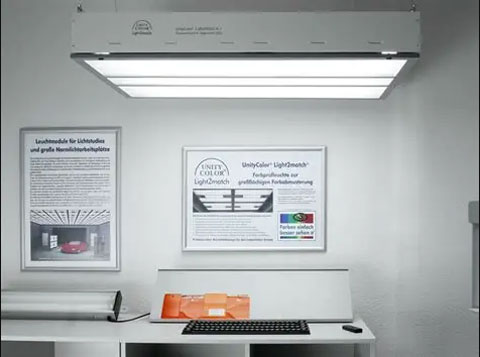 All garment inspection is conducted under D65 standard lighting – the international reference for daylight simulation in textile assessment. Certain color deviations and surface defects that are invisible under fluorescent workshop lighting become immediately apparent under D65 conditions.
Inspectors work through a defined sequence: full garment overview first (front, back, inner, outer), then a close-range detail pass at 30–45 cm to catch seam allowance irregularities, surface texture anomalies, and accessory fit issues. For knitted fabrics, inspectors pay particular attention to dropped stitches, run lines, and pilling zones along high-friction areas such as underarms and inner thighs.
Tactile and Dimensional Checks
Visual inspection alone doesn’t catch everything. Inspectors physically handle each sampled garment to assess hand feel against the approved golden sample – a critical step when fabric substitution is a known risk in the supply chain. A fabric that photographs identically to the approved swatch may feel noticeably different in weight, drape, or surface texture, signaling a potential raw material switch that no camera would flag.
Dimensional checks are conducted using a calibrated measuring tape against the buyer’s approved measurement spec sheet. Inspectors record actual measurements at every defined point – chest, waist, hip, inseam, sleeve length, collar circumference – and calculate the deviation from spec. Any measurement falling outside the buyer’s tolerance triggers a major defect classification.
For orders with multiple size runs, inspectors pull samples across the full size range rather than concentrating on the median size. Grading errors – where the size increment between S, M, L, and XL is inconsistent – are a common source of post-shipment returns that dimensional sampling across the full range would have caught.
Workmanship Assessment
 Seam integrity is assessed through a combination of visual review and controlled tension testing. Inspectors apply manual stress to key structural seams – shoulder, crotch, side seams, and waistband attachments – to simulate the forces a garment experiences during normal wear. This isn’t destructive testing; it’s a calibrated pull designed to reveal seams that are visually complete but structurally inadequate due to incorrect stitch tension, wrong thread type, or insufficient seam allowance.
Stitch density – measured in stitches per centimeter – is checked against spec for each seam type. A lockstitch seam on a woven trouser typically requires 4–5 stitches per centimeter for structural integrity; deviations indicate either machine misconfiguration or operator shortcuts under production pressure.
Accessory and Trim Verification
Zippers, buttons, snaps, drawcords, and decorative hardware are verified against the buyer’s approved trim card. Inspectors check for correct placement, secure attachment, smooth operation, and color/finish match. For children’s garments, drawcord length and attachment strength are subject to additional scrutiny under EN 14682 (Europe) and ASTM F1816 (North America) – both of which set strict limits to prevent strangulation hazards.
Button pull-tests are conducted using a calibrated force gauge: buttons on adult garments typically require resistance of at least 90 Newtons; children’s garments require higher thresholds given the increased ingestion risk. Any button that detaches below the required force threshold is classified as a critical defect.
AQL Sampling in Garment Inspection – What the Numbers Actually Mean
AQL – Acceptable Quality Limit – is the statistical backbone of garment inspection decisions, but it’s frequently misunderstood by importers who treat it as a pass/fail score rather than a probability framework.
Here’s what AQL actually defines: the maximum percentage of defective units that is considered acceptable as a process average. An AQL of 2.5 for major defects does not mean 2.5% of your shipment is allowed to be defective. It means the sampling plan is calibrated to reject batches where the true defect rate exceeds 2.5% with a defined statistical confidence.
Standard AQL Thresholds in Apparel
| Defect Category | Standard AQL | Practical Meaning |
|---|---|---|
| Critical | 0 (zero tolerance) | Any single critical defect = rejection |
| Major | 2.5 | Batch rejected if sampled defects exceed AQL table threshold |
| Minor | 4.0 | Higher tolerance; remediation often permitted |
Sample Size and Inspection Level
Sample size is determined by the total order quantity and the chosen inspection level – General Inspection Level II (GII) is the industry default for most apparel orders. A 5,000-unit order under GII requires a sample of 200 units. Inspectors do not cherry-pick; units are selected randomly across cartons, production lines, and size/color variants to ensure the sample is statistically representative.
The key implication for importers: a smaller order does not proportionally reduce your sample size. The AQL tables are designed so that smaller orders carry a higher sampling ratio precisely because small batches have less statistical redundancy. An order of 500 units under GII requires a sample of 80 units – a 16% sampling rate versus the 4% rate for a 5,000-unit order.
Garment Defect Remediation – What Works and What Doesn’t
Rejection is not the end of the process – it’s the beginning of a decision tree. When inspection identifies defects, importers face two immediate questions: Can this be fixed? And is fixing it worth the time, cost, and risk of introducing secondary defects? Clear answers to both questions are what separate importers who recover value from those who absorb losses.
Sorting and Segregation First
Before any remediation decision is made, the full batch must be sorted. Every unit in the order is physically reviewed – not just the inspection sample – to identify and segregate defective units by category and SKU. This is typically conducted by the factory’s internal QC team under the supervision of the third-party inspector or the importer’s local agent.
Sorting results are documented in a defect tally. This documentation serves two purposes: it gives the importer a precise picture of defect distribution across the batch, and it creates an audit trail that protects against post-sorting disputes about what was found and where. Without this step, remediation negotiations have no factual foundation.
Fabric Defects – Remediation Decision Guide
Fabric defects are the category where importer decisions have the highest financial stakes, because fabric accounts for 60–70% of total garment cost and many fabric-level issues have no viable fix.
Snags in knitted fabric can often be corrected invisibly with a latch hook tool, pulling the displaced yarn back to the inner face and pressing flat. This works well for single-yarn snags without breakage. Multi-yarn snags with structural distortion are a different matter – overlock stitching with matching thread can stabilize the area but leaves visible evidence on lighter fabrics.
Holes follow a size-dependent remediation logic:
| Hole Size | Remediation Option | Suitable For |
|---|---|---|
| Under 0.5 cm | Darn with matching yarn, press flat | Most product categories |
| 0.5 cm – 2 cm | Internal patch | Outerwear, denim – not premium knitwear or silk |
| Over 2 cm | Scrap the unit | Uneconomical and structurally compromised |
Stains and marks: remediation success depends heavily on how long the stain has been set. Fresh stains from handling or packaging materials – grease, ink, adhesive – respond well to appropriate solvent-based removers. Older or heat-set stains, particularly common with iron marks on synthetic fabrics, are much harder to reverse. Steam ironing through a cotton pressing cloth removes many shine and iron marks, but repeated attempts risk further damage.
Color deviation is the defect category with the fewest good remediation options. Minor shade differences between panels can sometimes be disguised through pressing adjustments, but batch-to-batch color inconsistency or fabric that falls outside the buyer’s approved color standard is typically not remediable. Rejection is usually the correct call – and the sooner that decision is made, the lower the total cost.
Sewing Defects – Most Fixable, Most Commonly Logged
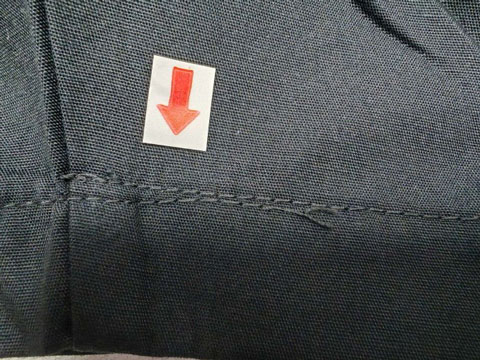 Sewing defects are the most straightforward to remediate, which is also why they’re the most commonly identified and logged in inspection reports. Broken threads, floating threads, and skipped stitches are addressed by removing the defective seam section with a seam ripper, re-sewing to the correct stitch density – 12–14 stitches per inch for woven constructions; 10–12 for knitted fabrics to preserve stretch recovery – and pressing flat.
Burst seams at stress points – crotch, underarm, side seams – require more than simple re-sewing. A double-needle pass or overlock-plus-sew reinforcement is the correct approach, with heavier fabrics sometimes requiring an additional lining strip behind the seam for load distribution. Any burst seam remediation should be checked dynamically, not just visually – the same manual stress test used during initial inspection should be reapplied after repair.
For major defects involving dimensional non-conformity, rework is often not viable at all. A garment cut 2 inches too narrow at the waist cannot be let out if the seam allowance doesn’t accommodate it. In these cases, the importer’s options are:
- Accept the deviation at a negotiated price reduction
- Request replacement units (which requires production lead time)
- Reject the affected units and ship the conforming portion of the batch
Seam strength testing per ASTM D5034 provides an objective benchmark for evaluating whether repaired seams meet the original structural specification.
Accessory Defects – Component-Level Fixes
Zipper issues are common and usually addressable: stuck sliders respond to wax or paraffin lubrication; skewed zipper tape can be corrected by removing stitches, realigning, and re-sewing. Damaged sliders or broken teeth require full component replacement – a more time-intensive fix that should factor into remediation timeline negotiations with the factory.
Button and rivet failures typically require machine re-attachment with verified pull-test confirmation afterward. For children’s garments, pull-test thresholds are non-negotiable – any repaired button attachment must meet the same force resistance standard as the original, per EN 71 and ASTM F963 requirements.
Print and embellishment defects – peeling heat transfers, loose studs, delaminating appliqués – can often be re-bonded with appropriate adhesive and controlled heat, though the success rate varies significantly with the original application quality. Low-quality original application typically means re-bonding is a temporary fix that will fail again in the field.
Re-inspection After Rework – The Step Most Importers Skip
This is where many importers make a costly mistake: accepting the factory’s word that rework is complete without commissioning a re-inspection. Rework quality is highly variable. Under production pressure, factories sometimes return units to the conforming pile without fully resolving the defect – particularly for issues like color deviation or dimensional non-conformity where the fix is genuinely difficult.
A re-inspection by the same third-party team – or ideally a different inspector to eliminate familiarity bias – is the only reliable way to confirm that remediation was effective. The re-inspection scope should mirror the original: same AQL sampling plan, same measurement checkpoints, same accessory verification. Re-inspection costs a fraction of what a post-shipment return or chargeback costs.
Remediation Decision Framework – Quick Reference
| Defect Type | Remediation Viability | Recommended Action |
|---|---|---|
| Single-yarn snag (knit) | ✅ High | Latch hook repair + press |
| Hole < 0.5 cm | ✅ High | Darn + press |
| Hole 0.5–2 cm | ⚠️ Category-dependent | Internal patch (outerwear/denim only) |
| Hole > 2 cm | ❌ Low | Scrap unit |
| Fresh stain | ✅ High | Solvent removal |
| Heat-set stain / iron mark | ⚠️ Variable | Steam press attempt; risk of further damage |
| Color deviation (batch-level) | ❌ Not viable | Reject |
| Skipped / broken stitch | ✅ High | Re-sew to spec density + press |
| Burst seam | ✅ With reinforcement | Double-needle or overlock-plus-sew + dynamic re-test |
| Dimensional non-conformity | ❌ Usually not viable | Price negotiation / replacement / partial shipment |
| Zipper – stuck slider | ✅ High | Wax/paraffin lubrication |
| Zipper – broken teeth | ⚠️ Time-intensive | Full component replacement |
| Button failure | ✅ High | Machine re-attach + pull-test |
| Peeling heat transfer | ⚠️ Variable | Re-bond; success depends on original quality |
Where In-House QC Programs Consistently Fall Short
Many importers maintain internal QC processes – factory liaisons, in-country agents, or dedicated quality managers. These programs have real value, but they have structural blind spots that third-party inspection is specifically designed to address.
Relationship Proximity
In-house QC staff who work with the same factories repeatedly develop familiarity that subtly erodes objectivity. This isn’t a character flaw – it’s a documented cognitive pattern. Inspectors who know a factory manager socially, who have eaten meals with the production team, or who depend on that factory relationship for their own job security are structurally compromised in ways that are difficult to self-correct.
Third-party inspectors rotate across factories and clients. They have no ongoing relationship with the factory being inspected, no incentive to soften findings, and no career consequence from issuing a rejection report. That structural independence is the core value proposition – not just technical skill.
For importers evaluating a new supplier for the first time, a factory audit conducted before production begins is the most effective way to establish baseline quality capability.
Lab Testing Gaps
Visual and tactile inspection cannot verify colorfastness, tensile strength, chemical compliance (REACH, OEKO-TEX), or wash durability. These require accredited laboratory testing – and most in-house QC programs either skip lab testing entirely or conduct it infrequently.
For importers selling into the EU or North American markets, chemical compliance is not optional. REACH regulation restricts over 240 substances in textile products; CPSC regulations in the US impose strict limits on lead content and phthalates in children’s garments. A garment that passes every visual inspection checkpoint can still be detained at customs or recalled from retail if it fails chemical testing.
Documentation Discipline
Professional third-party inspection generates a structured report: defect photographs with unit identification, measurement deviation tables, AQL calculation worksheets, and a clear pass/fail determination. This documentation is the importer’s primary evidence in any dispute with the factory, freight forwarder, or insurance provider.
In-house QC programs frequently produce informal notes, verbal reports, or inconsistently formatted records that don’t hold up under commercial scrutiny. When a dispute escalates – and in high-volume sourcing, disputes eventually escalate – documentation quality determines outcomes.
Building a Garment Defect Management Framework That Works
Effective garment quality management isn’t a single inspection event. It’s a layered system where each stage catches what the previous stage is structurally positioned to miss.
Stage 1 – Pre-Production Alignment
Before a single unit is cut, the importer and factory should align on: approved golden sample, measurement spec sheet with tolerances, approved trim card, fabric and accessory test reports, and packaging specifications. Every quality dispute that emerges during production can be traced back to an ambiguity or gap in pre-production alignment.
Stage 2 – During Production Inspection (DUPRO)
A DUPRO inspection, conducted when 20–30% of production is complete, catches process-level defects before they replicate across the full order. This is the highest-leverage inspection point: the cost of correction is lowest, the production line is still running, and adjustments can be made before the damage is done.
Stage 3 – Pre-Shipment Inspection (PSI)
Conducted when 100% of production is complete and at least 80% is packed, the PSI is the final quality gate before goods leave the factory. AQL sampling, dimensional checks, workmanship assessment, and accessory verification all occur here. This is the inspection most importers prioritize – but relying on PSI alone means any defects found are discovered at the point of highest remediation cost.
Stage 4 – Container Loading Supervision (CLS)
CLS confirms that the goods loaded into the container match the inspected batch – correct quantities, correct carton markings, correct loading sequence to prevent crush damage. It’s the last line of defense against substitution, short-shipment, or handling damage that occurs between inspection and loading.
The Four-Stage Framework at a Glance
| Stage | Timing | Primary Focus | Defect Cost if Found Here |
|---|---|---|---|
| Pre-Production | Before cutting | Spec alignment, golden sample | Lowest |
| DUPRO | 20–30% complete | Process-level defects | Low |
| PSI | 100% produced, 80% packed | AQL sampling, final gate | High |
| CLS | At container loading | Quantity, marking, loading | Highest |
Key Takeaways for Importers
Garment defect management is ultimately a risk-weighted decision framework. Here’s the practical summary:
- Defect classification drives shipment decisions – understanding critical, major, minor, and functional categories is the foundation of every inspection outcome.
- AQL is a probability tool, not a defect allowance – treat it as a statistical confidence threshold, not permission to ship a known percentage of bad units.
- Timing is leverage – defects caught during production cost a fraction of what they cost post-shipment. DUPRO is underutilized and high-value.
- Rework without re-inspection is a gamble – always commission re-inspection after significant remediation, regardless of factory assurances.
- Structural independence matters – third-party inspectors provide objectivity that in-house programs cannot replicate due to relationship proximity and incentive alignment.
- Lab testing is non-negotiable for regulated markets – chemical compliance failures can result in customs detention, retail recalls, and regulatory penalties that dwarf inspection costs.
- Not all defects are fixable – color deviation and dimensional non-conformity rarely have viable remediation paths; early detection is the only cost-effective strategy.
For importers building or refining their quality program, the next practical step is a pre-shipment inspection scoped specifically to your product category and target market – because garment defect risk profiles vary significantly between a children’s knitwear order and an adult outerwear program, and your inspection brief should reflect that difference.
FAQ
Q: What is the most common garment defect?
Seam failure – including broken stitches, skipped stitches, and burst seams at stress points – is the most frequently logged defect in professional garment inspections, accounting for a significant portion of major defect findings across woven and knitted constructions.
Q: Can garment defects be fixed after inspection?
It depends on defect type. Sewing defects and minor fabric snags are highly remediable. Color deviation and dimensional non-conformity typically are not. A re-inspection after rework is always recommended before shipment is approved.
Q: What AQL level should importers use for garment inspections?
The industry standard is AQL 2.5 for major defects and AQL 4.0 for minor defects, with zero tolerance for critical defects. These thresholds apply under General Inspection Level II (GII), which is the default for most apparel orders.
Q: When should a third-party inspection be commissioned?
Ideally at three points: during production (DUPRO) when 20–30% is complete, at pre-shipment (PSI) when production is 100% finished, and at container loading (CLS). At minimum, a PSI should be conducted on every order before shipment approval.
Conclusion
Garment defects are a production reality, but they don’t have to become a supply chain liability. The difference between importers who absorb defect costs quietly and those who manage them proactively usually comes down to the structure of their QC program – when inspections happen, what classification standards govern them, and whether remediation decisions are made with professional oversight or under factory pressure.
AQI SERVICE provides third-party garment inspection services across major production regions, including pre-shipment inspection, DUPRO, container loading supervision, and factory auditing. Our inspectors work to buyer-specified standards and provide detailed defect reporting that gives you the documentation you need to make clear shipment decisions. (Textiles and Garments Inspection)
If you’re reviewing your current apparel QC setup or bringing on a new supplier, we’re glad to talk through what an inspection program should look like for your product category.