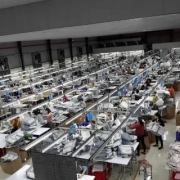
Mastering Umbrella Quality Control: Your Expert Guide to Flawless Production

In today’s market, a high-quality umbrella is more than just a functional item; it’s a reflection of your brand’s commitment to reliability. Whether shielding users from intense sun or sudden rain, a dependable umbrella provides essential protection.
However, product quality directly impacts usability, lifespan, and customer satisfaction. This makes umbrella quality control inspection a non-negotiable process. It must be integrated throughout the entire production cycle—from raw material procurement to final product dispatch. Only by implementing stringent checks at every stage can businesses ensure the umbrellas reaching consumers are safe, durable, and perform exceptionally.
Why Prioritize Umbrella Quality Control Inspection?
Investing in thorough umbrella quality control is crucial for long-term business success. It offers significant benefits:
Protecting Consumer Rights and Brand Loyalty
Consumers expect umbrellas to offer reliable rain and sun protection. If an umbrella fails prematurely—ribs breaking or canopy leaking after minimal use—it not only inconveniences customers but can also lead to negative reviews and brand damage. Rigorous umbrella quality control inspections by a trusted partner like AQI SERVICE prevent substandard products from entering the market. This ensures the umbrellas your customers purchase meet their daily needs, thereby safeguarding their rights and fostering loyalty.
Maintaining a Strong Corporate Brand Image
For umbrella manufacturers and importers, product quality is the cornerstone of their enterprise. Superior umbrellas build consumer trust and a positive reputation, establishing a strong brand image. Conversely, quality issues can lead to lost sales, damaged credibility, and significant harm to your brand. A comprehensive umbrella inspection process guarantees quality from the source, laying a solid foundation for brand integrity and growth.
Ensuring Compliance with Industry Standards and Regulations
The umbrella industry is governed by various quality standards and regulatory requirements (e.g., REACH, CPSIA). Products must undergo strict quality control inspections to ensure they meet these benchmarks before market entry. Non-compliance can result in product recalls, sales bans, hefty fines, and severe reputational damage—all of which can be mitigated through proactive quality assurance.
Suggested Outbound Link: For information on international consumer product safety standards, refer to organizations like the U.S. Consumer Product Safety Commission (CPSC) or relevant EU directives.
The Comprehensive Umbrella Quality Control Inspection Process
A meticulous inspection process, often detailed in an Umbrella Inspection Checklist, covers multiple stages:
Phase 1: Raw Material Inspection – The Foundation of Quality
The quality of raw materials is fundamental to the final product’s performance and durability.
- Canopy Material Inspection: The canopy is the primary protective element. Inspectors verify material type (e.g., polyester, nylon, Pongee) against specifications, checking for substitutions. Key tests include:
- Water Resistance Testing: Simulating rain to detect leaks.
- Tear Resistance Testing: Measuring the material’s strength against tearing.
- Colorfastness Testing: Assessing resistance to fading from rubbing or washing.
- Appearance Checks: Inspecting for color variations, stains, or physical damage. Only materials meeting all criteria proceed to production.
- Rib Material Inspection: The ribs form the umbrella’s skeleton; their strength and toughness are vital. Materials like stainless steel, aluminum alloy, or fiberglass are common.
- Metal Ribs: Checked for material purity, hardness (using a hardness tester), and uniform anti-rust coating.
- Fiberglass Ribs: Tested for toughness and strength via bending tests to ensure they return to shape and resist breakage. Surfaces are checked for smoothness to prevent user injury.
- Inspection of Other Raw Materials: Handles, tips, runners, and springs are also critical.
- Handles (Plastic, Wood, Rubber): Inspected for comfort, durability, and grip.
- Tips: Checked for secure attachment.
- Springs: Tested for appropriate elasticity for smooth opening and closing. Strict inspection of every component is essential for producing high-quality umbrellas.
Phase 2: In-Process Production Inspection – Monitoring Quality on the Line
Monitoring during manufacturing helps identify and rectify issues early.

- Cutting and Sewing Inspection:
- Cutting: Canopy panels must be cut precisely to design dimensions. Inspectors use measuring tools to verify accuracy and check for neat, fray-free edges.
- Sewing: Stitch density and uniformity are crucial for canopy firmness and appearance. Seams, especially panel joints, are checked for tightness and integrity. Defects like skipped stitches or broken threads are identified for immediate correction.
- Rib Assembly Inspection: Assembling the frame is a critical step. Each component is re-inspected before assembly.
- Connections must be firm, and components must fit correctly.
- Manual opening/closing tests check for smooth operation, free of jams or unusual noises.
- The frame’s stability in fully open and closed states is verified.
- For automatic umbrellas, the mechanism is tested for functionality and safety.
- Initial Finished Product Inspection: Once assembled, an initial review is conducted:
- Overall Appearance: Canopy pattern clarity, color uniformity, smoothness of ribs and handle, absence of defects, and overall aesthetic symmetry.
- Functional Tests: Smooth manual or automatic opening/closing, spring elasticity, and even force distribution across the canopy when open.
Case Study: How AQI SERVICE Ensures Order Success
Mr. Li, a trading company owner, faced a challenging order for 5,000 high-quality sun-protection umbrellas for a European client, with strict EU quality standards and a tight 30-day deadline. Concerned about potential quality issues, Mr. Li partnered with AQI SERVICE.
Our team developed a full-process umbrella quality control inspection plan, starting with raw materials. We identified a batch of polyester canopy material with slight color differences and poor colorfastness, prompting immediate replacement. During production, AQI SERVICE inspectors found incorrect stitch density in some canopies, which were reworked. A jammed spring in an automatic umbrella was replaced with a higher-quality component.
For the final inspection, AQI SERVICE utilized professional equipment:
- Water resistance tests simulated medium to heavy rain.
- Wind resistance tests in a wind tunnel simulated Level 7 wind force.
- A UV tester ensured the sun protection index reached UPF 50+.
Thanks to AQI SERVICE’s stringent adherence to the inspection checklist, all 5,000 umbrellas passed inspection and were delivered on time. The satisfied client praised the quality and expressed intent for long-term cooperation. This highlights how professional third-party inspection is key to order success.
Phase 3: Final Finished Product Inspection – Verifying Overall Quality
Before shipment, a final, thorough inspection confirms the product meets all specifications.
- Performance Testing:
- (1) Water Resistance Testing: The opened umbrella is exposed to simulated rain of varying intensities. Inspectors check for any water seepage on the canopy’s underside and ensure proper water runoff.
- (2) Wind Resistance Testing: Using a professional wind tunnel, umbrellas are tested against simulated wind forces to check for rib deformation, breakage, or canopy inversion.
- (3) Sun Protection Testing (for UV umbrellas): A UV tester measures the Ultraviolet Protection Factor (UPF) to ensure it meets advertised levels (e.g., UPF 50+).
- Durability Testing:
- (1) Opening and Closing Durability Testing: The umbrella is repeatedly opened and closed (thousands of cycles) to test the mechanism and rib durability.
- (2) Abrasion Durability Testing: Simulates daily wear by subjecting the canopy, ribs, and handle to friction tests to check for abrasion and damage.
- Safety Testing:
- (1) Sharp Component Detection: Inspecting for sharp points on rib tips or edges that could harm users. Non-compliant parts require blunting or modification.
- (2) Hazardous Substance Detection: Testing for restricted chemicals (e.g., formaldehyde, heavy metals, certain azo dyes) potentially used in dyes or coatings, ensuring compliance with regulations like REACH or California Proposition 65.
Methods and Technologies in Umbrella Quality Control
Effective QC combines various approaches:
Manual Inspection
Experienced inspectors use visual checks, touch, and manual operation to assess appearance, dimensions, and basic functions. This method is flexible for detecting subtle issues but can be subjective.
Instrument Testing
Advanced instruments provide objective, accurate data:
- Hardness testers for rib strength.
- UV testers for sun protection performance.
- Wind tunnels for wind resistance.
- Spectrophotometers for color consistency. While requiring investment and skilled operators, instrument testing offers reliable, quantifiable results.
Sampling Inspection (AQL)
For large production runs, inspecting every unit is impractical. Sampling inspection, often based on AQL standards (Acceptable Quality Limit, e.g., ISO 2859-1), involves randomly selecting a statistically significant number of units. The entire batch’s quality is then inferred from the sample’s results. This balances efficiency with a high degree of quality assurance.
Suggested Outbound Link: Learn more about AQL sampling from the International Organization for Standardization (ISO 2859-1).
Elevating Your Umbrella Quality Control Standards
Continuous improvement is key to maintaining high quality:
Strengthen Personnel Training
The expertise of your inspectors directly impacts QC effectiveness. Regular professional training on the latest standards, methods, and technologies is essential. AQI SERVICE invests heavily in training its inspectors to ensure top-tier service.
Introduce Advanced Equipment and Technologies
Investing in advanced testing instruments (e.g., high-precision mechanical testers, intelligent appearance inspection systems) enhances inspection accuracy and efficiency.
Improve the Quality Management System
A robust Quality Management System (QMS), such as one aligned with ISO 9001 principles, is vital. This includes detailed inspection standards, operating procedures, and a quality traceability system for each batch.
Strengthen Cooperation with Suppliers
Umbrella quality also depends on reliable raw material suppliers. Implement strict supplier screening, evaluation, and establish long-term partnerships focused on joint quality improvement.
Conclusion: Partner with AQI SERVICE for Umbrella Quality Excellence
Umbrella quality control inspection is a critical, multi-faceted process that safeguards your brand, protects consumers, and ensures regulatory compliance. As demonstrated by Mr. Li’s success story, partnering with a professional third-party inspection company like AQI SERVICE provides the expertise, standardized processes, and detailed checklists necessary to navigate complex quality requirements.
By employing a comprehensive approach—combining meticulous manual checks, advanced instrument testing, and statistically sound sampling—and by continuously improving your quality systems and supplier relationships, your business can consistently produce high-quality umbrellas. This not only meets growing consumer demands but also provides a significant competitive advantage in the marketplace.
Ensure your umbrellas meet the highest standards. Contact AQI SERVICE today to discuss your quality control needs.
Author: AQI Service as a professional quality control service company in China specialized in providing a complete range of quality inspection and testing certification services in China & Asia for global importers, buyers, retailers, and sellers.