Metal Badge Quality Control: A Comprehensive Guide for Trendy Toy Manufacturers
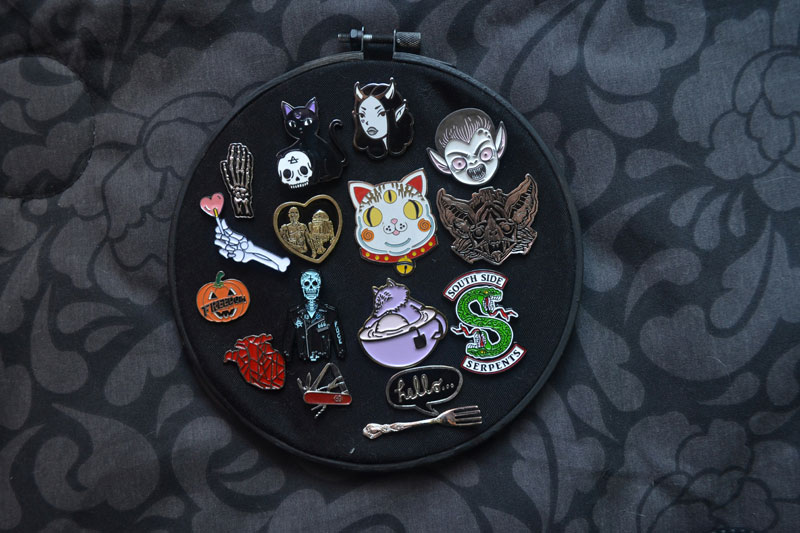
The cultural and trendy toy market is experiencing remarkable growth, with metal badges emerging as a standout category—driven by IP collaborations, independent designer collections, and collector demand. Industry reports indicate strong expansion in licensed collectible badges as consumers seek unique, high-quality pieces to showcase their interests.
However, this growth presents challenges: poor-quality badges with chipped paint, loose pins, or blurry designs can quickly turn customer excitement into frustration, especially in cross-border e-commerce where return costs and brand reputation risks are amplified.
For brands, manufacturers, and retailers, implementing comprehensive metal badge quality control is essential for sustaining success in this competitive space. Quality control is a systematic verification process that examines every aspect of a badge’s design, material, and functionality to ensure it meets both customer expectations and global business standards.
Unlike industrial-grade quality control requiring specialized lab equipment, metal badge quality control for trendy toys focuses on real-world usability and aesthetic precision—using simple tools and practical, repeatable checks. This guide breaks down everything you need to know, from business value to step-by-step execution, helping you deliver consistent, high-quality products across Amazon, Etsy, and offline retail channels worldwide.
Table of Contents
- Business Impact: Why Quality Control Matters
- 7 Critical Quality Control Checkpoints
- Efficient Quality Control Workflow
- Standards & Compliance Requirements
- Quality Control Checklist
Business Impact: Why Metal Badge Quality Control Matters
In a market where consumers judge products by their details, badge quality control isn’t optional—it’s a strategic investment. Here’s how comprehensive quality control directly impacts your operations:
Protect Brand Reputation in Social-Driven Markets
Today’s trendy toy buyers are vocal across Instagram, TikTok, and Etsy. A single defective badge can generate negative reviews reaching thousands of potential customers. Consider this: a customer purchases a limited-edition anime badge, only to find the character’s face blurred and the pin falling off after one wear. They post a photo captioned “Waste of money—don’t buy!” and the post gets 500 shares.
This exposure can erode brand trust for months—a risk amplified in cross-border markets where building credibility takes longer. Systematic quality control prevents this by catching flaws before shipment, ensuring every badge is polished, functional, and true to your marketing promises.
Reduce Costs Through Defect Prevention
Returns and rework silently drain profits, especially in international trade where shipping fees and customs duties compound losses. Example scenario: shipping 1,000 badges with peeling enamel to overseas markets could result in:
- $500 in return shipping fees
- $1,200 in rework costs (stripping and reapplying enamel)
- $800 in lost sales from customers who don’t repurchase
- Additional customs clearance fees for returned goods
Total loss: $2,500+—all avoidable with pre-shipment quality control. Identifying defects early (like enamel bubbles during production) allows fixes at the source, saving time, materials, and labor while reducing customer service costs across time zones.
Meet Premium Quality Expectations
Trendy toy collectors don’t just buy badges—they buy quality. A customer paying $25 for a copper IP badge expects substantial weight, sharp details, and years of durability. If the badge turns out to be lightweight iron (mislabeled as copper) or shows scratches on arrival, trust is broken.
Research indicates that a significant majority of trendy toy buyers will pay premium prices for brands delivering consistent quality—an opportunity to boost margins in competitive markets. Metal badge quality control ensures materials match product descriptions, finishes remain consistent, and functional components work as intended. This doesn’t just satisfy customers—it builds loyalty across international borders.
7 Critical Quality Control Checkpoints
Effective metal badge quality control covers seven key areas, each targeting specific aspects that impact customer satisfaction. For each area, we outline practical checks using basic tools (rulers, magnets, scales) requiring no specialized equipment.
1. Appearance Inspection: First Impressions Matter
A badge’s appearance is the first element customers notice—even minor flaws can create a “cheap” perception. Quality control should focus on these four checks:
a. Front Design Clarity
Examine badges under natural light, holding them 30–50 cm away (average customer viewing distance). Logos, text, and artwork should appear sharp—no blurred edges, broken lines, or missing details. For example, if featuring a game character’s sword, the blade should have distinct edges rather than appearing smudged. Unreadable small text (like designer signatures) indicates failed quality standards—critical for IP-licensed products requiring precise detail reproduction.
b. Color Consistency
Compare badges to physical design swatches or high-resolution digital samples. Check for three common issues:
- Color Mismatch: A “cherry red” section shouldn’t lean orange or pink
- Bleeding: Colors shouldn’t seep into adjacent areas (blue overlapping yellow creating green)
- Uneven Shading: Same colors should appear consistent across surfaces—no light spots or dark patches
c. Surface Smoothness
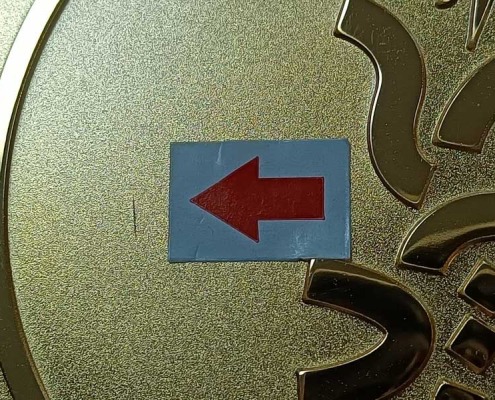
Run fingers gently over badge fronts. There should be no bumps, dents, or warps. For circular badges, lay edges on flat surfaces—rocking indicates warping. For square badges, verify all corners lie flat; raised corners affect display and wearability.
d. Stains and Scratches
Wipe badges with clean, dry microfiber cloths. Removable fingerprints or dust are acceptable, but:
- Non-removable stains (oil marks from production) are defects
- Visible scratches—even shallow ones—are unacceptable as they catch light and highlight flaws
e. Back and Edge Quality Control:
- Backs should be smooth with no burrs (sharp metal fragments that may scratch skin or clothing)
- Edges should be rounded or polished; sharp, unfiled edges present safety hazards and indicate poor craftsmanship, violating ASTM F963 sharp edge requirements
2. Size and Shape Verification: Consistency Builds Trust
For brands selling badge sets (like 5-piece anime collections) or maintaining brand consistency, size and shape uniformity is non-negotiable. Quality control must ensure customers receive matched pieces—a badge 1 cm smaller than others will stand out negatively.
a. Dimensional Quality Control
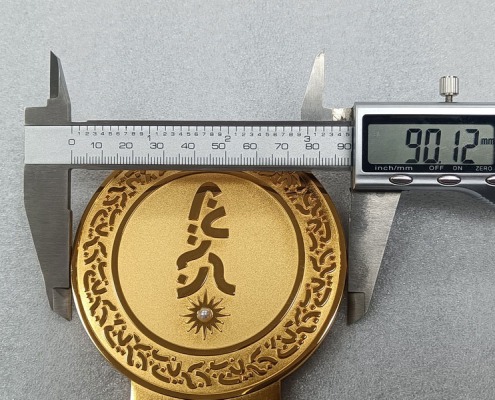
Use standard rulers (basic measurements) or digital calipers (precision) to measure key dimensions:
Circular badges: Measure diameter at three points (top, bottom, side) ensuring consistency. Tolerance should be ±0.2 cm—so a 5 cm badge should measure 4.8–5.2 cm.
Square/rectangular badges: Measure length and width on both sides. A 4×6 cm badge shouldn’t have one side at 4 cm and another at 3.8 cm.
Thickness: Measure at four corners and center. It should remain consistent (e.g., 0.3 cm ±0.05 cm). Uneven thickness creates imbalance and prevents flat display.
b. Shape Accuracy
For standard shapes (circles, squares), use templates cut from cardstock matching design specifications. For irregular shapes (hearts, stars, animal outlines), overlay badges on printed design sheets. Badge edges should align with designs—no missing segments (shortened star points) or excess metal (overly rounded heart curves).
c. Batch Consistency Check
Take 5–10 badges from identical batches and stack them face-down (avoiding scratches). Edges should align perfectly. Protruding badges indicate misshaping and should be rejected—critical for maintaining brand consistency in international shipments.
3. Material Validation: Verify Product Claims
Material specifications significantly affect badge value—”copper” suggests premium quality while “iron” implies budget-tier. Quality control must confirm materials match product descriptions to avoid false advertising and customer backlash, especially in regions with strict consumer protection laws.
a. Magnet Test
Use standard fridge magnets or small neodymium magnets. Hold against badges:
- Ferrous metals (iron, steel, some iron alloys) stick strongly
- Non-ferrous metals (copper, pure zinc, aluminum, stainless steel) don’t stick or stick very weakly
If products labeled “copper badge” attract magnets, they likely contain iron-plated copper—a misrepresentation risking penalties in international markets.
b. Weight Verification
Use digital kitchen scales (0.1g precision) to weigh badges. Different metals have distinct densities affecting weight:
- Copper (density: 8.96 g/cm³): 5 cm diameter, 0.3 cm thick badge weighs ~50g
- Zinc alloy (density: 6.6–7.2 g/cm³): Same size weighs ~38–42g
- Iron (density: 7.87 g/cm³): Same size weighs ~45g
A “copper badge” weighing only 40g isn’t pure copper—investigate materials to avoid misleading customers.
c. Visual and Tactile Assessment
Different metals display unique characteristics:
- Copper: Warm reddish-brown tint; develops patina (darkening) over time (new badges should be bright)
- Zinc alloy: Shiny silver-gray; may show slight blue tint
- Iron: Dull gray; unplated iron rusts when exposed to moisture (check for tiny orange spots)
- Stainless steel: Bright silver; smooth touch; fingerprint-resistant
These clues confirm or contradict material labels. For example, “stainless steel badges” showing rust are clearly mislabeled, risking compliance issues.
4. Surface Craftsmanship Quality Control: Details That Define Quality
Most trendy toy badges use specialized finishes enhancing appearance—electroplating, painting, enamel, or screen printing. Each finish has unique potential defects requiring specific quality control focus.
a. Electroplating (Gold, Silver, Antique Copper)
Electroplating adds thin metal layers for shine and durability. Quality control checks:
- Uniformity: Finishes should appear consistent across badges—no dark spots (uneven plating) or cloudy areas (dirty plating tanks).
- Adhesion Test: Tear small pieces of clear packing tape (1×2 cm). Press firmly onto plated surfaces, then peel quickly. No metal flakes or plating residue should stick—poor adhesion means plating will peel over time.
- Scratch Resistance: Gently rub plated surfaces with thumbnails (no pressure). No scratches or bare metal spots should appear—critical for regularly worn badges.
b. Painting (Matte, Glossy, Metallic)
Paint adds color and texture. Quality control focuses on:
- Coverage: No bare metal should show through paint—even in small crevices (between character fingers).
- Smoothness: Paint should be even, without runs (drips from excess paint) or orange peel texture (bumpy surface from poor drying).
- Durability: Scratch paint lightly with fingernails. It shouldn’t chip or peel. For glossy paint, verify consistent shine—no dull patches.
c. Enamel (Soft Enamel, Hard Enamel)
Enamel is glass-like material fused to metal, often used for premium badges. Quality control checks:
- Fill Quality: Enamel should completely fill metal grooves—no gaps (empty spots) or overflow (enamel on metal edges).
- Smoothness: Hard enamel should be polished flat with no bumps or bubbles. Soft enamel (with slight indents) should still be smooth without rough spots.
- Impurities: Hold badges under bright light. Look for tiny black or white spots (dust or air bubbles trapped during firing)—these defects ruin premium appearances.
Screen Printing (Multi-Color, Fine Text)
Screen printing is used for detailed designs or text. Quality control verifies:
- Clarity: Text and lines should be sharp—no blurriness or feathering (fuzzy edges). 2mm-tall text should be easily readable.
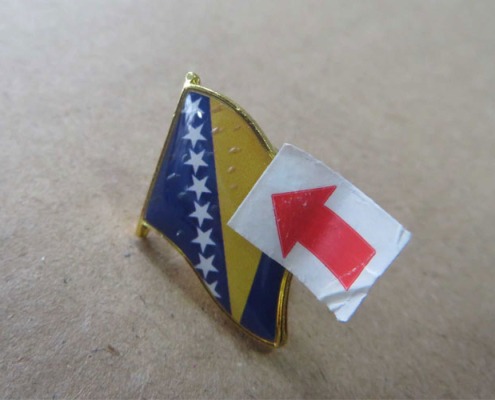
- Alignment: For multi-color designs, each color should align perfectly. Red circles on blue backgrounds shouldn’t show gaps or overlaps between colors.
- Adhesion: Use tape tests (same as electroplating). No screen-printed ink should stick to tape—ensuring longevity.
5. Component Functionality: Working Pins, Caps, and Loops
Most metal badges are designed for wearing or display, making functional components (pins, caps, hanging loops) critical to quality control. Badges with broken pins are useless—rigorous testing is essential.
a. Pin Assembly Quality Control
Pins consist of shafts, bases (attached to badges), and springs (for opening/closing). Test three aspects:
- Base Firmness: Grip pin bases with thumbs and forefingers. Pull gently up, down, left, and right. Bases shouldn’t move or wobble—loose bases mean pins will detach over time.
- Shaft Strength: Hold pin shafts mid-length and bend slightly (10 degrees) sideways. Release—they should spring back to original shapes without permanent bends or cracks. Weak shafts break when worn.
- Open and Close Mechanism: Push pin shafts open and closed 10 times. Movement should be smooth without sticking or jamming. Difficult opening or incomplete closing indicates defects.
b. Cap Fit Verification
Caps (securing pins to clothing) are equally important. Quality control tests:
- Pushing caps onto pin shafts until clicking
- Shaking badges gently (simulating walking/movement)—caps shouldn’t fall off
- Pulling caps gently—they should remove with light force (easy customer removal) but not too easily (preventing accidental detachment)
c. Hanging Loop Strength Test
Loops are welded or riveted to badges. Test strength by:
- Tying 500g weights (small rice bags) to loops
- Hanging for 1 minute—loops shouldn’t bend, break, or loosen from badges
d. Magnetic Back Quality Control
Magnetic backs are glued to badges. Verify by:
- Pressing badges onto fridges or metal filing cabinets
- Pulling gently—they should stick firmly (falling with light force indicates weak magnets or insufficient glue)
- Attempting to peel magnets with fingers—they shouldn’t come loose (poor adhesion means eventual detachment)
6. Durability Testing: Built to Last
Trendy toy badges are meant for use—worn on jackets, displayed on bags, or stored in collections. Quality control must test durability ensuring they don’t break or show wear after initial uses.
a. Abrasion Resistance Quality Control
- Take cotton fabric pieces (simulating jackets) or denim (simulating jeans)
- Rub badge fronts back and forth 20 times with light pressure (like walking friction)
- Check for scratches, paint loss, or plating wear—no visible damage passes quality standards
b. Impact Resistance Testing
- Hold badges 1 meter above wooden tables (simulating falls from bags/pockets)
- Drop face-down (most common fall orientation)
- Inspect for dents, bent edges, paint chipping, or loose pins—no defects means adequate durability
c. Extended Wear Quality Control
- Pin badges to thick fabric pieces (canvas bags)
- Leave pinned for 24 hours (simulating full-day wear)
- Remove and verify:
- Pins shouldn’t be bent or deformed
- Caps should still fit securely (no loosening from pressure)
- Fabric shouldn’t show snags or scratches from badge edges
7. Packaging and Labeling Quality Control
Packaging serves dual purposes: protecting badges during shipping and communicating key information to customers. Quality control must cover both aspects.
a. Packaging Protection Verification
- Integrity Check: Verify boxes, plastic sleeves, or blister packs are undamaged—no tears, crushed corners, or broken seals. Damaged packaging can’t protect contents during shipping.
- Fit Assessment: Badges should fit snugly in packaging without movement. Rattling causes scratching against packaging during transit. Badges in plastic sleeves shouldn’t slide out when held upside down.
- Moisture/Dust Resistance: For collectible badges (long-term storage), packaging should include moisture barriers (sealed plastic bags) or dust covers. This prevents rust (on iron/steel badges) or dust buildup (on enamel/painted finishes).
- Compression Resistance: Ensure packaging meets small parcel shipping standards to avoid deformation during sea or air freight.
b. Labeling Quality Control
- Basic Information Verification: Labels must include:
- Material specifications (e.g., “Zinc Alloy Badge,” “Copper-Plated Iron Badge”)—clear disclosure avoids complaints
- Manufacturer name or logo (for traceability)
- Batch number or production date (for recalls and quality tracking)
- IP Authorization (If Applicable): For licensed badges (anime, game, movie IPs), labels must include “Official Licensed” logos or statements and copyright holder information—avoiding legal issues.
- Clarity Standards: All text should be legible—no blurriness, fading, or typos. Labels reading “Zinc Allloy” (typo) or showing fuzzy logos appear unprofessional.
- Multi-Language Compliance: For EU markets, include key information in local languages (German, French, Spanish) meeting regional requirements.
Efficient Quality Control Workflow
For businesses handling large batches (100+ badges), full quality control (checking every badge) is time-consuming and inefficient. Follow this streamlined process for accurate results without wasting resources.
Step 1: AQL-Based Statistical Sampling
Professional metal badge quality control follows the internationally recognized AQL (Acceptable Quality Limit) standard based on ISO 2859-1. This ensures consistent, defensible sampling decisions across suppliers and markets.
Understanding AQL Standards
AQL represents the maximum percentage of defects considered acceptable for different defect categories:
- Critical Defects (AQL 0): Safety hazards, material misrepresentation, major functionality failures – Zero tolerance
- Major Defects (AQL 1.5): Significantly impacts usability or appearance – peeling plating, loose pins, wrong dimensions – Accept if ≤1.5% defective
- Minor Defects (AQL 2.5): Small cosmetic flaws not affecting function – tiny scratches, slight color variation – Accept if ≤2.5% defective
Please note the AQL choosed by importers and it should be agreed between importers with the supplier before production.
Sample Size Determination (Inspection Level II – General Standard)
For metal badge quality control, use General Inspection Level II which balances cost-efficiency with accuracy.
Learn more about What are the General Inspection Levels? How to choose AQL for Inspection?
Step 2: Logical Quality Control Sequence
Check badges from “least invasive” to “most invasive” avoiding damage before all checks complete. Optimal order:
- Packaging/Labeling: Check first—damaged packaging allows setting aside for further assessment without handling
- Appearance: Inspect while badges remain pristine (no handling marks)
- Size/Shape: Use rulers/calipers—no scratching contact
- Material: Use magnets and scales—minimal contact
- Surface Craftsmanship: Check finishes and use tape tests (minor contact)
- Component Functionality: Test pins, caps, loops (requires handling but no damage)
- Durability: Do last—tests like dropping or rubbing could leave marks affecting earlier checks
Step 3: Documentation and AQL-Based Decision Making
Recording inspection results systematically is critical for ongoing quality improvement and supplier management. Proper documentation also provides legal protection in disputes.
- Batch number, sample size, inspection date, inspector name
- Defect lists (e.g., “loose pin,” “enamel bubble,” “size mismatch”)
- Number of samples with each defect (e.g., “3/20 samples have loose pins”)
AQL-Based Decision Matrix
Apply your inspection results to the AQL standard to make objective decisions:
Decision Logic:
- PASS (Accept Batch)
-
- Critical defects ≤ Accept number for AQL 0
- Major defects ≤ Accept number for AQL 1.5
- Minor defects ≤ Accept number for AQL 2.5
- Action: Approve shipment, release payment, schedule next order
- CONDITIONAL PASS (Accept with Corrective Action Depends on Client’s Quality Requirements)
-
- One defect category slightly exceeds accept number but below reject number
- Example: For 80 samples, found 4 major defects (threshold is 3 accept/4 reject)
- Action: Accept current batch but require supplier to implement corrective measures before next production
- REJECT (Batch Fails)
-
- Any critical defect found (zero tolerance)
- Major defects ≥ Reject number for AQL 1.5
- Minor defects ≥ Reject number for AQL 2.5
- Action: Refuse shipment, demand 100% sorting or replacement, hold payment
Quality Standards & Compliance Requirements
Understanding relevant quality standards helps ensure metal badge quality control meets international requirements, particularly for cross-border sales.
Key International Standards
ASTM F963 (United States):
- Toy safety standard covering sharp edges, small parts, and mechanical hazards
- Relevant for badges sold in US markets (Amazon US, domestic retailers)
- Quality control must verify compliance with sharp edge and small parts requirements
- Link: ASTM International – F963 Standard
EN 71 (European Union):
- European toy safety standard with similar requirements to ASTM F963
- Mandatory for badges sold in EU markets
- Quality control procedures should align with EN 71 testing protocols
- Link: EU Toy Safety Directive
Platform-Specific Quality Requirements:
- Amazon requires specific quality documentation and may conduct random inspections
- Etsy emphasizes accurate product descriptions and material disclosure
- Quality control records should be maintained for platform audits
- Link: Amazon Seller Central – Product Compliance
Working with Third-Party Quality Control Services
Many brands partner with experienced third-party quality control providers to ensure consistent standards across international supply chains. Professional services offer:
- Objective assessments using standardized checklists
- On-site factory inspections in major production hubs
- Multi-language reporting for different markets
- Expertise in regional compliance requirements
When selecting quality control partners, consider:
- Industry experience with similar products
- Geographic coverage matching your supply chain
- Turnaround time and reporting formats
- References from other brands in your market segment
Metal Badge Quality Control Checklist
Use this comprehensive checklist for your quality control workflow:
Appearance Quality Control
- [ ] Design clarity (sharp edges, readable text)
- [ ] Color consistency (no mismatch, bleeding, uneven shading)
- [ ] Surface smoothness (no bumps, dents, warps)
- [ ] No stains or scratches
- [ ] Back and edges safe and smooth
Size & Shape Quality Control
- [ ] Dimensions within tolerance (±0.2 cm)
- [ ] Thickness consistent across badge
- [ ] Shape matches design template
- [ ] Batch consistency verified
Material Quality Control
- [ ] Magnet test confirms material type
- [ ] Weight matches expected material density
- [ ] Visual/tactile characteristics align with claims
Surface Finish Quality Control
- [ ] Plating/paint coverage complete
- [ ] No adhesion issues (tape test passed)
- [ ] Enamel fill quality acceptable
- [ ] Print clarity and alignment correct
Functionality Quality Control
- [ ] Pin base firm and secure
- [ ] Pin shaft strong and springs back
- [ ] Pin opens/closes smoothly
- [ ] Cap fits properly
- [ ] Loops/magnets hold required weight
Durability Quality Control
- [ ] Passes abrasion test (20 rubs)
- [ ] Survives 1m drop test
- [ ] Maintains function after 24-hour wear
Packaging Quality Control
- [ ] Packaging intact and properly sized
- [ ] Labels accurate and legible
- [ ] Required information present
- [ ] Multi-language support (if needed)
Frequently Asked Questions
Q: How often should metal badge quality control be performed
Quality control should be conducted at multiple stages: during production Inspection, pre-shipment inspection, and random post-production audits. For high-volume orders, implement quality control at 25%, 50%, 75%, and 100% production completion.
Q: What is the acceptable defect rate for metal badges?
Industry standard accepts <5% minor defects (cosmetic issues not affecting functionality) and 0% major defects (material misrepresentation, safety hazards, non-functional components).
Q: Can I perform metal badge quality control in-house?
Yes, for small batches (<500 units). For larger volumes or cross-border production, third-party quality control services provide objective assessments and can inspect at factory locations before shipment.
Q: What tools are essential for basic quality control?
Essential tools include: digital calipers (±0.01mm precision), digital scale (0.1g precision), neodymium magnet, microfiber cloths, clear tape, bright LED light, and design reference samples.
Q: How do I handle failed quality control batches?
Document all defects with photos, provide detailed feedback to manufacturers, negotiate rework or replacement, and conduct re-inspection after corrections. Maintain quality control records for continuous improvement.
Conclusion
In the fast-paced trendy toy market, balancing speed and quality remains a persistent challenge. Comprehensive metal badge quality control—focused on appearance, materials, functionality, and durability—protects brand reputation, reduces costly returns, and builds customer loyalty across international markets.
By implementing the seven critical quality control checkpoints outlined in this guide, brands can ensure every badge meets customer expectations while complying with global safety standards. Whether handling small batches in-house or working with production partners across multiple countries, these practical methods provide a foundation for consistent quality delivery.
The investment in thorough quality control pays dividends: satisfied customers become brand advocates, return rates decrease, and premium pricing becomes justifiable. In a market where details matter and social media amplifies every customer experience, quality control isn’t just a checkbox—it’s your competitive advantage.
Additional Resources
- ASTM F963 Toy Safety Standard
- EN 71 European Toy Safety
- Amazon Product Compliance Guidelines
- ISO 2859-1: Sampling Procedures for Inspection
Need expert assistance with supplier quality audits or pre-shipment inspections? Professional third-party quality control services can help ensure consistent standards across your international supply chain. Contact qualified inspection providers to discuss your specific requirements.
Author: AQI Service is a professional quality control service company in China that specialized in providing a complete range of quality inspection and testing certification services in China & Asia for global importers, buyers, retailers, and sellers.