


Mobile Phone Accessories Inspection: A Complete Quality Control Guide for Manufacturers and Brands

Why Mobile Phone Accessories Inspection Is Non-Negotiable
Smartphones are essential to modern life—and their accessories are equally critical. From fast chargers powering daily work to wireless earphones used for calls and entertainment, these products directly impact user experience and brand reputation.
However, quality issues remain widespread. Inferior chargers cause fires. Defective batteries bulge or leak. Poorly designed earphones disconnect during important calls. These failures lead to costly recalls, legal liability, and permanent damage to consumer trust.
A. The Business Case for Quality Control
Protecting Brand Loyalty Through Safety
When an accessory fails—especially due to safety hazards—consumer trust disappears instantly. Professional quality control acts as your first line of defense, catching defects before products reach customers.
Avoiding Compliance Penalties and Recalls
Global markets enforce strict standards for mobile accessories:
- EU: CE certification requirements
- US: FCC compliance rules
- China: GB national standards
Non-compliant products face customs seizure, fines, or expensive recalls. A 2022 case involving a domestic mobile brand illustrates this risk: after launching faulty wireless chargers without proper pre-production inspection, the company faced a $2 million recall and 15% drop in brand satisfaction. Proactive inspection costs far less than fixing compliance failures after launch.
B. Differentiating From Low-Quality Competitors
The market floods with unbranded, untested accessories that undercut prices by eliminating quality control—using recycled materials, substandard components, and skipping safety testing. Professional inspection helps legitimate businesses differentiate by demonstrating certified quality to safety-conscious consumers.
Five Essential Dimensions of Accessories inspection Quality Control
Effective inspection covers every aspect of performance, safety, and usability. Here are the core testing areas:
-
Appearance and Build Quality
First impressions matter. Surface defects often signal deeper quality issues that frustrate users and damage brand perception.
Key Inspection Points:
- Surface quality: Check for scratches, bubbles, uneven coloring, or manufacturing impurities
- Dimensional accuracy: Ensure perfect fit (phone cases must align with device ports; screen protectors require ≤0.1mm size deviation)
- Finishing details: Verify smooth edges without burrs, crisp logo printing, and properly functioning components
Premium accessories demand stricter standards—luxury wireless earphones require consistent texture and flawless alignment of charging case hinges.
-
Performance Testing
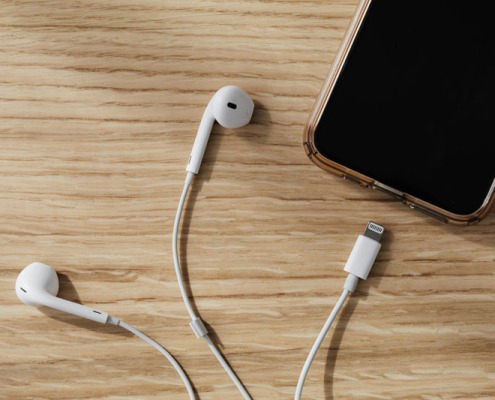
Consumers buy accessories to solve specific problems. Performance inspection verifies products deliver on their promises.
a. Charging Accessories: Efficiency and Stability
Chargers, cables, and power banks are most commonly used—and most prone to performance failures.
Critical tests include:
- Charging efficiency: Fast chargers must maintain rated power with minimal voltage fluctuation
- Conversion rate: Quality chargers achieve ≥85% efficiency (inferior products often fall below 60%, wasting energy)
- Data transmission: USB-C cables should support high-speed data transfer and withstand physical stress testing
- Capacity accuracy: Power banks must deliver within 10% of labeled capacity
b. Audio Accessories: Sound Quality and Connectivity
Wireless earphones and speakers succeed or fail based on audio performance and connection reliability.
Testing conducted in professional acoustic labs:
- Acoustic performance: Frequency response across human hearing range (20Hz–20kHz), signal-to-noise ratio (≥90dB), distortion rate (<1%)
- Connection stability: Maintain stable connection within rated range with minimal disconnections
- Battery life: Actual playback time must closely match manufacturer claims
c. Protective Accessories: Real-World Durability
Phone cases and screen protectors must withstand daily wear and tear.
Key durability tests:
- Drop resistance: Cases should protect devices from typical fall heights
- Scratch resistance: Screen protectors must resist common objects like keys
- Water resistance: Waterproof accessories must meet IP rating standards
-
Safety Compliance
Safety is foundational to any successful accessory business. Inspection prevents harm to users and property.
a. Electrical Safety
For charging and audio accessories, electrical testing prevents fires, shocks, and device damage:
- Insulation resistance testing: Ensures electrical components are properly insulated (industry standard: ≥10MΩ) to prevent shock hazards
- Voltage withstand testing: Products must handle voltage stress without breakdown
- Anti-shock protection: Verify child-safe plug designs and insulated casings per regulatory standards
b. Chemical Safety
Accessories in close contact with users must be free from harmful substances:
- Heavy metal testing: Check for lead, cadmium, and other toxic metals in materials
- Toxic chemical screening: Test for formaldehyde, harmful plastics compounds
- Odor evaluation: Ensure no pungent smells causing user discomfort
Children’s accessories require even stricter limits—zero small swallowable parts and no sharp edges.
c. Mechanical Safety
Poor structural design leads to physical injury:
- Stable stands that don’t tip under device weight
- Secure buttons and interfaces resistant to detachment
- Smooth edges on all surfaces
-
Compatibility Verification
Accessories must work reliably across multiple devices, operating systems, and brands.
Testing scope includes:
- Chargers: Support for fast-charging protocols (QC, PD) across Samsung, Apple, Xiaomi, and other major brands
- Wireless earphones: Stable connections with iOS and Android devices
- Data cables: Reliable file sync and charging across laptops, tablets, and phones
Broader compatibility means larger market reach. Many manufacturers test against 50+ device models for comprehensive verification.
-
Environmental Durability
Accessories face extreme conditions—from hot car dashboards to rainy commutes. Environmental testing ensures reliable performance:
- Temperature extremes: 24-hour exposure to high heat (60℃/140℉) or cold (-20℃/-4℉) with no performance degradation
- Humidity resistance: Testing at 40℃ and 90% relative humidity prevents rust or short circuits
- Vibration testing: Simulated transportation and daily use ensures structural integrity
Real-World Success: How Inspection Transforms Business Outcomes
Case Study 1: Charger Manufacturer Prevents Customs Crisis
Background: A Shenzhen-based charger manufacturer specializing in European and American markets previously suffered heavy losses when 30% of goods were seized by German customs due to uninspected shipments with loose ports and unclear markings. Detention fees reached 200,000 RMB, and the company lost a long-term distributor.
Challenge: Secure smooth customs clearance for 50,000 units of 20W fast chargers ordered by European client in early 2024.
Solution: Commissioned comprehensive on-site finished product inspection before shipment, focusing on:
- Compliance markings (clear CE logo, parameters, manufacturer information)
- Physical structure (stable plug contacts, secure cord connections)
- Basic functionality (uninterrupted charging across device types, no overheating)
Results:
- Inspection identified 350 defective units (blurred logos, skewed plugs) marked unqualified
- 49,650 qualified units shipped with authoritative inspection report
- Customs clearance time: 7 days → 2 days
- Customer complaints: 0
- Follow-up orders increased 40%
Key Takeaway: Investing in pre-shipment inspection with proper documentation dramatically reduces customs risk and builds client confidence.
Case Study 2: Cable OEM Secures Partnership with Top Brand
Background: A Dongguan data cable OEM supplying domestic second-tier phone brands sought partnership with a top-tier brand in 2024. Initial USB-C cable samples failed review due to connector burrs and occasional file transfer interruptions.
Challenge: Meet strict quality requirement—defect rate <0.1% verified by third-party on-site inspection reports for each batch.
Solution: Implemented systematic quality control with independent inspection as final delivery checkpoint. Testing covered:
- Appearance (burr-free connectors, clear logos, no cable indentations)
- Durability (50+ insertions without connector wear, bend testing)
- Stability (uninterrupted large file transfer, reliable charging connection)
Results:
- First three batches achieved 0.08%, 0.05%, and 0.06% defect rates
- Top brand accepted goods and signed 2-year long-term supply agreement
- Order volume tripled
Key Takeaway: Consistent third-party verification builds credibility needed for partnerships with premium brands.
The Future: Technology-Driven Quality Control
Inspection technology is evolving rapidly, making quality control more efficient, accurate, and proactive.
Automated Visual Inspection
Machine vision systems with AI now replace manual appearance checks for high-volume production. These systems detect defects as small as 0.001mm—approximately 10 times faster than human inspectors. One tempered glass manufacturer reduced missed defects from 5% to 0.1% after implementing automated visual inspection.
Automated performance testers streamline workflows by testing multiple parameters simultaneously—voltage, current, temperature rise—uploading results to cloud databases in real-time.
Predictive Quality Analytics
AI and big data transform quality control from reactive testing to preventive analysis. AI models trained on thousands of test results can predict potential issues before products ship. For example, AI systems analyzing battery charge-discharge curves can identify cells with significantly reduced lifespan, preventing future returns.
Big data analytics also identify production bottlenecks and optimization opportunities, helping manufacturers improve processes continuously.
Sustainability-Focused Testing
Global sustainability regulations like the EU’s New Battery Regulation drive demand for eco-friendly accessories. Modern inspection now includes:
- Material degradation rate testing for biodegradable products
- Carbon footprint verification for manufacturing processes
- Recyclable material authentication
Getting Started with Professional Inspection
Quality control isn’t just about passing tests—it’s about building consumer trust, avoiding costly mistakes, and competing globally. As markets grow and standards tighten, cutting corners on quality becomes increasingly risky.
A. When to Implement Inspection:
- Pre-production: Verify raw materials and component quality
- During production: Monitor manufacturing consistency with in-process checks
- Pre-shipment: Conduct final sampling to ensure batch quality before delivery
- Post-production: Random market surveillance to maintain quality standards
B. Choosing an Inspection Partner:
Look for the third party providers offering:
- ISO-accredited testing laboratories
- Expertise in relevant regional standards (CE, FCC, GB)
- Comprehensive testing capabilities across all accessory types
- Transparent reporting with actionable recommendations
- Global presence for international supply chains
Frequently Asked Questions
What’s the difference between sampling inspection and 100% inspection?
Sampling inspection tests a statistically representative sample from each production batch—typically more cost-effective for large volumes. 100% inspection examines every single unit—necessary for high-risk products or critical safety components, but significantly more expensive.
Most manufacturers use sampling for routine batches and 100% inspection when defect risks are elevated.
How long does typical Mobile phone accessories inspection take?
Timeline varies by product complexity and order size:
- Simple accessories (cables, cases): 1-2 days for sampling inspection
- Complex electronics (chargers, earphones): 3-5 days including performance and safety testing
- Full compliance testing for new product certification: 2-4 weeks
Pre-scheduling inspection concurrent with production minimizes delays.
What happens if products fail inspection?
When defects are identified:
- Detailed failure report documents specific issues
- Manufacturer addresses root causes
- Re-inspection conducted after corrections
- Only compliant products receive pass certification
Failed units are typically segregated, reworked if possible, or disposed of according to quality agreements.
Which standards apply to my target markets?
Common regional requirements:
- European Union: CE marking, RoHS compliance, REACH regulations
- United States: FCC certification, UL safety standards
- China: GB national standards, CCC certification
- Global: IEC international standards widely recognized
Consult with inspection providers familiar with your specific target markets to ensure complete compliance.
How much does professional inspection cost?
Inspection costs depend on:
- Product type and complexity
- Testing scope (appearance only vs. comprehensive safety/performance)
- Sample size and batch volume
- Urgency and turnaround requirements
As a reference point, basic sampling inspection for common accessories typically ranges from a few hundred to a few thousand dollars per batch—significantly less than the potential cost of recalls, compliance penalties, or brand damage from quality failures.
Most inspection providers offer customized quotes based on specific requirements.
Protect Your Brand with Professional Quality Control
Mobile phone accessories inspection is a strategic investment protecting your bottom line, customers, and brand reputation. As the industry evolves and standards become more stringent, professional quality control separates successful businesses from those facing costly failures.
AQI Service provides comprehensive quality control solutions for mobile accessory manufacturers, brands, and e-commerce sellers worldwide. Our ISO-accredited laboratories, experienced inspection teams, and expertise across CE, FCC, GB, and international standards ensure your products meet quality and compliance requirements.
Whether you manufacture chargers, develop wireless audio products, or supply protective accessories, we tailor inspection programs to your specific needs—from raw material verification through final pre-shipment sampling.
Contact us today to discuss how professional quality control can strengthen your market position and build lasting consumer trust.


