Motorcycle Helmet Inspection: Standards, Tests, and What Importers Need to Know

The WHO puts it plainly: head injuries cause 60% of motorcycle fatalities and 70% of long-term disabilities from road accidents. A helmet that works is one that has been properly tested and verified – not just one that looks the part or carries a certification sticker.

For manufacturers, importers, and distributors, Motorcycle helmet inspection isn’t a formality. It’s the difference between a product that protects riders and one that creates liability. A $12 million U.S. lawsuit in 2023 – stemming from a helmet brand’s failure to properly test impact resistance – made that cost concrete. So did the wave of customs seizures that followed China’s 2022 rollout of its updated GB 811 standard, which left non-compliant inventory stranded at the border.
This guide covers what businesses involved in the helmet supply chain actually need to know: the standards that govern different markets, the tests that matter most, how a professional inspection runs from start to finish, and the real-world failures that slip through when corners get cut.
Why Motorcycle Helmet Inspection Matters for Your Business
For any company involved in the motorcycle helmet supply chain, ignoring motorcycle helmet inspection is a risky decision. It impacts not only rider safety but also your bottom line, legal standing, and brand trust. Below are the two most critical reasons to prioritize rigorous motorcycle helmet inspection.
Rider Safety and Business Liability Are the Same Problem
The core purpose of helmet inspection is straightforward: verify that a helmet can actually absorb impact energy and keep a rider’s head intact in a crash. But for businesses, a helmet that fails in the field isn’t just a safety issue – it’s a legal and commercial one.
Defective helmets that cause injury create direct product liability exposure. In markets like the U.S. and EU, that means lawsuits, regulatory fines, and potentially criminal exposure for responsible parties in the supply chain. Beyond the legal risk, reputational damage moves fast. A single viral report of an unsafe helmet can reach millions of consumers within hours and take years to undo.
Regulatory consequences are equally real. Most major markets – North America, Europe, China – require helmet compliance verification before products can be sold. Non-compliant shipments face seizure, return-to-origin costs, and outright market bans.
WHO data gives that risk a concrete number: properly inspected and certified helmets reduce fatal head injuries by 42% and severe brain injuries by 69%.
WHO data highlights urgency: Properly inspected/certified helmets reduce fatal head injuries by 42% and severe brain injuries by 69%.
Consistent Inspection Keeps the Market Honest
The global helmet market has a counterfeiting and quality-dumping problem. Products with fake certifications, substandard EPS liners, and low-grade retention hardware are not uncommon – particularly in price-sensitive segments. When these products aren’t filtered out, they undercut legitimate manufacturers and erode consumer trust across the entire category.
Third-party motorcycle helmet inspection creates a consistent baseline. It identifies and removes non-compliant products before they reach consumers. It gives retailers and distributors objective documentation to stand behind. And for brands selling across multiple markets, it ensures the product reaching each country actually meets that country’s specific requirements – not just the requirements of wherever it was manufactured.
Key Motorcycle Helmet Inspection Standards (Global & Regional)
Motorcycle helmet inspection is effective only when adhering to recognized standards, which define minimum requirements for performance, design, and labeling. Below are the most influential global and regional standards guiding worldwide inspection processes.
International Standards: DOT, ECE, and Snell
Widely accepted across borders, international standards are critical for businesses selling helmets globally.
DOT FMVSS 218 (United States)
Every helmet sold in the United States must comply with DOT FMVSS 218. The standard covers three core performance areas:
| Core Requirement | Specification | Why It Matters |
| Impact Absorption | Drop test: Helmet mounted on a weighted headform (simulating a 75kg rider) is dropped from 1.2m. Max impact force must be <300 G (1 G = force of gravity). | Forces above 300 G cause traumatic brain injury (TBI) in 90% of cases. |
| Penetration Resistance | 3lb (1.36kg) pointed striker dropped 10ft (3m) onto the helmet. No penetration to the headform. | Prevents sharp objects (rocks, glass) from piercing the helmet in crashes. |
| Retention System Strength | Chin strap/buckle must withstand 300lb (136kg) pull for 60 seconds. No breaking or stretching over 25mm. | Ensures the helmet stays on during a crash (80% of unbuckled helmets fly off in impacts). |
Compliance Tip: Look for the DOT sticker on the helmet’s back-genuine stickers have a unique manufacturer ID and production date (counterfeits often omit these).
ECE R22.06 (Europe & The Global Standard)
ECE R22.06 is the most widely adopted helmet standard worldwide, used across the EU and accepted in 50+ countries including Australia and parts of Asia. In several respects it’s stricter than DOT:
- Impact testing covers multiple points – front, side, and rear – rather than one or two locations
- Visors must pass scratch resistance testing and transmit at least 85% of visible light (clear variants)
- Helmets are tested across a temperature range of -20°C to +50°C for environmental durability
The ECE mark is a market access requirement in regulated regions, and verification through independent inspection is how it gets confirmed – manufacturer self-declaration isn’t accepted.
Snell Memorial Foundation Standards (The Premium Benchmark)
The non-profit Snell Memorial Foundation sets voluntary but rigorous standards (Snell M2020 for motorcycles). It’s favored by professional riders and safety-focused consumers:
- Lower impact force limit: Max 275 G (vs. DOT’s 300 G) for better TBI protection.
- Sharper penetration test: Uses a 4lb (1.8kg) striker with a narrower tip than DOT/ECE.
- Rotational impact testing: Adds tests for angular acceleration (a leading cause of concussions).
Snell certification isn’t required in any market, but it carries real weight with safety-conscious consumers and professional riders. Premium brands like Arai and Shoei use it to differentiate their products at the high end of the market.
GB 811-2022 –China’s Updated Standard
China is the world’s largest motorcycle market, and GB 811-2022 is its mandatory helmet standard. The 2022 revision brought it substantially closer to international practice:
- Two product categories: Category A (full-face and open-face helmets) and Category B (half-helmets), with different performance thresholds
- Multiple impact points plus oblique impact testing, similar to ECE
- Mandatory labeling requirements: GB 811-2022 mark, manufacturer name, production date, and size must all be present
Non-compliant helmets cannot legally be sold in China. Products that don’t carry proper GB 811-2022 documentation are subject to fines and recalls.
Standard Comparison Chart (2024)
| Feature | DOT FMVSS 218 | ECE R22.05 | Snell M2020 | GB 811-2022 (Category A) |
| Max Impact Force | <300 G | <300 G | <275 G | <275 G |
| Impact Points Tested | 1–2 | 5 | 6 | 5 |
| Environmental Tests | No | -20°C to +50°C | -30°C to +60°C | -20°C to +50°C |
| Visor Light Transmission | No requirement | ≥85% (clear) | ≥85% (clear) | ≥85% (clear) |
| Mandatory? | U.S.: Yes | EU/50+ countries: Yes | No | China: Yes |
What a Complete Motorcycle Helmet Inspection Covers
A proper helmet inspection goes well beyond dropping the shell and measuring the force. Here’s what each component of a full inspection actually involves.
A. Structure and Dimension Inspection
Before any performance testing starts, inspectors verify the physical build and fit:
| Item to Inspect | Requirement | How to Test | Failure Sign |
| Outer Shell | Smooth (no sharp edges); made of ABS, polycarbonate, or fiberglass. | Run hands over the shell; check for cracks, dents, or uneven surfaces. | Sharp edges (risk of cutting skin); thin spots (≤2mm thickness). |
| Inner EPS Liner | Minimum 20mm thick (varies by standard); fully adhered to the shell. | Measure thickness with a caliper; check for gaps between liner and shell. | Liner <15mm thick; gaps >1mm (reduces impact absorption). |
| Size Accuracy | Matches labeled size (e.g., M = 57–59cm); fits test headforms without gaps. | Use ISO-standard headforms to test fit. | Helmet slides >1cm on the headform; presses on ears/temples. |
Consumer Tip: For end-users, the “two-finger test” works: After buckling the chin strap, only two fingers should fit between the strap and your chin.
B. Impact Performance Inspection
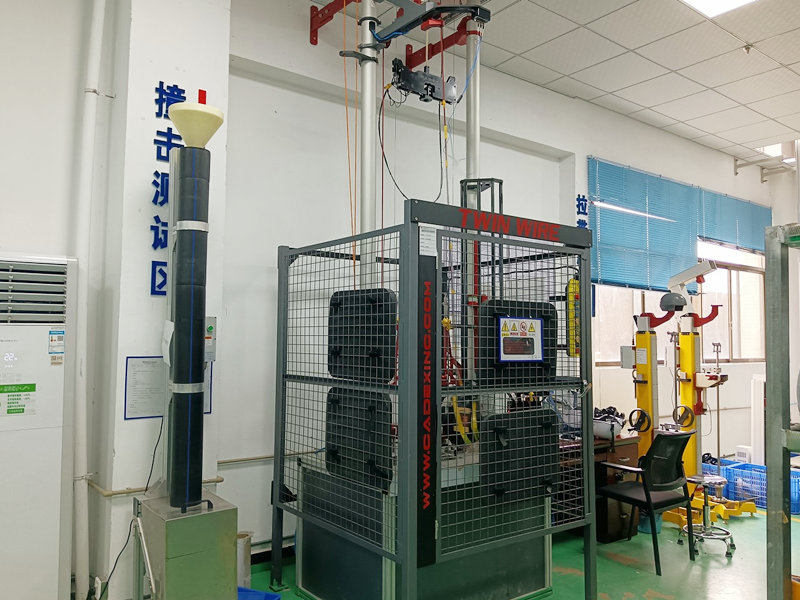
Helmet Impact Testing Equipment
This is the most technically demanding part of the inspection and the one that requires properly calibrated laboratory equipment.
B.1. Drop Hammer Impact Test
Simulates a helmet hitting the ground in a crash:
- Helmet mounted on a human head-mimicking weighted headform, dropped from specified heights (1.2m for DOT, 1.5m for ECE).
- Headform sensors measure max impact force; failure occurs if exceeding limits (300G for DOT, 275G for Snell).
Failure: Force exceeds 300 G (DOT/GB Category B) or 275 G (ECE/Snell/GB Category A).
B.2. Energy Absorption Test
Evaluates how well the EPS liner cushions impacts:
- Compress the liner with a 50kg load at 5mm/min speed.
- Measure energy absorbed via force-displacement data.
Requirement: Minimum 50% energy absorption (all standards).Failure: Absorption <45% (liner is too hard/soft to protect the head).
C. Penetration Resistance Inspection
Ensures sharp objects (rocks, glass) don’t penetrate:
- A 3–5lb pointed striker dropped 10–12 feet onto the helmet.
- Failure if striker penetrates shell/liner to touch the headform.
- ECE R22.05/Snell test multiple points (front/side/back); DOT focuses on front/top.
D. Retention System Inspection
A helmet that flies off in a crash is useless. This test checks the chin strap, buckle, and D-rings:
D.1. Strength Test
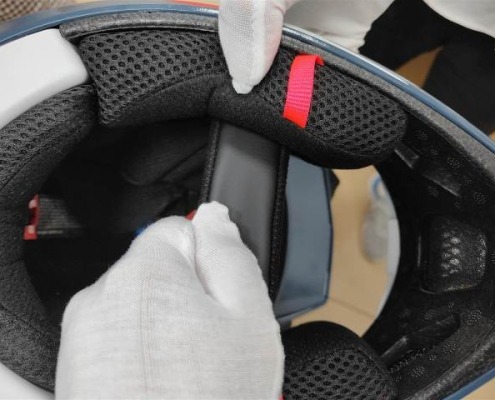
- Attach the helmet to a tensile machine via the chin strap.
- Apply force:
- DOT: 300lb (136kg) for 60 seconds
- ECE/GB: 200 Newtons (45lb) for 30 seconds
- Measure stretch and check for breaks.
Failure: Strap breaks, stretches over 25mm, or buckle comes undone.
D.2. Stability Test
- Mount the helmet on a headform and buckle the strap.
- Tilt the headform forward 30° and backward 30°.
Failure: Helmet slides off the headform or covers the rider’s eyes.
E. Visor (Face Shield) Inspection
Critical for wind/debris/UV protection; key tests:
E.1. Impact Strength Test
- A 600g steel ball dropped 1.2m onto the visor.
- Must not shatter (small cracks allowed, no sharp fragments).
E.2. Light Transmission Test
- Clear visors: ≥85% visible light transmission (ECE/GB 811-2022).
- Tinted visors: ≥95% UV blockage.
E.3. Scratch Resistance Test
- Rotating abrasive pad rubbed on the visor.
- Light transmission must drop by ≤10% (for daily durability).
F. Additional Inspection Items
- Weight: Full-face helmets must stay under 1.8kg. Heavier helmets increase neck fatigue and reduce control in extended riding.
- Field of view: Minimum 105° horizontal (ECE/DOT). Restricted peripheral vision is a traffic hazard.
- Labeling: All required marks (DOT, ECE, or GB 811-2022), manufacturer name, production date, and size must be present, legible, and permanent. Missing or non-permanent labels are a compliance failure regardless of how the helmet performs physically.
The Motorcycle Helmet Inspection Process –Step by Step
Understanding the inspection process helps businesses streamline quality control and ensure consistency. Below is a typical step-by-step process used by third-party providers:
A. Sample Collection
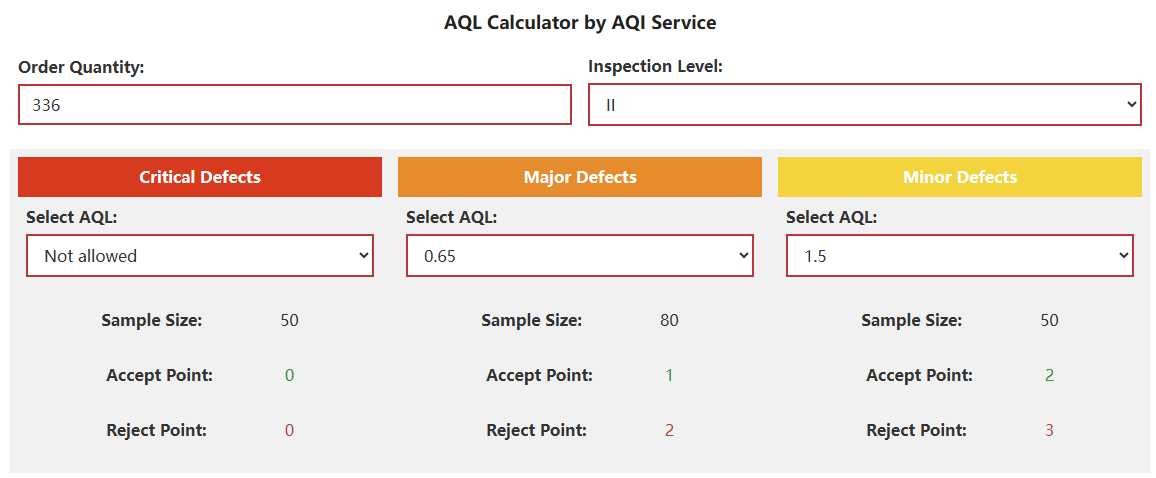
Samples are drawn from the production batch using a recognized sampling plan – typically ANSI/ASQ Z1.4 (ISO 2859-1). For a batch of 336 units, for example, standard sampling would call for 50 units for critical and minor checks and 80 units for major defect assessment, selected from across available cartons to avoid position bias.
Three types of sampling serve different purposes:
- Pre-production samples: catch design and tooling issues before full-run commitment
- In-line samples: monitor production consistency mid-run
- Pre-shipment samples: from completed lots verify the final product before loading
B. Visual Inspection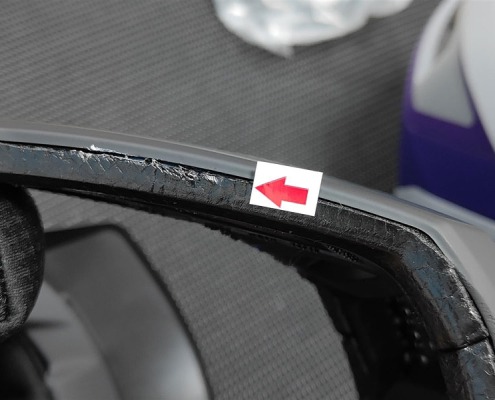
Before any equipment is used, inspectors conduct a systematic visual check:
- Outer shell: Cracks, dents, uneven surfaces; paint/graphics must not obscure labels.
- Inner liner: Proper adhesion to shell (no gaps) and freedom from defects.
- Retention system: Frayed straps, broken buckles, or loose stitching.
- Visor: Scratches, bubbles, or discoloration affecting vision.
Visual inspection alone catches 10–15% of non-conforming units in typical batches – mostly workmanship defects and labeling failures.
C. Laboratory Performance Testing
The most intensive phase, conducted in ISO-accredited labs with specialized equipment:
- Impact testing: Drop towers for drop hammer and energy absorption tests (Section 3.2).
- Penetration testing: Drop testers with pointed strikers (Section 3.3).
- Retention testing: Tensile strength machines for strap durability (Section 3.4).
- Visor testing: Light meters (transmission) and impact testers (strength) (Section 3.5).
Data Requirement: Record all measurements (e.g., “Impact force: 285 G”) and take photos/videos for documentation.
D. Data Analysis and Root Cause Review
Test results are compared against the applicable standard. Any failure triggers a root cause investigation – not just a rejection. Common failure patterns include:
- High impact force → EPS liner below minimum thickness (e.g., 15mm instead of 20mm)
- Visor failure → polycarbonate substituted with lower-grade plastic
- Retention failure → strap material degraded or attachment point stitching inadequate
Understanding the root cause is what makes an inspection report actionable for the manufacturer.
E. Inspection Report
A detailed report is delivered, including:
- Sample details (batch number, size, production date).
- Test results for each item (with testing photos/videos).
- Compliance status (pass/fail) against the target standard.
- Corrective action recommendations (if applicable).
Distributors use this report to demonstrate compliance to retailers and customs authorities. Manufacturers use it to direct production corrections before the next run.
Case Study: Pre-Shipment Inspection of Motorcycle Helmets by AQI Service
In motorcycle helmet trade, Pre-Shipment Inspection (PSI) is critical for risk mitigation. AQI Service, a third-party agency, conducted a PSI on Moto 3.5 motorcycle helmet kits produced by a Dongguan-based sports goods supplier, following the ANSI/ASQ Z1.4 (ISO2859-1) standard.
Basic Inspection Details
- Product: Moto motorcycle helmet kits
- Ordered Quantity: 336 units;
- Inspection Date: August 29, 2025
- Sampling Plan: Single, normal (Level G-II);
- AQL: Cri. 0, Maj. 0.65, Min. 1.5
- Sample Size: 50 units for critical & Minor, 80unites for Major based on AQL (selected from 36 cartons out of 112 available)
What the Inspection Found
a. Pending/Non-Conforming Issues
- Quantity shortfall: Only 324 units were present on-site – 12 units short of the 336 ordered. The supplier claimed the missing units had shipped in January but could not provide documentation. Status: Pending.
- Workmanship defects beyond AQL: One helmet model was missing its cleaning cloth and user manual – both required for EU market compliance. Four minor defects were recorded (staining on two shells, glue marks on two visors), exceeding the allowable minor defect limit of two.
- Mislabeled outer carton: The outer carton for Item 1025210481 was labeled as Item 1025210461, creating a mismatch with the inner box label. Status: Pending.
b. Conforming Items
- Reliability Tests Passed: All key tests cleared, including barcode scanning, logo rub test, 3M tape adhesion, tension test, and 360° Turbine Check.
- Packaging: No over-packaging or gaps; desiccants were included (prevents moisture damage).
- Consistency: All helmets matched approved samples (size: 51–62cm, weight: 1250–1500g ±50g, color: no variation).
c. Conclusion & Recommendations
- Overall Result: FAIL (final approval/rejection by the client).
d. Required supplier actions:
- Repair defective units and replace missing accessories
- Correct mislabeled outer cartons
- Provide shipping documentation for the 12 missing units
- Schedule re-inspection within 10 days
This case is a useful illustration of what pre-shipment inspection actually catches: not catastrophic design failures, but the kind of documentation gaps, workmanship issues, and quantity discrepancies that routinely cause problems at customs or with retail buyers.
Common Challenges in Motorcycle Helmet Inspection and Compliance
Despite advances in inspection, businesses face challenges threatening safety and compliance:
A. Counterfeit and Gray Market Products
Interpol estimates that counterfeit helmets represent 15–20% of the global market. These products typically share a few telltale characteristics:
- EPS liners made from recycled foam that compresses and stays compressed – no energy absorption
- Chin straps using low-grade polyester that fails under 50 pounds of force
- Printed certification labels with no hologram, no QR code, and no unique identifier
Gray market helmets present a different but related problem: products certified for one region and relabeled for another. A helmet certified only under DOT being sold in an ECE-required market, for example, isn’t just non-compliant – it may fail the additional tests ECE requires.
How to identify fakes:
- Check the label closely: genuine certification marks include holograms or scannable QR codes that verify against the issuing body’s database
- Weigh the helmet: full-face counterfeits often come in under 1kg; genuine helmets typically weigh 1.2–1.8kg
- Press the EPS liner: genuine energy-absorbing foam springs back; substandard foam stays indented
B. In-House Testing Limitations
Many manufacturers rely on in-house inspection, leading to biased or inaccurate results:
- Production pressure leads inspectors to overlook marginal defects to hit shipment targets
- Older testing equipment – 10+ year-old drop towers are common in smaller facilities – produces sensor data that drifts from calibration
- In-house staff often lack the expertise to interpret complex requirements like ECE R22.06’s oblique impact rules
A practical hybrid model works well for most operations: use internal teams for visual checks and incoming material inspection, and use accredited third-party laboratories for impact, penetration, and retention testing. The critical performance tests require equipment and calibration that in-house setups rarely maintain to the required standard.
C. Keeping Up With Evolving Standards
Standards don’t stand still, and the current update cycle is meaningful for helmet importers:
- ECE R22.06 adds stricter rotational impact testing, targeting the angular acceleration forces most associated with concussive injury. Helmets certified only under the previous ECE R22.05 will need re-testing.
- GB 811-2025 (expected) is anticipated to adopt rotational testing similar to Snell’s approach, bringing China’s standard further in line with global practice.
For smaller and mid-size businesses, keeping pace with these changes is a real operational challenge. Subscribing directly to update notifications from ECE and China’s SAMR is the minimum. Partnering with a third-party inspection provider that actively tracks standard revisions and updates its test protocols accordingly takes the monitoring burden off internal teams.
How to Approach Motorcycle Helmet Inspection Practically
If you’re sourcing or importing helmets and building out your compliance process, a few principles are worth keeping front of mind.
Match your standard to your market.
DOT for the U.S., ECE R22.06 for Europe and most international markets, GB 811-2022 for China. If you’re selling across multiple markets, each requires separate verification – a single certificate rarely covers all three.
Don’t treat pre-production and pre-shipment as interchangeable.
Pre-production testing on prototype samples catches design and tooling issues early, when they’re cheap to fix. Pre-shipment inspection on finished production-run units verifies that what actually gets shipped matches what was approved. Both are necessary; neither replaces the other.
Build documentation habits before you need them.
Customs authorities, retail buyers, and regulators all ask for the same things: test reports from accredited laboratories, certificates referencing specific production batches, and clear labeling that can be traced back to the manufacturer. Having these in order before a shipment moves is far less costly than reconstructing them under pressure.
Use third-party inspection for the tests that matter most.
Visual checks, workmanship reviews, and basic dimensional verification can be handled internally with well-trained staff. Impact testing, penetration resistance, and retention system testing require calibrated equipment and documented methodology. Those belong in an accredited laboratory.
Conclusion
Motorcycle helmet inspection isn’t a single action – it’s a system that runs through product development, production, and shipment. When it works, it keeps riders safe and keeps products out of recalls and customs holds. When it breaks down, the consequences show up in lawsuits, market bans, and reputational damage that takes years to recover from.
The standards are getting stricter. ECE R22.06’s rotational testing requirements and China’s anticipated GB 811-2025 update both reflect growing scientific understanding of how head injuries actually occur – and both raise the bar for what compliant helmets need to demonstrate.
For importers and brands operating in this space, the practical response is the same regardless of which market you’re targeting: verify early, verify independently, and document everything.
*AQI Service provides pre-shipment inspection, factory audit, and quality control services for importers and brands sourcing helmets and protective equipment from Asia. Our inspection teams work to current DOT, ECE R22.06, and GB 811-2022 requirements across all helmet categories.