OEM vs ODM Manufacturing in China: What Every Importer Needs to Know (2026)
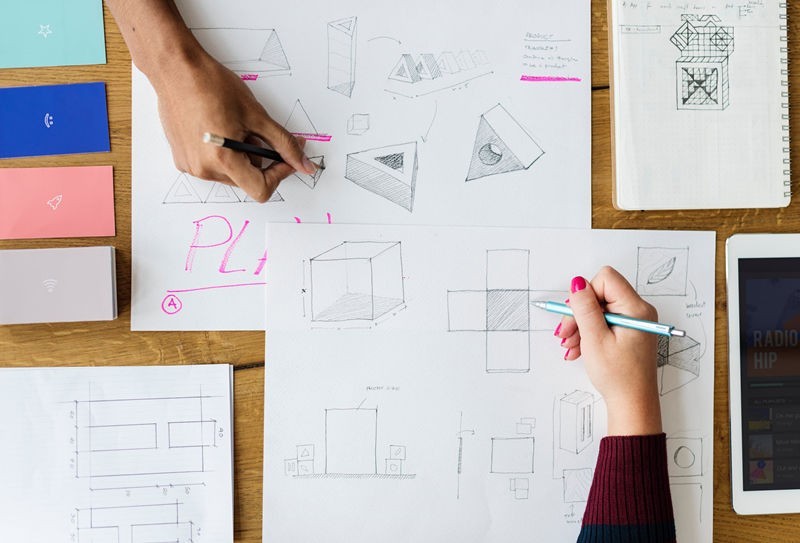
If you’ve spent any time sourcing products from China, you’ve seen both terms – OEM vs ODM – used constantly, often interchangeably, and sometimes incorrectly. The distinction matters far more than most importers realize: it determines who owns the product design, how much customization is actually possible, how long production will take, and what quality control strategy your order requires. This guide breaks down exactly what each model means in the context of China manufacturing, where the real risks sit, and how to match the right model to your situation.
What Is OEM Manufacturing in China?
The definitions are straightforward. The implications are not.
OEM – Original Equipment Manufacturing
OEM means the factory produces a product built entirely around your design and specifications. You bring the concept, the technical requirements, and the design intent. The factory provides the production capability, the equipment, the components, and the labor. The finished product is yours – no other brand is sourcing the same item from the same mold.
A practical example: a headphone brand partners with a Chinese OEM factory to produce premium headphones built to the brand’s exact acoustic and industrial design specifications. The factory manufactures; the brand owns the design, the tooling, and the trademark.
OEM contracts in China must comply with Chinese law and should be drafted in Chinese as well as your home language. Working with a qualified attorney on the manufacturing agreement – particularly around IP ownership and tooling rights – is not optional for OEM arrangements.
Advantages of OEM Manufacturing
- Full product differentiation – your product is built to your specifications and is not available to competitors through the same factory
- IP ownership – the buyer typically retains design rights, making it easier to protect the product and move production if needed
- Long-term strategic control – you determine the product roadmap, feature evolution, and lifecycle
Disadvantages of OEM Manufacturing
- Higher upfront investment – custom tooling (injection molds alone can run $5,000–$50,000+), engineering, sampling, and certification all sit with the buyer
- Longer time to market – development, tooling, and sampling rounds add weeks or months before production begins
- Greater risk exposure – the buyer bears the full development cost and market risk if the product does not succeed
What Is ODM Manufacturing in China?
ODM – Original Design Manufacturing
ODM means the factory already has an existing product design. You select a base model from their catalog, apply your branding, and request limited modifications – typically color changes, logo placement, packaging customization, or minor component adjustments. The factory owns the underlying design; you own the brand that goes on it.
A practical example: a toy company partners with a Chinese ODM factory to produce educational building blocks. The factory designed and tooled the product; the toy company brands and sells it. The same base design may be sold to multiple brands simultaneously.
ODM is also commonly called private labeling — and it is the dominant model for Amazon FBA sellers, DTC brands launching first products, and importers entering a new category without the capital for full product development.
Advantages of ODM Manufacturing
- Faster time to market – the core design already exists; no tooling development, no extended sampling rounds
- Lower upfront investment – the factory absorbs tooling and R&D costs; the buyer avoids the full cost of product development
- Lower MOQ tendency – factories already producing the design in volume can often accommodate smaller initial orders
- Reduced development risk – the factory has production history on the product and knows the common failure modes
Disadvantages of ODM Manufacturing
- Limited differentiation – multiple brands may source the same base design from the same factory; competition shifts to price and marketing
- IP constraints – the ODM supplier typically retains ownership of the underlying design; the buyer’s exclusivity is limited unless explicitly contracted
- Less customization – modifications are restricted to what the factory’s existing tooling can accommodate
The core difference is who owns the product concept. With OEM, the buyer leads the design. With ODM, the supplier leads the design. Everything else – cost structure, timeline, IP risk, quality control complexity – flows from that single distinction.
OEM vs ODM Manufacturing China: Side-by-Side Comparison
The single most important distinction: with OEM, the buyer owns the product concept. With ODM, the supplier owns it. Every other difference flows from that.
| Factor | OEM Manufacturing | ODM Manufacturing |
|---|---|---|
| Product design ownership | Buyer | Supplier |
| Customization level | Fully customizable | Limited to predefined options |
| Speed to market | Slower — development required | Faster — design already exists |
| Tooling & development cost | Higher — buyer pays | Lower — factory absorbs |
| MOQ tendency | Often higher | Often lower |
| IP ownership | Typically retained by buyer | Typically retained by ODM |
| Product differentiation | High | Moderate to low |
| Quality control complexity | Higher — new product, no baseline | Lower — factory has production history |
| Best for | Brands building unique products | Brands prioritizing speed and simplicity |
The Third Option: Contract Manufacturing (CM)
A Contract Manufacturer (CM) produces a product based on the buyer’s design — similar to OEM – but focuses exclusively on production. The CM does not own or distribute products independently. In many OEM arrangements, the brand is technically the OEM (the entity that owns and defines the product), while the factory is the CM (the entity that builds it).
CM also sometimes refers to a model where the Chinese manufacturer produces parts or components, and the buyer handles final assembly. This adds flexibility and control, but the logistics require the buyer to have genuine assembly capability.
For importers developing technically complex or high-value products, CM is worth evaluating alongside OEM – particularly because a factory whose business model is production rather than distribution has less incentive to sell your design to competitors.
Which Industries Use OEM and ODM Manufacturing in China?
Both models are used across virtually every product category manufactured in China.
OEM is dominant in:
- Consumer electronics with proprietary designs (smartphones, audio equipment, wearables)
- Custom industrial and mechanical components
- Medical devices requiring specific technical specifications
- Apparel and footwear with proprietary patterns or construction
ODM is dominant in:
- Amazon FBA and private label consumer goods
- Home goods, kitchenware, and general merchandise
- Toys, sporting goods, and seasonal products
- Entry-level electronics and accessories
The reality of modern China sourcing: even products that appear to be simple ODM arrangements often involve some level of OEM customization – a modified component, a proprietary packaging structure, or a functional change that required new tooling. The two models exist on a spectrum, not as a binary choice.
IP Risk in China OEM and ODM Manufacturing
Whether you choose OEM or ODM, intellectual property exposure is a real operational risk in China manufacturing – not a theoretical one.
With ODM, the factory owns the base design. If your product becomes successful, nothing prevents them from selling a near-identical version to your competitors under a different brand. The modifications you requested may not create sufficient legal separation from the factory’s original design.
With OEM, you own the design in principle – but only if you have the documentation and legal agreements to prove it. A factory that manufactures your product has access to your tooling, your specifications, and your production data. Without a properly structured NDA and manufacturing agreement, that information can be used against you.
Practical steps to reduce IP exposure in China manufacturing:
- Register your trademark in China before production begins — not after
- Use a written manufacturing agreement drafted in Chinese that explicitly assigns design ownership to the buyer
- Document tooling ownership separately from the production relationship
- Use NNN agreements (Non-Disclosure, Non-Use, Non-Circumvention) rather than standard Western NDAs, which are harder to enforce in Chinese courts
- Ask directly whether the factory supplies competitors in your category
Quality Control: How OEM vs ODM Changes Your Inspection Strategy
OEM and ODM manufacturing require meaningfully different quality control approaches. This is where many importers underinvest — and where problems become expensive.
With ODM, the factory has production history on the product. They know the common defect points, the typical failure modes, and the testing requirements. A pre-shipment inspection against a product-specific checklist is usually sufficient for routine orders once the relationship is established.
With OEM, you are introducing a new product into production — often with new tooling, new components, and a factory team that has never made this exact item before. The quality risk is highest at the beginning of the production run, not at the end. That changes the inspection strategy entirely.
For OEM production, the quality control sequence that actually works:
- Factory audit before placing the first order – verify the factory has the equipment, processes, and quality management systems your product requires
- Pre-production inspection – confirm materials and components match specifications before production begins
- During-production inspection (DPI) – catch defects while correction is still possible, not after the full production run is complete
- Pre-shipment inspection (PSI) – final AQL-based sampling before goods leave the factory
For ODM production with an established supplier, steps 2 and 3 can often be consolidated. Skipping the PSI entirely – regardless of how long the supplier relationship has been running – is a mistake experienced importers don’t make twice.
How to Choose Between OEM and ODM Manufacturing in China
The right choice depends on where you are in your brand’s development and what you are actually trying to protect.
Choose OEM manufacturing if:
- Your product requires specific features, dimensions, or materials that don’t exist in any supplier’s catalog
- You are building a brand where the product itself is the competitive differentiator
- You have the timeline and budget for a proper development and sampling phase
- Long-term IP ownership is a strategic priority
Choose OEM if:
- You are launching a first product and need to validate demand before investing in custom development
- Speed to market is the primary constraint
- Your differentiation is in branding, marketing, or customer experience – not the product design itself
- Your upfront budget for tooling and R&D is limited
Consider CM if:
- You have a proprietary design and want to minimize the risk of a factory selling it to competitors
- You want greater transparency into the supply chain
- You are producing technically complex products where production focus matters
A common progression: many importers start with ODM to validate demand, then invest in custom tooling and transition to OEM once the product has proven itself in the market. If this is your plan, negotiate the transition terms – especially tooling ownership – before you start, not after.
Frequently Asked Questions
Is ODM lower quality than OEM manufacturing in China?
Not inherently. ODM products can be high quality — the factory has established processes and production history. The quality risk with ODM is consistency over time and the factory’s incentive to maintain standards when selling the same base product to multiple buyers. Regular inspection remains important regardless of the model.
Can an ODM factory become an OEM factory for my product?
Yes, and this is a common progression. Many importers start with an ODM arrangement to validate demand, then invest in custom tooling and transition to OEM once the product has proven itself in the market. The key is to negotiate the transition terms – especially tooling ownership – before you start, not after.
Who owns the tooling in an OEM arrangement?
This depends entirely on your manufacturing agreement. If you pay for the tooling, you should own it – but that ownership must be documented explicitly in writing. Tooling disputes are one of the most common sources of conflict between importers and Chinese factories.
How do I verify a factory’s OEM or ODM capability before placing an order?
Ask for samples of products they have manufactured for other clients in your category. Request a factory audit – either in-person or through a third-party inspection company – to verify equipment, processes, and quality management systems before committing to production.
Request a Quote from AQI SERVICE →
- How to Choose Alibaba Trusted Suppliers & Tips for Minimizing Product Defects
- Manufacturing in Asia? 10 Essential Characteristics for Good Suppliers
- What should a purchase contract specify between an importer and a supplier?
- How Do I Ensure the Quality of Shipped Goods from an Alibaba Supplier?
Author: AQI Service as a professional quality control service company in China specialized to provide a complete range of quality inspection and testing certification services in China & Asia for global importers, buyers, retailers, and sellers.