
Packaging Inspection
Catch Packaging Defects Before They Reach Your Customer
 HK Tax ID: 62765141
  Operation in China & South of Asia
  ISO 9001:2015 Certificated





Packaging inspection is a quality control process that checks a product’s packaging, not just the product itself, against agreed specifications before it ships. That includes carton strength, drop and vibration resistance, labeling accuracy, seal integrity, and compliance with destination-market regulations.
It’s often treated as a secondary check during a Pre-Shipment Inspection, and that’s exactly where problems start. Packaging failures rarely show up in a visual check. They show up after transit, when the product has already been handled, stacked, and shipped.
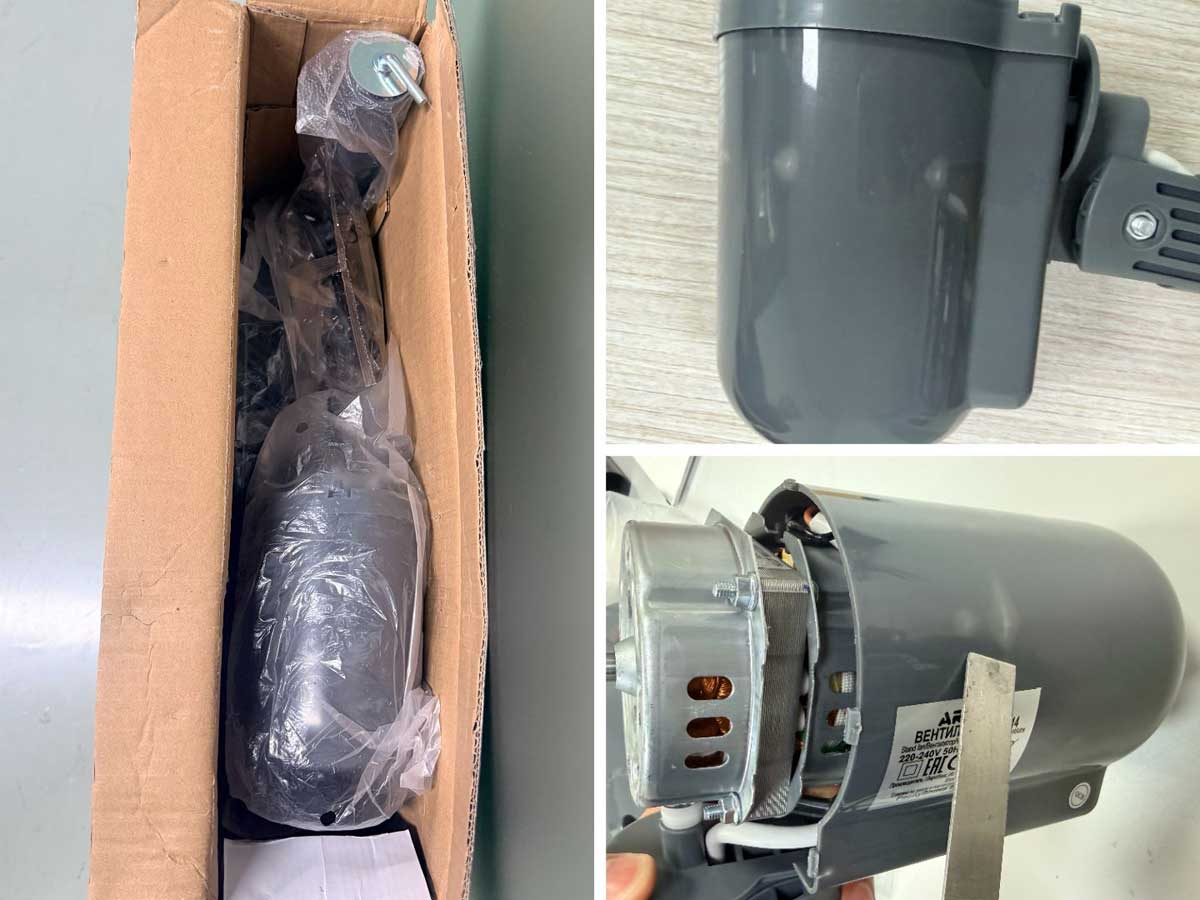 A customer ordered 4,340 units of a fan. AQI Service inspected 200 units before shipment, in line with standard AQL sampling, and the batch passed. When the customer received the goods, every single unit (100%) had visible white pressure marks on the motor housing.
Tracing the issue back, the root cause wasn’t the fan itself. It was the packaging. During the pre-shipment inspection, the factory had declined to run drop and vibration tests. Further back, at the engineering trial run stage, no drop or vibration testing had been arranged at all. The factory had simply used its usual shipping method, based on past experience, without testing whether it actually protected this specific product.
The motor’s fixing clip had a sharp corner. Combined with insufficient packaging protection, that corner pressed directly into the plastic housing during transit, leaving a pressure mark on every unit in the shipment.
What this case shows: a sample of 200 units can pass a visual and functional check and still miss a packaging-related defect that only appears after real-world transit stress. ISTA-compliant drop and vibration testing exists precisely to catch this before it happens. When placing an order, confirm the factory has the equipment to run these tests properly, and have a third-party inspector verify the results during the pre-shipment inspection rather than taking the factory’s word for it.
Products powered by button cell or coin batteries face a specific packaging regulation in the US: Reese’s Law, which took effect in 2023 and requires child-resistant packaging plus specific warning labels for any button cell or coin battery sold, imported, or included with a consumer product. It’s a frequent source of recalls: CPSC has recalled products including pet laser toys and LED Christmas headbands for exactly this violation. If your product uses a button cell or coin battery, packaging compliance needs to be checked alongside carton and drop testing, not treated as a separate step.
(Please find the dedicated guide on button cell battery packaging compliance. In the meantime, if you’re sourcing this category, flag it to your inspector before booking.)
If your goods are shipping into the EU, packaging now falls under Regulation (EU) 2025/40 (PPWR), which replaced the old Packaging Directive. The regulation entered into force in February 2025, and its main obligations became generally applicable on August 12, 2026 – meaning they’re already in effect. As of that date, packaging placed on the EU market needs to meet combined heavy metal limits (lead, cadmium, mercury, hexavalent chromium), and manufacturers or importers need an EU Declaration of Conformity backed by technical documentation showing the packaging was assessed against the regulation.
One requirement that’s easy to get ahead of: PPWR introduces a harmonized label for packaging material composition, to help consumers sort waste correctly. That specific labeling requirement isn’t mandatory yet – the EU’s implementing rules for it are due by August 12, 2028 – but it’s worth building material-composition documentation into your inspection process now, since factories that already track this will have an easier transition than those that don’t.
During a packaging inspection, this means checking that the exporter can produce the Declaration of Conformity and supporting technical file for EU-bound orders, not just the physical carton itself.
(Please find the dedicated guide on EU PPWR compliance for exporters. In the meantime, if you’re shipping packaging into the EU, flag it to your inspector before booking so the DoC and technical documentation can be reviewed alongside the physical inspection.)
 How is packaging inspection different from a Pre-Shipment Inspection?
PSI covers the product itself. Packaging inspection can be run as part of a PSI or as a standalone check, and specifically targets carton strength, drop and vibration resistance, labeling, and seal integrity.
It depends on the product and the risk of transit damage. Products with rigid components pressing against packaging, like the fan case above, are higher risk. If you’re unsure, ask your inspector to recommend a test plan based on the product.
AQI Service references ISTA procedures for drop and vibration testing, and ISO 2859-1 for AQL sampling.
Yes. See our packaging quality control checklist for a self-service version you can use internally, alongside a formal third-party inspection.
We check that the exporter can produce the EU Declaration of Conformity and technical documentation required under PPWR for EU-bound orders, alongside the physical carton, drop, and labeling checks. The regulation’s harmonized material-composition label isn’t mandatory until 2028, so we flag readiness for it rather than treating it as a pass/fail item today.
It’s billed on the same man-day basis as our other inspection services, starting from USD 188, with man-days evaluated based on order size and test scope.
Knowledge of China Inspection, Asia Inspection, Inspection Standards, Product
Testing, Compliance Certification, Quality Control Solutions, etc.

Get a Quote from AQI Service, a Third-Party Quality Control Service Provider specialized to provide a complete range of Quality Inspection Services in Asia.

Check out our quality inspection report samples for factory audit and product inspection in China & Asia.
 https://aqiservice.com/wp-content/uploads/2026/09/White-Mattress-Inspection-Services-in-China.jpg
533
800
Jolyne Chen
https://aqiservice.com/wp-content/uploads/2024/02/newlogo3.png
Jolyne Chen2026-10-06 09:59:352026-09-19 09:59:33Mattress Inspection for Global Sourcing: What Importers and Procurement Teams Need to Verify Before Every Shipment
https://aqiservice.com/wp-content/uploads/2026/09/White-Mattress-Inspection-Services-in-China.jpg
533
800
Jolyne Chen
https://aqiservice.com/wp-content/uploads/2024/02/newlogo3.png
Jolyne Chen2026-10-06 09:59:352026-09-19 09:59:33Mattress Inspection for Global Sourcing: What Importers and Procurement Teams Need to Verify Before Every Shipment https://aqiservice.com/wp-content/uploads/2024/08/Electronic-computer-accessories.jpg
533
800
Jolyne Chen
https://aqiservice.com/wp-content/uploads/2024/02/newlogo3.png
Jolyne Chen2026-09-29 06:35:532026-09-19 10:28:57Computer Accessories Quality Inspection: What Importers Need to Verify Before Every Shipment
https://aqiservice.com/wp-content/uploads/2024/08/Electronic-computer-accessories.jpg
533
800
Jolyne Chen
https://aqiservice.com/wp-content/uploads/2024/02/newlogo3.png
Jolyne Chen2026-09-29 06:35:532026-09-19 10:28:57Computer Accessories Quality Inspection: What Importers Need to Verify Before Every Shipment https://aqiservice.com/wp-content/uploads/2024/07/9-LAB-TESTS-FOR-PACKAGING-THAT-COULD-SAVE-YOUR-PRODUCTS.jpg
533
800
Jolyne Chen
https://aqiservice.com/wp-content/uploads/2024/02/newlogo3.png
Jolyne Chen2026-08-25 08:00:022026-08-22 11:29:51Sanitary Ware Inspection: A Practical Guide for Importers Who Can’t Afford to Get It Wrong
https://aqiservice.com/wp-content/uploads/2024/07/9-LAB-TESTS-FOR-PACKAGING-THAT-COULD-SAVE-YOUR-PRODUCTS.jpg
533
800
Jolyne Chen
https://aqiservice.com/wp-content/uploads/2024/02/newlogo3.png
Jolyne Chen2026-08-25 08:00:022026-08-22 11:29:51Sanitary Ware Inspection: A Practical Guide for Importers Who Can’t Afford to Get It Wrong