Wedding Dress Quality Inspection: What Importers Should Check Before Shipment
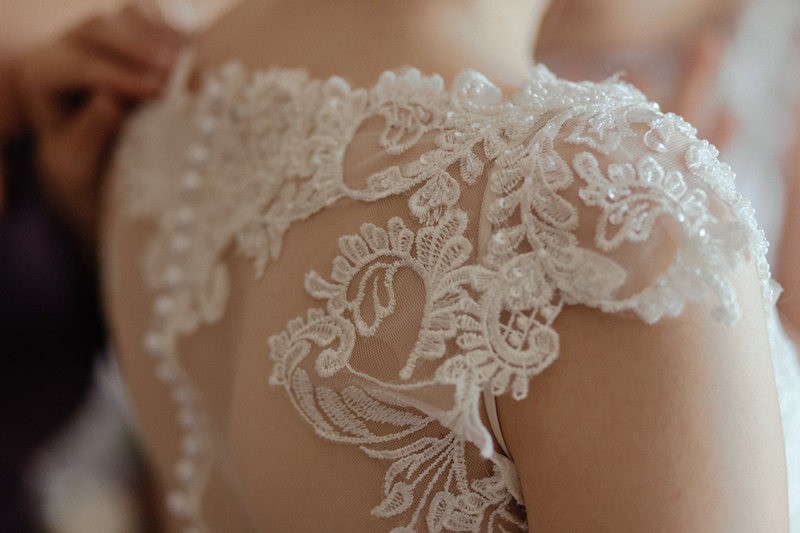
Wedding dress quality inspection is harder than checking a standard garment order. A gown can combine a hand-beaded bodice, layers of tulle, a boned corset and a made-to-measure size chart. Much of the finishing is done by hand. Each unit is high in value, so one visible flaw can make a gown unsellable.
This guide is for importers, bridal boutiques and online sellers who buy gowns from factories in China and other Asian countries. It covers typical defects, a four-stage checklist, the on-site tests, and how to book the inspection once the factory finishes its own check.
Why Wedding Dress Quality Inspection Differs From Standard Garment Checks
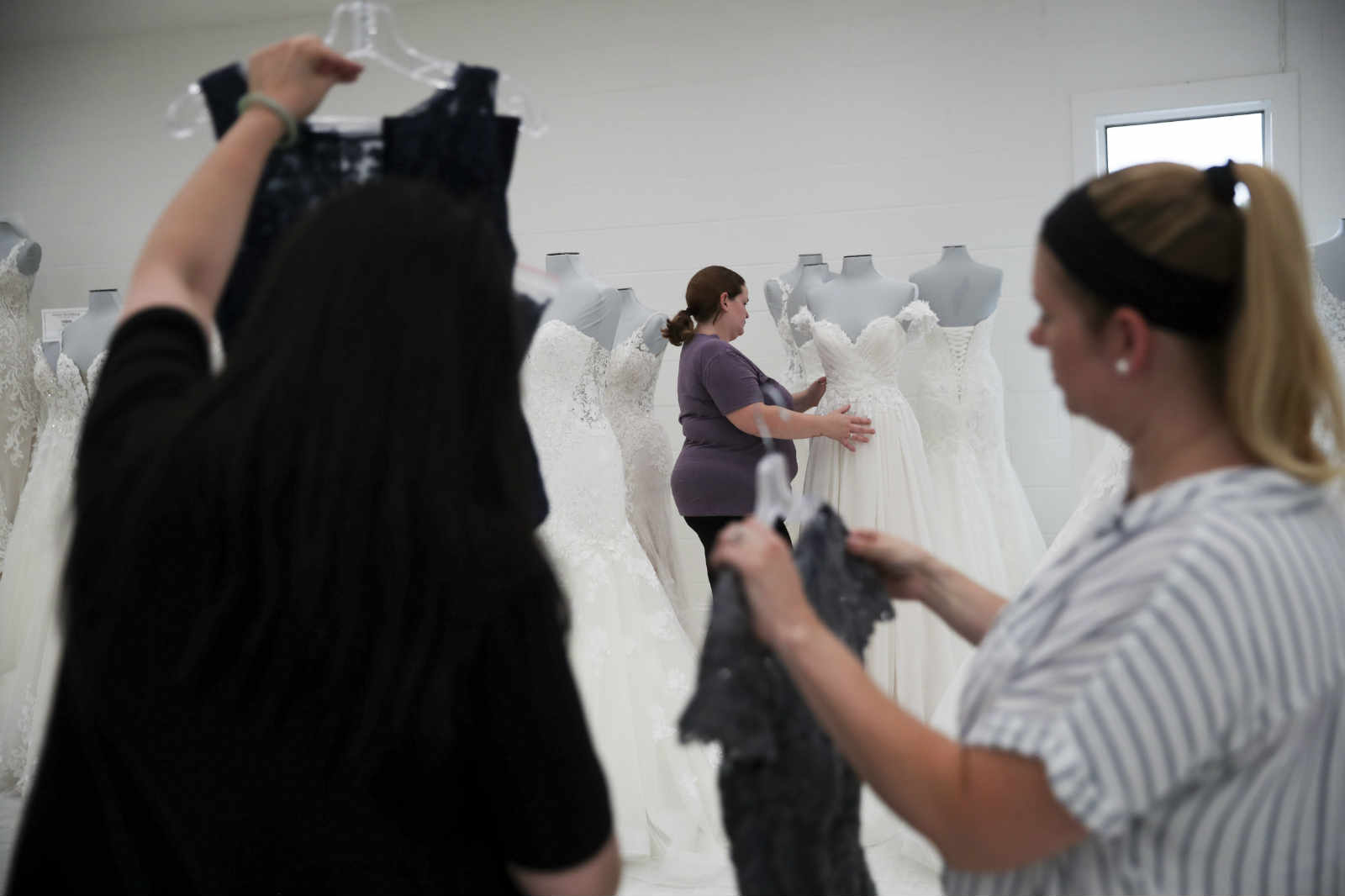
Making a wedding dress takes cutting, stitching, lacing, beading and further handwork. Handwork varies from piece to piece, so a sample that looks right does not guarantee that the rest of the lot matches it.
Gowns also bring problems that ordinary apparel rarely has. Colour is one. White, ivory and champagne sit close together, and a small shift shows up next to lace or lining. Fit is another, especially on custom-size orders where each dress has its own measurements. Beads, lace and tulle add a third: they loosen, snag or crush in transit.
For bridal gown quality control, an independent third-party inspection before shipment gives you a report on the actual production lot, checked against your approved sample and size chart. That report gives you grounds to ask the factory for rework, sorting or replacement before the goods leave. It also protects customer satisfaction once the gowns reach your customers.
Most gown factories run their own quality check at the finishing line. The third-party inspection follows that check and tests the same gowns against your specification, with the report going to you.
Wedding Dress Defects and How Inspectors Classify Them
Inspectors sort defects into critical, major and minor classes, so the pass or fail decision follows rules agreed before production. The table lists typical bridal gown defects. Your own specification decides which class each one falls in.
| Class | Defect | What the inspector finds |
|---|---|---|
| Critical | Needle in fabric | One or more needles left in the gown. This can injure the wearer, so many buyers treat it as critical. |
| Major | Asymmetry | One side of the gown sits higher or lower than the other. |
| Major | Broken, poor or missing beading | Beads are loose or lost because of poor workmanship. |
| Major | Broken, loose or missing stitches | Stitches are loose or broken because of poor workmanship. |
| Major | Split yarn | The yarn in the fabric has split. |
| Major | Holes | Small holes in any area. The class depends on size and location, and some holes are minor. |
| Major | Other | Draw yarn, holes in the tulle, missing hanger loop. |
| Minor | Dirty marks | One or more stains that make the gown look dirty. |
| Minor | Missing lace | Lace is loose or missing because of poor workmanship. |
| Minor | Other | Beading not secure, uneven tulle edges, uneven or poor stitching, stitches starting to come loose, fabric flaw. |
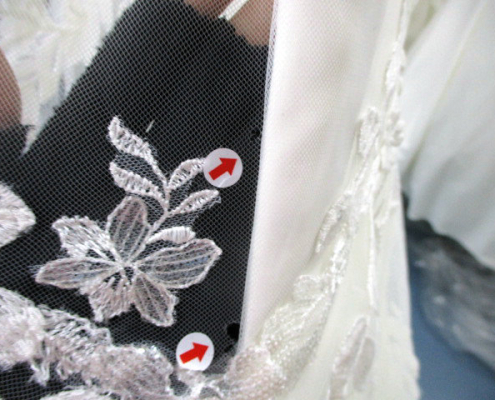 Holes need a written rule. A pinhole in a hidden seam allowance and a hole in a tulle skirt are different problems, so state size and location limits in the spec. Do the same for dirty marks by defining how large or how visible a mark must be before it counts.
In a pre-shipment inspection, sampling follows the AQL table, which comes from the ISO 2859-1 sampling standard. The inspector draws random samples, records the defects and makes a judgment call based on the count in each class. A common starting point is zero critical defects, AQL 2.5 for major and AQL 4.0 for minor. Buyers of high-value gowns can tighten the major limit. The guide to critical, major and minor defects explains how the classes work in practice.
Case Study
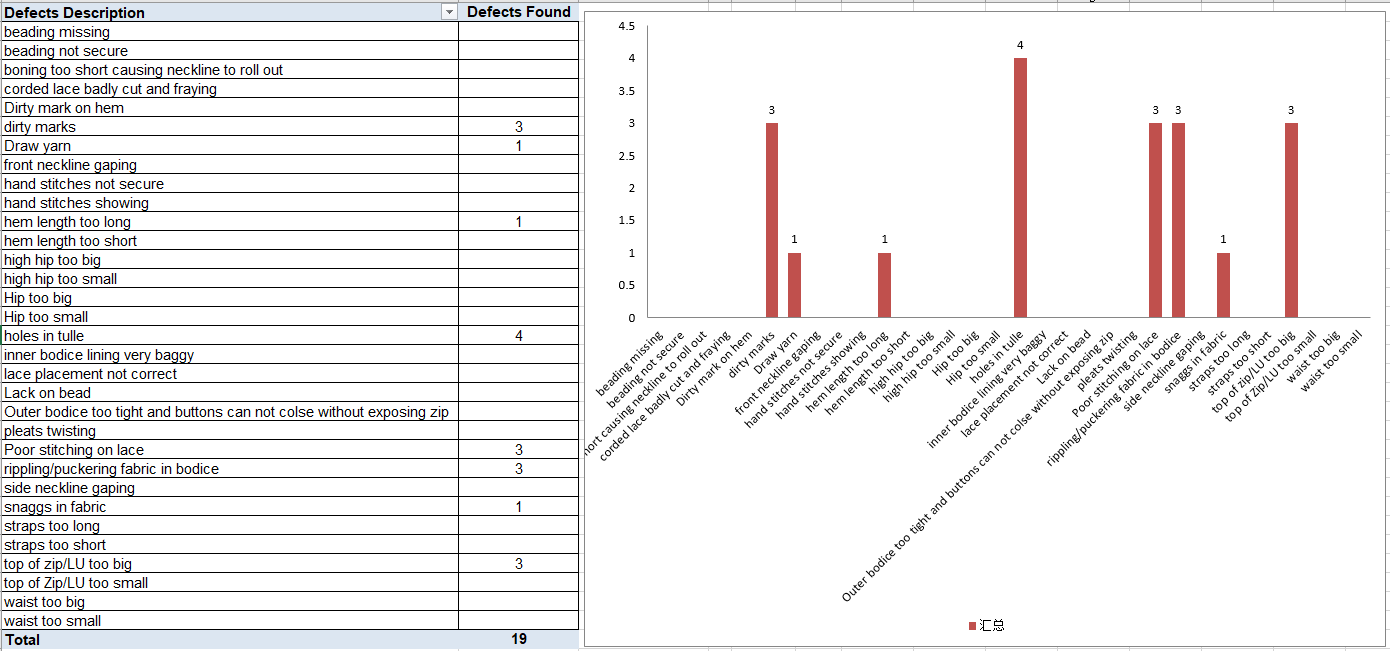
In one AQI Service inspection of bridal gowns, inspectors checked a sample of 125 pieces and recorded 19 defects across eight types. Holes in the tulle were the most frequent, with four cases. Dirty marks, poor stitching on lace, rippling or puckering in the bodice and an oversized top of the zip or lace-up opening each appeared three times. Draw yarn, snags in the fabric and a hem that was too long each appeared once. The defect sheet for the order listed items from beading and lace to hip, waist and hem measurements, so fit-related problems were recorded alongside cosmetic ones.
Wedding Dress Quality Inspection Checklist: Four Stages
Manufacturers and importers should inspect gowns at fixed points, especially for designer styles. Before a shipment goes out, the standard inspection runs through four stages.
The inspector checks that packaging and gowns follow the client’s specification. That covers carton marks, hangtags, care and content labels, and hanger loops. A missing hanger loop is recorded as a major defect. Packing should also protect beading, lace and the train from crushing and snagging.
Labels depend on the destination market. In the US, fibre content and care labels fall under FTC rules, 16 CFR Part 303 and Part 423. EU sales follow Regulation (EU) No 1007/2011 on textile fibre names and labelling. Put the required wording in your spec so the inspector has something to check against.
2. Structure and Materials
The inspector compares production gowns with the golden sample. The comparison covers fabric type and colour, accessories, hangtags and labels, packaging, logos and marks. On a gown, it also covers the inner construction: corset seams, boning and lining. Fabric and padding are weighed against the spec, which shows whether lighter materials replaced the approved ones.
3. Workmanship and Mannequin Fit Check
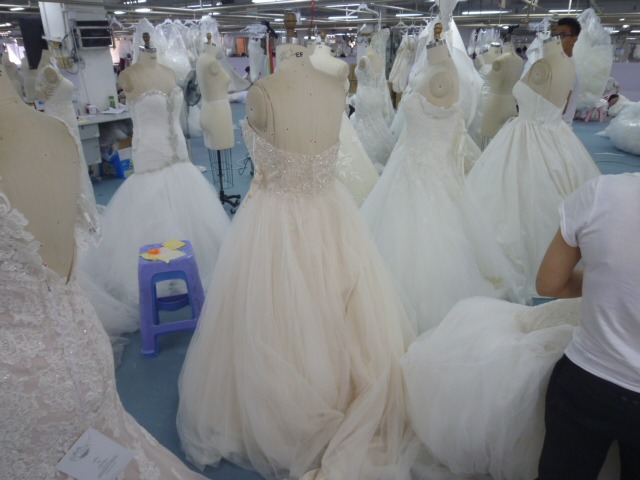 In a pre-shipment inspection, the inspector draws random samples, records defects and applies the AQL limits set for the order. In a full inspection, the same workmanship checks apply to every gown. Handwork gets the closest look: beading, lace, tulle edges, seams and hems.
Fit and sizes are mainly confirmed on the sample before mass production starts, so a mannequin fit check at final inspection is added when the client asks for it. In that case the inspector puts the gown on a mannequin and works through the list below. The list comes from a bridal gown inspection checklist and can be copied into your own spec.
- Bodice interior: The corset fits properly and rests securely on the body without rippling. Corset seams are carefully sewn, with no extra fabric at the centre front. There are no gaps between the underbust and the vertical seams, and the boning is cut at the same angle as the neckline and ends without being oversized.
- Neckline and bust: The neckline does not sag, slouch, gape or sit lopsided, and it does not roll out at an angle. The overbust is rounded and smooth, without pointing. Neckline elastic has a well-sewn edge that does not pucker.
- Waist, hips and closure: The waist is snug and the hip fit is right. The top of the zipper closes properly, and the zip stays concealed when the buttons are closed. When the gown is fastened, the corset is invisible at the back neckline because it is attached inside with proper hand-stitching.
- Interior and finish: Seams are tidy, without snags or fraying, and adjustments use quality materials and seams that do not deteriorate. The interior lining is snug without bunching or excess size. Elastic or boning inside the corset shows no pilling, and the corset interior is clean. The hem is the right length, and there are no stains, pulls, holes or construction errors. The gown fits the mannequin without catching or pulling anywhere.
4. On-Site Tests Inspectors Run on Bridal Gowns
The fourth stage is the on-site test, done before shipment as part of the quality assurance service from the inspection company. The table lists the tests commonly applied to bridal gowns.
| Test | What the inspector does |
|---|---|
| Approved sample comparison | Compares the gowns with the golden sample and the technical standard to find differences in materials, trims and construction. |
| Dimensions and size chart | Measures each sampled gown and records the sizes against the required size chart. On custom-size orders, the reference is each dress’s own sheet. |
| Metal detection | Scans for broken needles and other metal fragments. Agree in advance which metal parts, such as hooks, boning or beads, are expected. |
| Seam strength | Loads the seams to evaluate durability. Name the test method and pass value in the spec, for example ASTM D1683 or ISO 13935-2. |
| Barcode scan | Scans the barcode to confirm it reads and matches the SKU, size and colour on the label and carton. |
| Accessory fastness | Checks that buttons, snaps, belts, loops and other accessories are secure and working. |
| Rub check | Wipes the printed or electroplated markings on labels with damp cotton for about 15 seconds and looks for colour transfer or fading. |
| Stitch density | Counts stitches per inch and compares the result with the requirement. |
| Mannequin fitting | Puts the gown on a mannequin to confirm it fits, using the fit check above. Done when the client requests it. |
| Fabric and padding weight | Weighs the fabric and padding against the specified weight. |
| ISTA 1A carton drop | Drops packed cartons in the ISTA 1A sequence: one corner, three edges and six faces. |
| Colour shading | Compares colour between panels, lining, lace and tulle, and between gowns in the same lot. |
| Zipper fatigue | Pulls the zipper open and closed repeatedly to test its resistance to cyclic loading. |
Colour shading and seam strength deserve extra attention on bridal orders. For colour, give the inspector an approved swatch as the reference and ask for a comparison between the outer fabric, lining, lace and tulle on the same gown. Seams carry the weight of beaded skirts and boned bodices, so name the test method and the pass value in the spec.
After the four stages, the inspector totals the defects in each class and compares them with the AQL limits. Whether a failed test rejects the order on its own depends on your specification, so agree that point before production starts.
What Skipping Inspection Costs Buyers
Retailers and marketplaces can issue charge-backs for late shipments, wrong labelling or poor product quality. Delays cost sales as well, because customers cancel orders when a gown does not arrive on time. Defects that reach the customer turn into bad reviews that hurt your reputation.
Returned gowns with damaged beading or fabric may not be resellable, and that adds the cost of unsellable stock. Travel is the last cost. Sending your own staff to check factories takes time and money, and one visit covers only the pieces they happen to see.
When to Book Wedding Dress Quality Inspection
Gown factories usually run their own quality check at the finishing line. The third-party inspection comes after that check, when production is complete and at least 80% of the goods are packed. A pre-shipment inspection and a full inspection use the same timing, so the choice between them depends on lot size and risk.
Most bridal styles are made as small custom lots, and an AQL sample from a small lot covers only a few gowns. For these orders, a full inspection, also called 100% inspection or defect sorting, or a pre-shipment inspection with a higher sampling rate gives a more reliable picture. A full inspection goes through every gown in the lot. The workmanship checks apply to each piece, defective gowns are set aside for rework, and only pieces that meet the spec go forward. Tests that need samples, such as the carton drop test and seam strength, are still run on samples.
Larger runs, such as bridesmaid dresses, suit a wedding dress pre-shipment inspection that samples the lot and applies the AQL limits set for the order. The inspector runs the full checklist above.
If you need visibility before the finishing stage, for example on a large order with heavy beading, a check during production or production monitoring can find repeat problems while there is still time to correct the rest of the lot.
What to Put in Your Wedding Dress Inspection Specification
An inspector can only check what the spec defines. Start with the approved sample and photograph the construction details that matter: the inside of the bodice, the beading pattern, the lace edge and the hem. Add a size chart with tolerances, and attach the individual size sheet for every custom-size gown. For colour, supply a physical swatch and name the shade, since “white” covers several distinct tones.
Next comes the defect list. Give each defect a class, and write size and location limits for holes, stains and loose beads. Set the AQL levels and the inspection level, list the on-site tests with their methods and pass values, and state which failures reject the order. Add the packing and labelling requirements for the destination market, including the exact label wording. A wedding dress inspection checklist built this way lets any inspector reach the same decision on the same lot.
Before your next order, send this package to the inspector and agree on it in writing. For wedding dress quality inspection in China and other Asian countries, AQI Service checks bridal gowns against your specification and reports against your defect list and AQL limits.
Related:
- Textiles and Garments Quality Inspection
- QC Inspection Coverage in Asia
- How to Build a Quality Control Inspection Checklist
Author: AQI Service as a professional quality control service company in China specialized in providing a complete range of quality inspection and testing certification services in China & Asia for global importers, buyers, retailers, and sellers.