Running Test vs. Aging Test: The Hidden Gap that’s Costing Importers Thousands
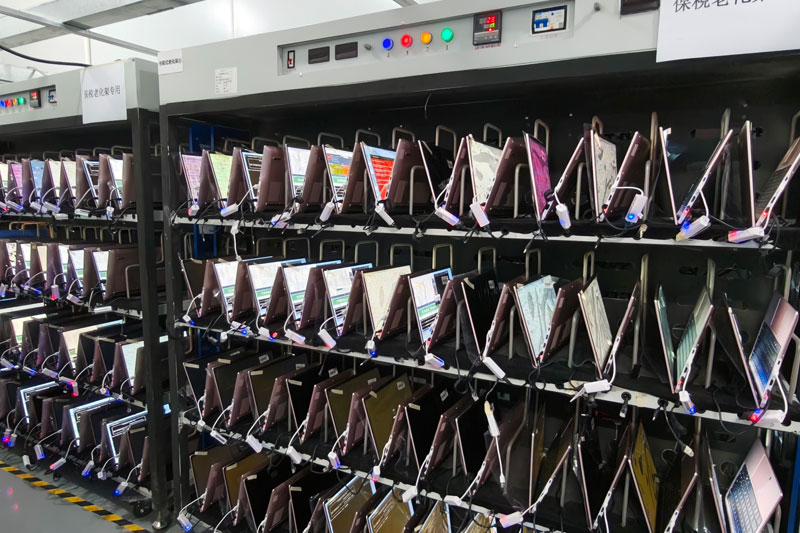
There’s a version of quality control that looks solid on paper – a checklist, a factory sign-off, a passed inspection report. Then there’s what actually happens on the production floor. After more than a decade of third-party inspections across electronics, industrial equipment, and consumer goods factories in Asia, one gap keeps showing up: buyers assume their supplier is running meaningful aging tests, when in reality the factory did a five-minute power-on check and called it done.
That gap doesn’t show up immediately. It shows up about three weeks after the container clears customs.
This article breaks down two of the most commonly confused – and commonly misrepresented – factory tests: the Running Test and the Aging Test. If you’re sourcing electronics, power equipment, automotive components, or anything where longevity matters, knowing the difference isn’t a technical nice-to-have. It’s a procurement necessity.
What a Running Test Actually Does?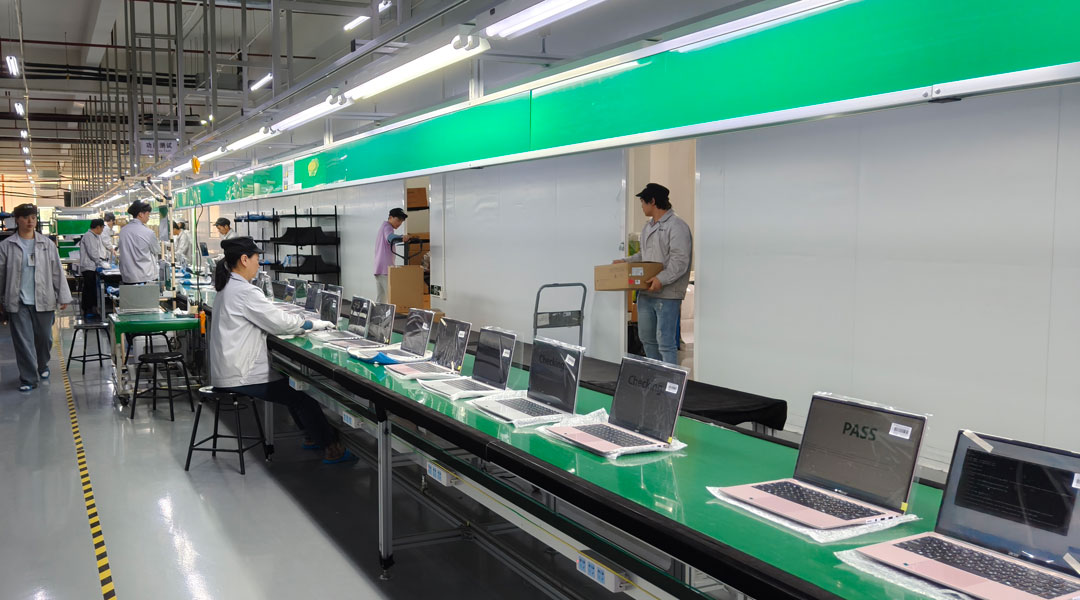
The Running Test – sometimes called a run-in test or ambient burn-in test – is a functional verification step run under normal operating conditions. Standard room temperature, rated voltage, typical load. The product cycles through its full operational sequence for a defined period, usually somewhere between 15 minutes and four hours depending on the product category.
What is it catching? Mostly assembly-level defects. A loose connector causing an intermittent power drop. A marginal solder joint that gives out under the first real load. A firmware bug that only surfaces when a specific input sequence is triggered. These are day-one failures – problems that exist right now, at the moment of shipment, not six months down the road.
The Running Test is fast, relatively low-cost, and a reasonable first screening pass. Its weakness is that it’s blind to latent defects – components that are technically functional today but operating near the edge of their rated tolerances and will degrade prematurely under real-world use.
What a Running Test Won’t Catch
This is the part factories rarely volunteer. A component can pass every functional check in a standard Running Test and still be on a failure trajectory that puts it in a warranty claim queue within 60 days of delivery.
Capacitors with subtle dielectric weakness, MOSFETs with marginal gate oxide integrity, solder joints that look clean but have voids at the interface – none of these show up under normal operational cycling at ambient conditions. When AQI SERVICE audits a factory’s testing protocol, we’re specifically looking at whether the factory understands this limitation and has a compensating aging test process in place. Many don’t.
The Aging Test: Using Stress as a Diagnostic Tool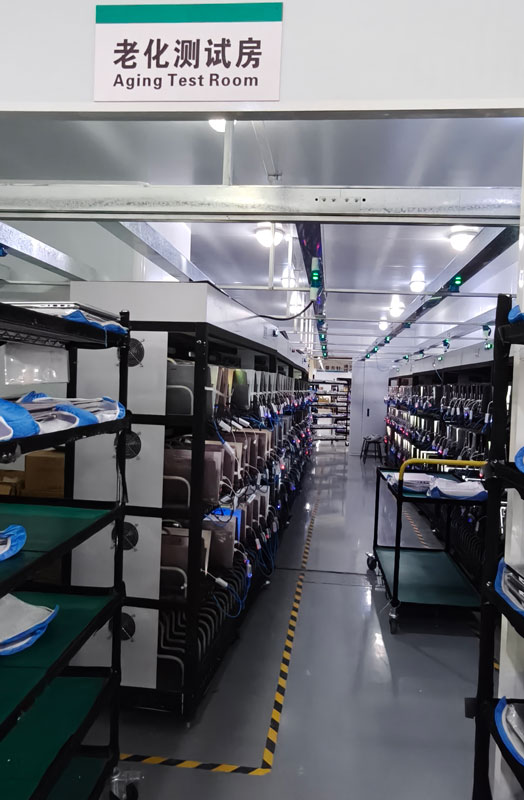
The aging test operates on a different logic entirely. Instead of asking “does it work now?”, it asks “will it still work after 10,000 hours of operation?” It gets at that answer by compressing time through controlled stress.
The underlying principle comes from reliability engineering – specifically, the Arrhenius equation, which describes how elevated temperature accelerates chemical degradation in materials. Running a product at 50°C or 65°C instead of 25°C doesn’t just test it in heat. It uses that heat to accelerate the aging process, surfacing failure modes that would otherwise take months or years to appear. A 48-hour aging test at elevated temperature can simulate, depending on the acceleration factor, thousands of hours of field operation.
This is what separates serious quality systems from superficial ones.
Static vs. Dynamic Aging – The Method Matters
Not all aging tests are equivalent, and this distinction matters significantly when you’re specifying test requirements in a purchase contract.
Static aging means the product is powered on but not actively performing operations. It stresses the thermal and electrical components but leaves logic, memory, and mechanical subsystems largely untested. Better than nothing – but incomplete.
Dynamic aging runs the product through continuous operational cycles – diagnostic routines, load simulations, input/output sequences – while simultaneously exposing it to elevated stress conditions. This is meaningfully more effective at surfacing hidden defects in firmware behavior, mechanical wear points, and complex electrical interactions. It’s also what most suppliers won’t do unless a buyer specifically requires it, because it demands real test infrastructure, trained personnel, and longer floor time.
When AQI SERVICE conducts third-party factory assessments for electronics clients, we ask to see aging rack configurations, thermocouple placements, load profiles, and cycle logs etc., based on client’s request. The answers are always telling.
The Bathtub Curve – Why This Should Influence Your Inspection Requirements
Product failure rates over time follow a characteristic pattern with three distinct phases – what reliability engineers call the bathtub curve.
The first phase is the early failure period, where defective units reveal themselves. Failure rates start high and decline as weak units drop out. The second phase is the stable operating period, where properly manufactured products run with low, flat failure rates. The third phase is wear-out, where components age beyond their design life and failure rates climb again.
The entire point of the aging test is to push products through that first phase before they leave the factory. Every unit that would have failed in your customer’s hands during the first 90 days is ideally identified and removed at the aging stage. What ships is, theoretically, the stable population.
The practical implication for importers: if your supplier skips or shortens the aging test to hit a shipment date, they’re not saving time. They’re transferring the early failure period from their factory floor to your customers’ hands.
Where Third-Party Inspection Fits In
Factory self-reporting on test protocols is a known reliability issue. Not because all suppliers are dishonest, but because production pressure, capacity constraints, and differing interpretations of “adequate testing” create predictable gaps between what’s documented and what’s practiced.
A third-party inspection company like AQI SERVICE functions as an independent check on that gap. In the context of running and aging tests, this means several things in practice.
During Pre-Production Audits
Before production begins, we evaluate whether the factory’s test setup can actually execute the stress conditions specified. This includes reviewing chamber calibration records, verifying temperature uniformity inside aging rooms (hotspots are common and compromise aging test validity), confirming that load configurations match the product’s rated operating conditions, and checking whether monitoring systems log anomalies automatically or rely on manual spot checks.
A factory can own an aging chamber and still run an ineffective aging test. Chamber age, sensor drift, and inadequate cycle programming all degrade test validity over time.
During In-Process and Pre-Shipment Inspections
For electronics and equipment shipments, AQI SERVICE inspectors can be present during the aging phase to observe the process directly – verifying that units aren’t being cycled at below-specified temperatures, that aging test durations match agreed specs, and that failure records are being maintained accurately.
We also perform independent functional sampling post-aging. Units that pass a supplier’s aging test should perform consistently across our test protocols. When they don’t, it raises questions worth asking before the shipment leaves the port.
Failure Analysis and Systematic Defect Detection
One of the underutilized functions of aging test data is identifying systematic failure patterns. If 8% of units on an aging rack are failing at the same stage of the cycle with the same failure mode, that’s not random variation – that’s a design or materials signal. A well-managed third-party inspection program captures this data and escalates it, giving buyers the early warning needed to address root causes before a product reaches mass market.
Industry-Specific Aging Test Requirements
Testing requirements aren’t uniform across product categories. Here’s what the risk profile looks like in the segments we most commonly work with.
Consumer Electronics and Smart Home Devices
Volume and margin pressure in this segment mean that full-unit aging tests are often replaced with statistical sampling approaches. This is a legitimate risk management decision – but buyers need to know that’s what’s happening. We frequently see factory documentation that implies full-unit aging when the actual practice is 5–10% sample aging. Clarifying this in your QC agreement matters.
For flagship or higher-margin SKUs, 24–48 hour dynamic aging under load should be a contractual minimum. The cost is real but modest compared to a recall or a wave of early warranty claims.
Industrial and Power Equipment
Products designed for continuous 24/7 operation – UPS systems, industrial controllers, power conversion equipment – should be held to significantly higher aging test standards. 72-hour full-load aging at 60°C or above is a reasonable baseline. Anything shorter or cooler, and you’re not reaching the thermal equilibrium conditions that expose heat-sensitive failure modes.
In our factory audit work for this category, aging duration is the most commonly compressed variable when production is running behind schedule. Knowing this is a pressure point helps buyers build appropriate contractual protections.
Automotive Electronics and Safety-Critical Components
This category warrants mention of Environmental Stress Screening (ESS) –
a more intensive aging test variant that combines thermal cycling, random vibration, and power cycling simultaneously. ESS is standard in Tier 1 automotive supply chains and effectively surfaces solder joint fatigue, connector fretting, and component delamination that thermal-only aging tests miss.
For buyers sourcing automotive-adjacent components outside of established OEM supply chains, requiring ESS documentation and witnessing it through a third-party inspection protocol is a meaningful risk reduction measure.
Questions Smart Buyers Should Be Asking About Aging Tests
Based on our inspection experience, these questions separate buyers who understand their quality risk from those who discover it after customs clearance:
- What is the specific aging test temperature profile for this product, and how is it verified?
- Is the aging test dynamic or static, and what is the operational cycle during aging?
- What is the failure rate observed during the aging test, and are records available by lot?
- How long has the aging chamber been in service, and when was it last calibrated?
- If a unit fails during the aging test, what is the failure analysis and disposition process?
- Can you provide aging rack photos and thermocouple placement diagrams?
Suppliers who find these questions intrusive are telling you something important.
Why Cutting Aging Tests Is Always a False Economy
The pushback on aging tests is almost always about cost and capacity. Chamber time, electricity, extended floor cycles, delayed shipments. These are real costs.
Here’s the math that doesn’t get discussed: detecting and removing a defective unit during an aging test at the factory costs a fraction of what that same unit costs when it fails in the field. Factor in return logistics, diagnosis and repair labor, replacement unit cost, customer relationship impact, and potential regulatory exposure – especially under EU GPSR requirements – and the calculus tilts sharply toward investing in proper factory-level aging.
For importers managing suppliers across multiple regions and product lines, the invisible failure cost – the one that doesn’t appear on any purchase order – is usually the most expensive line item they have.
What “Passed Testing” Actually Means
When a factory tells you a product has been tested, the useful follow-up is always: tested how, for how long, under what conditions, and with what documented outcome?
The Running Test and the aging test serve genuinely different functions. One confirms the product works today. The other provides meaningful evidence – not a guarantee, but real evidence – that it will still be working when your customer needs it to. Both matter, neither replaces the other, and neither is meaningful without independent verification.
That’s the core value of a third-party inspection relationship. Not paperwork – visibility. The kind that keeps a container of products from becoming an after-sales crisis.
AQI SERVICE provides pre-shipment inspection, factory audits, and in-process quality control for importers sourcing from Asia. Our teams are on the ground when it matters most.