Sanitary Ware Inspection: A Practical Guide for Importers Who Can’t Afford to Get It Wrong

Most product failures in the sanitary ware category don’t happen because a supplier was negligent. They happen because nobody conducted a proper sanitary ware inspection before the container left the port. And by the time the goods arrive in Hamburg, Los Angeles, or Melbourne, the leverage is gone.
This is the reality that shapes how we approach inspection at AQI SERVICE. Not as a formality – but as a structured, technically grounded process that gives importers actual visibility into what they’re paying for, before the balance payment clears.
If you’re sourcing toilets, basins, faucets, bathtubs, or smart bathroom fixtures from Asian manufacturers, this guide covers what rigorous sanitary ware inspection actually looks like in practice, what standards govern the process, and where the most common failure points are.
Why Sanitary Ware Demands a Different Level of Scrutiny
Why Makes Sanitary Ware Inspection Different
Sanitary ware occupies a unique position among imported goods. Unlike apparel or electronics, it’s installed permanently, hidden behind walls, and expected to function without failure for fifteen to thirty years. It interacts directly with drinking water systems. It’s used by children and elderly people. And once it’s installed, replacing a defective unit is not a warehouse return – it’s a plumber, a tile job, and a very unhappy customer.
Why Generic Checklists Don’t Work Here
This is why generic product inspection protocols don’t transfer cleanly to this category. A proper sanitary ware inspection has to account for load-bearing requirements, glaze stability standards, and dimensional tolerances that directly affect whether a fixture fits the plumbing rough-in on a job site – none of which a standard consumer goods checklist will catch.
The Cost of Getting a Batch Wrong
For importers sourcing at volume – whether for retail chains, hospitality projects, or construction developers – the cost of a defective batch compounds quickly. Freight, warehousing, and installation labor can push the total remediation cost well past the original product value. That’s the financial argument for inspection in a single sentence.
Two Inspection Gates: Pre-Production and Pre-Shipment
There’s a meaningful difference between an inspector who walks the factory floor with a checklist and one who applies the right instruments, standards, and sampling logic to a complex ceramic product line. A professional sanitary ware inspection looks like the latter – here’s how it breaks down.
Material Verification Before Production Starts
Pre-Production Inspection (PPI) is the stage most buyers skip – and it’s where many quality problems actually originate. Before the kilns are loaded, sanitary ware inspection at this stage means verifying that raw materials match what was agreed in the specification sheet. Is the clay body formulation consistent with the approved grade? Is the brass alloy for faucet bodies genuinely low-lead, or is the supplier substituting cheaper material once the order is confirmed?
For ceramic bodies, this matters because the chemical composition of the glaze and the body need to be thermally compatible. A mismatch in their expansion coefficients – something you’d never see by looking at the finished product – is the root cause of crazing: fine surface cracks that appear after six months of use and indicate a fundamental manufacturing flaw, not just cosmetic damage.
Pre-Shipment Inspection – The Final Gate
Pre-Shipment Inspection (PSI) is the stage most clients prioritize, and for good reason: it’s the last practical point at which inspection can identify problems before goods ship. At this stage, the full order should be packed and ready, allowing our inspectors to apply AQL (Acceptable Quality Limit) sampling per ISO 2859-1 – typically at a general inspection level II with AQL 2.5 for major defects and AQL 4.0 for minor defects, though this varies by client specification and product risk profile.
What Sanitary Ware Inspection Actually Tests at Pre-shipment
A thorough sanitary ware inspection at PSI covers the following.
Visual, Color and Dimensional Checks
Under D65 standardized lighting, our inspectors evaluate the glaze surface for pinholes, iron spots, crawling defects, and color deviation. For white-body ceramics destined for matched suites (toilet + basin + bidet), we use spectrophotometer readings to verify that the shade of white is consistent across all pieces. “Off-white” in one piece of a suite is a commercial problem, not just an aesthetic preference – and it’s exactly the kind of issue that sanitary ware inspection at PSI is designed to catch before shipment.
Dimensional Accuracy Ceramic ware shrinks 10–12% during kiln firing. Final dimensions must fall within a ±2% tolerance to ensure compatibility with standard fittings. For toilets, the rough-in dimension (the distance from the wall to the floor drain center) is non-negotiable – it has to match what’s printed on the carton. We verify this with calibrated measuring equipment, not a fabric tape measure.
Water Absorption and Flush Performance

For ceramic sanitary ware, water absorption is one of the most telling material quality indicators. Testing methodology follows ASTM C373 for North American markets, or the method specified under GB/T 6952 for export-grade Chinese sanitary ware. A body with high porosity will trap bacteria, develop persistent odors, and stain in ways that no glaze can permanently prevent. Premium sanitary ware should have a water absorption rate of less than 0.5% for vitreous china. This is a lab-verified figure, not a factory claim – and verifying it is a core part of any credible third-party inspection.
For toilets, flush performance is verified against MaP (Maximum Performance) testing protocols. MaP Premium certification requires a toilet to clear a minimum of 350 grams of waste simulant (soybean paste) in a single flush, within the specified water consumption limit. With Ultra-High Efficiency Toilet (UHET) targets now common in North American and European markets – 3.8 to 4.8 liters per flush – there’s less room for error in the flush valve and trapway geometry. We test this at the factory using standardized media, not just by filling the tank and listening.
Pressure, Leakage and Surface Finish
Every pressurized component – faucets, flush valves, shower thermostatic cartridges – undergoes static and dynamic pressure testing as part of the inspection protocol. For toilets, we use a dye test or smoke test to detect hairline cracks in the trapway that would not be visible externally but would cause persistent leakage after installation.
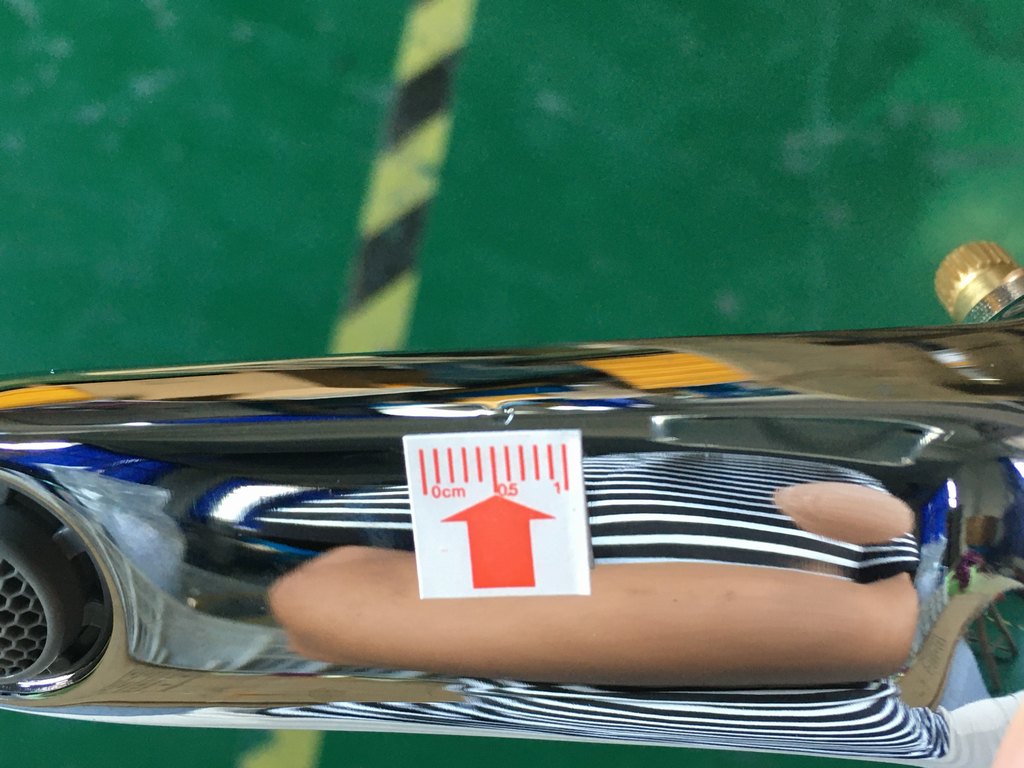
For faucets and metal fixtures, electroplating thickness is verified using XRF (X-ray fluorescence) testing. The standard requirement for chrome-plated brass fittings is a minimum nickel undercoat of 10μm and a chromium topcoat of 0.2μm. Substandard plating is one of the most common substitution risks in this category – visually indistinguishable at the factory, but prone to corrosion and peeling within 12–18 months of installation.

Regulatory Compliance – What Market You’re Selling Into Determines What You Must Prove
Compliance isn’t uniform. The standards governing sanitary ware differ significantly between markets, and selling a non-compliant product – even an otherwise high-quality one – creates customs clearance risk and legal exposure. A well-scoped sanitary ware inspection aligns with the specific requirements of your target market, not just a generic global checklist.
North America
The ASME A112.19.2/CSA B45.1 standard is the primary technical benchmark for ceramic plumbing fixtures in the US and Canada. Beyond this, the EPA WaterSense label has become a practical commercial necessity for retail and construction channels – not just a nice-to-have certification. It requires independent third-party verification of both water consumption and performance. Our sanitary ware inspection process can align with the documentation requirements for WaterSense submissions.
Europe
EN 997 governs complete WC suites and pans, with recent updates specifically addressing rimless toilet designs – now dominant in the European market – and their unique hygiene verification requirements. EN 14688 sets functional requirements and test methods for washbasins, including a 1.5kN structural load test for wall-hung models – a safety-critical requirement that directly affects installation liability. The CE marking framework means that non-conformance isn’t just a market access problem; it’s a liability issue. Inspection against EN standards requires familiarity with these specific technical clauses, not just a visual walkthrough.
China Export and GB Standards
As the world’s dominant manufacturer of sanitary ware, China’s GB/T 6952 standard – and its recent updates – has become a baseline quality benchmark even for export-grade products. Understanding how Chinese factories grade their own output (Superior, First Class, and Qualified tiers) helps buyers set realistic specification expectations and negotiate quality clauses in purchase contracts – a conversation that becomes much easier when backed by independent inspection data.
Protecting the Shipment: Loading Supervision and Supplier Audits
Container Loading Supervision – The Step That Protects Everything Else
Even a flawless sanitary ware inspection can be undermined at the loading stage. Sanitary ware is heavy, brittle, and vulnerable to transit damage when stacking order or bracing isn’t correct. Container Loading Supervision (CLS) is a distinct service – not an extension of PSI – and it addresses a different set of risks that sanitary ware inspection alone cannot cover.
During CLS, our inspector is physically present at the factory during loading. We verify that the cartons loaded match the inspected stock (not substitute goods), confirm the stacking order places heavier items at the base, check that internal bracing is adequate for the voyage, and document the container condition before the doors are sealed.
For high-value orders, we also record the container number and seal number with photographic evidence – documentation that becomes critical if a transit damage claim needs to be filed later.
Factory Audits: When You Need to Qualify a New Supplier
Sanitary ware inspection addresses product quality on a per-shipment basis. Factory audits address supplier capability and risk profile – a different but equally important question that shapes whether inspection findings will improve over time or keep repeating.
Before placing a first significant order with a new manufacturer, a factory audit establishes whether the supplier has the technical infrastructure to consistently deliver what they’re quoting. We assess kiln capacity and control systems, mold management processes, in-house testing equipment (and whether it’s calibrated and actually used), workforce stability, and whether the factory runs a functioning internal QC process or effectively outsources quality control to the buyer’s sanitary ware inspection agent.
For sanitary ware specifically, we also look at effluent management. This is increasingly relevant for European buyers with sustainability mandates – the glaze and firing process generates industrial waste, and how a factory handles that speaks to both regulatory exposure and ethical sourcing standards.
The Defects That Cost Importers the Most – and How Early Inspection Catches Them
 Some defect types are cosmetic and manageable through negotiation. Others are structural, safety-critical, or compliance failures that make the entire batch unsaleable. The value of sanitary ware inspection lies partly in knowing which category a defect belongs to – and escalating accordingly.
Crazing vs. Surface Scratching
Crazing – fine crack networks in the glaze – is not a surface defect. It’s a material failure caused by incompatible thermal expansion between the glaze and the ceramic body. It will worsen over time with thermal cycling (hot showers, cold cleaning products) and creates a hygiene risk as the surface becomes porous. Sanitary ware inspection classifies crazing as a rejection-level defect, not a cosmetic one – a distinction that matters enormously when negotiating with a supplier who wants to offer a discount rather than a replacement.
Thermostatic Drift in Faucets
Thermostatic mixer faucets are now a mainstream product in European bathrooms, and failure to maintain stable outlet temperature isn’t just a comfort issue – it’s a scalding risk. During sanitary ware inspection, we test thermostatic cartridges under dynamic pressure conditions to verify they hold within the specified temperature tolerance, not just at static test conditions.
Ghost Flushing in Smart Toilets
The smart toilet segment is growing fast, and so are the electronic defect rates. Ghost flushing – where the toilet activates without a user present due to oversensitive sensor calibration – is a common issue in this category. It’s discovered quickly by end-users, generates immediate complaints, and is expensive to address post-installation. Catching it during inspection before shipment costs a fraction of the customer service fallout.
Working With an Inspection Partner – What to Expect From AQI SERVICE
The value of a third-party inspection company isn’t just the report at the end – it’s the expertise applied during the process, the calibrated instruments used, and the professional judgment of an inspector who has seen enough ceramic defects, flush failures, and electroplating problems to know when something is borderline and when it’s a clear rejection.
At AQI SERVICE, our inspectors working in the sanitary ware category are trained against the relevant ISO, EN, ASME, and GB standards. We issue inspection reports with photographic documentation, defect classification, and a clear pass/fail recommendation based on the AQL criteria agreed with the client. We don’t issue “conditional pass” reports that leave ambiguity – your team needs a clear answer before the payment wire goes out.
If you’re sourcing from China, Vietnam, or other manufacturing hubs and want to understand what a realistic inspection scope looks like for your product type and order size, contact our team for a consultation. The cost of getting this right the first time is always lower than the cost of managing it afterward.