CPC Certification for Children’s Products: A Practical Guide for US Importers (2026 Updated)

Induction
If you’re importing children’s products into the United States, CPC Certification isn’t optional, and it isn’t a formality. The Children’s Product Certificate – CPC – is a legal document that you, as the importer, are personally responsible for issuing. Getting it wrong, or missing it entirely, means your shipment gets stopped at the port, or worse, it gets through and a CPSC enforcement action follows later.
What makes CPC Certification genuinely complicated isn’t understanding what it is – the definition is straightforward enough. The difficulty is in the execution: knowing which test standards apply to your specific product, finding a CPSC-accepted lab that can run those tests correctly, understanding what the certificate itself needs to say, and building a process that holds up across multiple shipments and product lines.
This article covers the practical side of CPC Certification – the parts that trip up experienced importers, not just first-timers.
What CPC Certification Actually Is (And Who Issues It)
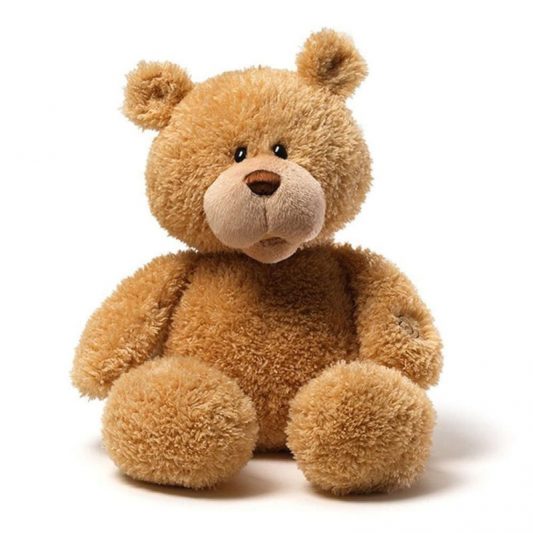
A CPC Certification – formally the Children’s Product Certificate – is a written document certifying that a children’s product complies with all applicable CPSC children’s product safety rules. It has to be based on testing conducted by a CPSC-accepted third-party laboratory – you can’t self-certify children’s products, unlike some general-use consumer goods.
The importer of record is responsible for issuing the CPC for products manufactured overseas. This is a point that causes confusion: the factory doesn’t issue the CPC, and neither does your testing lab. The lab provides test results. You – the importer – issue the certificate based on those results. The legal liability stays with you regardless of who helps you draft the document.
The CPC must accompany every shipment. Under current CPSC regulations, an electronic certificate satisfies this requirement if it’s accessible via a URL that’s available with the shipment and identified by a unique identifier. In practice, most importers include the CPC reference on the commercial invoice or in the shipment documentation package.
Which Products Require a CPC
Any product primarily designed or intended for use by children 12 years old and under requires a CPC. The product category is broader than most importers initially assume.
The obvious categories are covered – toys, children’s clothing, cribs and juvenile furniture, car seats, bicycle helmets, and school supplies. But the requirement also extends to products that aren’t marketed as children’s items but are foreseeably used by children. A low-cost folding stool sold without age labeling, for example, may still require a CPC if CPSC determines it’s used by children. When in doubt, the question to ask is: would a reasonable person expect a child under 12 to use this product?
For importers managing multiple product lines, the practical challenge is that different product categories require compliance with different safety rules – and therefore different test items on the CPC. A children’s toy requires ASTM F963. A children’s garment requires flammability testing under 16 CFR 1610 or 1615/1616 depending on the garment type. A children’s furniture item has its own set of applicable standards. The CPC must cite each applicable rule separately, which means the testing program has to be designed to cover all of them.
The Testing Behind Your CPC Certification
CPC Certification is only as good as the testing it’s based on, and the testing is where most compliance failures actually originate. Here’s what that looks like in practice for the two most common children’s product categories.
For toys, the core standard is ASTM F963 – the Standard Consumer Safety Specification for Toy Safety. It’s revised periodically, and your test report needs to reference the current version. Submitting a CPC based on testing against an outdated version of F963 is a compliance failure even if the product would have passed the current version.
ASTM F963 covers a wide range of hazard categories:
Mechanical hazards – small parts testing (for products intended for children under 3), sharp edges and points, projectile hazards, folding mechanisms, and more. Small parts testing uses the small parts cylinder specified in 16 CFR 1501: any component that fits entirely within the cylinder is a regulated small part and triggers specific labeling requirements if the toy is sold to children under 3.
Flammability – solid materials in toys must meet the flammability requirements in section 4.2 of F963, tested against the method specified there.
Chemical hazards – this is where CPSIA overlaps with F963. CPSIA Section 101 sets lead content limits (100 ppm in substrate materials, 90 ppm in surface coatings) and phthalate restrictions (certain phthalates capped at 0.1% in accessible plastic and vinyl components). Heavy metal migration from surface coatings is tested against ASTM F963 section 4.3.5, which references EN 71-3 migration limits for eight regulated metals.
Electrical and thermal hazards – for battery-operated toys and toys with heating elements.
The test report for a toy CPC typically runs to 20-40 pages when all applicable sections are tested. If a lab is offering a CPC package with a 3-page report, that’s a red flag worth investigating.
-
Children’s Clothing: Flammability and Beyond
For children’s apparel, the primary testing requirement is flammability. The applicable standard depends on the garment type:
- 16 CFR 1610 covers general wearing apparel. It classifies fabrics into three classes based on burn rate: Class 1 (normal flammability, acceptable for sale), Class 2 (intermediate flammability, acceptable for most garments), and Class 3 (rapid and intense burning, not acceptable).
- 16 CFR 1615 and 1616 cover children’s sleepwear specifically – sizes 0-6X and 7-14 respectively. Sleepwear requirements are significantly stricter than general apparel, requiring either flame-resistant treatment or tight-fitting construction that meets specific dimensional requirements.
Beyond flammability, children’s clothing may also require testing for lead in surface coatings (buttons, snaps, zipper pulls), phthalates in vinyl or PVC components (drawstring tips, decorative elements), and drawstring requirements under the CPSC guidelines on drawstrings in children’s upper outerwear.
Importers sourcing children’s garments from the same factory across multiple seasons need to be aware that fabric substitutions – even minor ones from the supplier’s perspective – may require re-testing. A change in fabric weight, dye lot, or finish can affect flammability classification.
What the CPC Document Needs to Include
The CPSC specifies the required elements of a CPC. A certificate that’s missing any of these elements is non-compliant, regardless of whether the underlying testing is solid:
- Product identification – detailed enough to match the certificate to specific products and no others. Generic descriptions like “children’s toy” aren’t sufficient. Include model numbers, SKUs, and product descriptions.
- Citation of applicable safety rules – each applicable children’s product safety rule must be cited separately. If your toy is subject to both ASTM F963 and CPSIA lead and phthalate requirements, both need to be listed.
- Importer information – name, address, and contact details of the US importer issuing the certificate.
- Contact for test records – the person or organization maintaining the underlying test documentation, which the CPSC can request.
- Date and place of manufacture – where and when the product was produced.
- Date and place of testing – when and where the third-party lab testing was conducted.
- Laboratory identification – name, address, and phone number of the CPSC-accepted lab whose testing supports the certificate.
The CPSC provides sample CPC templates on their website that show the layout for toys and children’s clothing. These are useful starting points, but they don’t cover every possible product type or applicable rule – you’ll need to adapt them to your specific product.
The Tracking Label Requirement That Often Gets Missed
Separate from the CPC, CPSIA requires a permanent tracking label on children’s products and their packaging. This is a distinct requirement that’s easy to overlook when you’re focused on the testing and certificate.
The tracking label must include:
- Manufacturer or private labeler name
- Location and date of production
- Detailed information on the manufacturing process (lot number, batch number, or other identifier that allows the product to be traced back to its production run)
- Any other information the manufacturer considers relevant
“Permanent” means it should remain legible throughout the useful life of the product and resist removal. For most hard goods, this means molded-in text, a sewn-in label, or a label applied with permanent adhesive. A sticker that can be peeled off doesn’t meet the requirement.
The practical reason this matters: if a product recall is ever necessary, the tracking label is what allows CPSC and the importer to identify exactly which production batch is affected and notify the right consumers. Products without adequate tracking labels face separate enforcement exposure beyond the CPC issue.
Where Third-Party Inspection Fits In
Laboratory testing and third-party pre-shipment inspection serve different functions in a children’s product compliance program, and both are necessary.
The lab tests samples against the applicable standards and produces the results that your CPC is based on. But lab testing happens on samples – usually submitted by the factory before mass production, or drawn from early production. It doesn’t tell you whether the finished goods in your shipment match what was tested.
That gap is where pre-shipment inspection comes in. A pre-shipment inspection of children’s products verifies:
- Tracking label compliance – are the labels present on both the product and packaging? Are they legible and correctly placed? Do they include all required information?
- Age grading and warning labels – are the correct age warnings present? For products with small parts intended for children 3 and older, the “not suitable for children under 3 years” warning must appear on the product and packaging in the specified format.
- Packaging compliance – are there any drawstrings, cords, or suffocation hazards in the packaging that need additional warnings?
- Physical condition – are there sharp edges, broken components, or accessible small parts that weren’t present in the tested sample but appear in production units?
- Documentation check – does the shipment have the CPC and tracking label documentation available to accompany it?
A product that passed lab testing six months ago can still fail a pre-shipment inspection if the factory changed materials, modified a component, or had a production quality issue in this specific batch. The lab test establishes compliance for the design; the pre-shipment inspection confirms compliance for the shipment.
Maintaining CPC Certification Across Multiple Shipments
One CPC-related mistake that experienced importers still make: treating compliance as a one-time event rather than an ongoing process.
A CPC issued for one shipment doesn’t automatically cover future shipments if anything material has changed. There’s also a procedural change on top of the substantive ones: as of July 8, 2026, most importers must electronically file certificate data with U.S. Customs and Border Protection, not just have the CPC available on request.Changes that require new testing and a new CPC include:
- A new manufacturing facility, even for the same product
- A change in materials – different fabric, different plastic resin, different surface coating
- A change in a component supplier – even if the component looks identical
- A revision to the applicable test standard (ASTM F963 updates, for example)
- A product design change, however minor it appears
Importers who order the same product repeatedly from the same factory sometimes assume that the original CPC covers all subsequent shipments indefinitely. It doesn’t. Building a process that tracks which CPC covers which shipment, when testing was conducted, and when standards are due for revision is the infrastructure that makes multi-shipment compliance manageable.
Frequently Asked Questions
#1 Can one CPC cover multiple colorways or size variations of the same product?
Generally yes, provided the variations don’t affect the product’s compliance with applicable safety rules. A toy available in three colors can typically be covered by a single CPC if the only difference between variants is color – assuming the colorants themselves have been tested and pass heavy metal and chemical requirements.
Where a size variation changes the structural risk profile (for example, a larger size that no longer triggers small parts requirements for under-3s), the CPC should address each variant explicitly. When in doubt, the safer practice is to issue separate certificates rather than rely on a broadly worded single document that CPSC reviewers may challenge.
#2 What happens if my product fails lab testing – can I still get CPC Certification?
No. CPC Certification must be based on passing test results from a CPSC-accepted laboratory. If testing reveals a failure – lead content above the 100 ppm limit, a small parts failure for an under-3 product, or a flammability failure – you cannot legally issue a compliant CPC, and the product cannot be imported until the issue is resolved.
The practical path forward depends on where the failure is: a surface coating lead failure usually means reformulating the coating and retesting; a small parts failure may require a design change or an age-grading adjustment with appropriate warnings. Factories sometimes push back on test failures by suggesting the sample was unrepresentative, but unless there’s a documented procedural error in the testing, the result stands. Retesting a different sample without addressing the root cause isn’t a compliance strategy.
#3 Does CPC Certification issued for the US market satisfy requirements in other countries?
No. The CPC is a US-specific document required under CPSIA and enforced by the CPSC. It has no legal standing in other markets.
The EU equivalent for toys is the CE mark under the Toy Safety Directive (EN 71 series), which requires a different testing program and a Declaration of Conformity rather than a CPC. Canada has its own children’s product regulations under the Canada Consumer Product Safety Act. The UK post-Brexit has UKCA marking requirements. There’s some overlap in the underlying test standards – EN 71-3 heavy metal migration limits appear in both ASTM F963 and EU toy testing, for example – but the certification documents, required test items, and compliance declarations are market-specific.
Importers selling the same product into multiple markets need to build a testing program that covers all applicable requirements, not assume that passing US testing covers them everywhere else.
How AQI SERVICE Supports CPC Compliance
AQI SERVICE works with importers at the intersection of laboratory testing and physical inspection for children’s products. We coordinate sample submission to CPSC-accepted laboratories in China and Asia for the required testing, and we conduct pre-shipment inspections that verify finished goods match tested specifications and carry the required labels and documentation.
For importers managing multiple children’s product lines or working with new factories, we also offer factory audits that assess whether a supplier’s production controls are compatible with consistent CPC compliance – before you’re committed to a production run.
Our laboratory partners are located in Dongguan and other manufacturing regions. Laboratory testing for a standard toy CPC – covering ASTM F963 and CPSIA lead and phthalate requirements – typically runs $380–$500 USD depending on the number of test items required, with a 7–10 business day turnaround after sample receipt. Contact us at aqiservice.com to discuss testing and inspection requirements for your specific product category.
AQI SERVICE is an independent third-party inspection com
Related:
- What Does AQL 2.5 Mean in Quality Inspection? | AQL Standard
- Everything about Amazon Quality Control For Amazon FBA Sellers
- Children’s Toys Safety Testing and Quality Control Guidance
Author: AQI Service as a professional quality control service company in China specialized in providing a complete range of quality inspection and testing certification services in China & Asia for global importers, buyers, retailers, and sellers.