Unlocking Commercial Value: The Ultimate Guide to 3rd Party Inspection

Introduction to 3rd Party Inspection: Why It Matters for Modern Businesses
In today’s competitive market, maintaining product quality and meeting regulatory standards is non-negotiable. For businesses across industries—from manufacturing to retail—3rd party inspection has emerged as a critical tool to achieve these goals. Unlike in-house checks, third-party inspection brings an unbiased perspective, ensuring that products, services, or processes meet predefined standards set by authorities, industry bodies, or customers.
In this guide, we’ll break down what it entails, its key processes, real-world applications, and how it can drive long-term business success.
What Is 3rd Party Inspection? Definition & Core Characteristics
Precise Definition of 3rd Party Inspection
Third-party inspection refers to the evaluation of products, services, or systems by an independent organization that is not affiliated with the buyer or seller.
This neutral entity operates in accordance with international standards (such as ISO), national regulations, or customer-specific requirements. The goal is to provide an objective assessment of quality, safety, performance, or compliance—free from conflicts of interest that might influence in-house or supplier-conducted checks.
4 Key Characteristics of Reliable 3d Party Inspection
-
Independence
The inspection body must be financially and operationally independent of both the party producing the goods (seller) and the party purchasing them (buyer). This ensures no external pressures skew the results. For example, a third-party inspector evaluating electronic devices will not favor the manufacturer or the retailer—their sole focus is on meeting the agreed-upon standards.
-
Professionalism
It requires specialized expertise. Reputable providers employ certified technicians, use advanced testing equipment, and stay updated on the latest industry standards. This professionalism guarantees accurate, consistent results that businesses can rely on for decision-making.
-
Regulatory Compliance
Third-party inspection providers strictly adhere to local, regional, and international regulations. This is especially crucial for industries like pharmaceuticals or food production, where non-compliance can lead to legal penalties or harm to consumers.
-
Versatility
Third-party inspection services are not limited to a single industry. They can be tailored to meet the needs of sectors ranging from construction to automotive, covering everything from raw material testing to final product certification.
The 3rd Party Inspection Process: Step-by-Step Breakdown
A well-structured third-party inspection process ensures transparency and reliability. While steps may vary slightly based on industry or project scope, the following framework is standard for most third-party inspection engagements:
Step 1: Define Inspection Requirements
Before starting, the client (usually the buyer or business owner) must clearly outline their needs. This includes specifying the standards to be met (e.g., ISO 9001 for quality management), the scope of inspection (e.g., testing a batch of textiles for durability), and any critical parameters (e.g., maximum allowable heavy metal levels in toys).
Defining requirements upfront prevents misunderstandings later. For example, a clothing brand might require 3rd party inspection to check for fabric strength, colorfastness, and compliance with child safety laws—all of which need to be documented before the inspection begins.
Step 2: Select a Qualified 3rd Party Inspection Provider
Choosing the right provider is make-or-break for effective third-party inspection. Clients should evaluate factors like:
- Industry certifications
- Track record in the relevant sector
- Geographic reach (important for global supply chains)
- Turnaround time for reports
Different third-party inspection agencies possess varying industry qualifications and specialize in inspecting different types of goods. Customers can seek out the appropriate inspection agency based on their specific needs.
Step 3: Submit Samples & Documentation
The client provides the necessary samples (e.g., 10 units of a new smartphone model) and supporting documents (e.g., product specifications, previous test reports). Accuracy here is critical: incomplete documentation can delay the inspection or lead to incorrect results.
For example, if a customer commissions the inspection of a new model of child safety seat but fails to provide the product specification sheet, the inspection agency may incorrectly judge non-compliant products as qualified because it cannot verify key parameters such as the locking force of the seat belt buckle.
Step 4: Conduct On-Site Inspection at the Factory
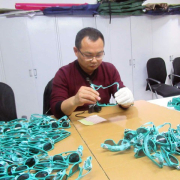
Based on requirements, inspections are uniformly carried out as on-site inspections at the manufacturer’s factory. On-site inspections focus on various products produced by the factory; for example, conducting appearance checks, function tests, and specification verification on electronic devices, household items, and other products manufactured at the factory.
During this step, inspectors follow standardized procedures to collect data. For example, testing a laptop’s battery life would involve running specific software under controlled conditions and recording results at set intervals.
Step 5: Generate & Review the Inspection Report
After completing the checks, the third-party provider compiles a detailed report. This document includes:
- A summary of the inspection scope
- Test results (with pass/fail indicators)
- Photographs or videos (if applicable)
- Recommendations for improvements
The report is reviewed internally by the provider to ensure accuracy before being shared with the client. A clear report helps businesses quickly identify issues—for example, a furniture manufacturer may discover through the report that a batch of chairs has a high number of defects, and then arrange for timely re-production and shipment to avoid delays in the delivery schedule.
Step 6: Use the Report for Decision-Making
The client uses the third-party inspection report to make critical business decisions. This could include:
- Approving a shipment for sale
- Requesting the supplier to fix defects
- Terminating a contract with a non-compliant vendor
- Certifying products for entry into new markets
For global businesses, third-party inspection reports often serve as proof of compliance for customs authorities. For example, a toy exporter to the EU would need a third-party report to show compliance with the CE mark requirements.
Industry Applications of 3rd Party Inspection
Third-party inspection adds tangible value across product categories and supply chains. For consumer and industrial staples—daily necessities, electrical appliances, steel—it solves critical quality control issues. It also strengthens compliance via factory audits and loading supervision, cutting business risks.
1. Daily Necessities Industry: Protecting Consumer Quality & Safety
Daily necessities (toothpaste, shampoo, tissues, diapers) directly impact consumer health. Third-party inspection blocks substandard goods via on-site sampling and verification. Key applications:
-
Physical Performance & User Experience Testing:
Inspectors run on-site tests for real-world functionality. Diapers are checked for absorption speed and leak resistance (to meet “all-night dry” claims). Tissues are tested for wet toughness, softness, and lint-freeness. Plastic tableware (containers, cups) is verified for heat resistance (no hot-water deformation) and impact resistance (no standard-drop damage).
-
Packaging & Label Compliance:
Inspectors confirm packaging includes full details (production date, shelf life, manufacturer info) to prevent “three-no products.” They test tightness (e.g., shampoo tube leaks, food-container seals via inversion/squeezing) to protect goods in transit.
-
Batch Consistency Sampling:
Mass-produced goods risk batch variations. Inspectors use AQL (Acceptable Quality Level) (e.g., AQL 1.0) to sample randomly—e.g., 20 boxes from 1,000 tissues. Samples are checked for size (vs. specs), thickness uniformity, and print quality to ensure consistency and protect brand reputation.
-
Sensory & Visual Inspections:
Personal care/cleaning products are visually/sensorially checked for defects: uniform toothpaste (no foreign objects/odors), clear shampoo (no separation), and non-caked detergent (signals proper storage). These quick checks filter out issues early.
2. Electrical Appliances Industry: End-to-End Quality Control
Poorly made electrical appliances (rice cookers, fridges, chargers, headsets) pose safety/performance risks. Third-party inspection covers the full lifecycle—production to export. Key on-site tasks:
-
Component & Assembly Checks
Inspectors sample key parts: flat, scratch-free rice cooker heating plates (even heating), intact vacuum cleaner motor housings (no leaks), and straight charger plugs (no loose connections). They also assess finished assembly (tight screws, smooth buttons) to reduce assembly failures.
-
On-Site Safety Verification
Following standards like GB 4706.1-2005, inspectors run basic safety tests: shell grounding (via multimeter), compliant plug sizes, and functional safety features (e.g., auto-shutoff for kettles). Small appliances are checked for sharp edges.
-
Function & Performance Testing
Core functions are tested in real scenarios. Fridges are powered on to verify cooling (thermometers check temps) and responsive controls. Rice cookers are tested for normal heating and accurate reservations. Headsets are connected to devices for clear sound and stable Bluetooth.
-
Export Label Compliance
Exported appliances need market-specific labels. Inspectors verify: EU-bound goods have the CE mark (LVD/EMC codes); U.S.-bound goods have UL certification. Clear, complete labels avoid customs delays.
3. Steel Industry: Safeguarding Industrial Quality
Steel (reinforcing bars, machinery parts, frame steel, pipes) is foundational—its quality impacts downstream safety/lifespan. Third-party inspection uses on-site checks to validate suitability. Key applications:
-
On-Site Mechanical Checks
Basic tests confirm suitability. Construction bars are bent to 180° (no cracks = good ductility). Machinery steel’s surface hardness is measured (via portable tester) to meet processing needs (avoids wear/machining issues).
-
Appearance & Dimensional Inspections
Inspectors check for surface defects (cracks, scars, rust)—e.g., cracked bars risk structural failure. Dimensional checks (calipers, laser gauges) ensure: seamless pipes have ≤±0.5mm outer diameter deviation and ≤10% wall thickness difference; bars meet diameter/length specs for direct processing.
-
Application Adaptability Checks
Steel is tested for its use case. Oil/gas pipes need smooth inner walls (less resistance) and flat ends (tight welding). Structural steel (H-beams) needs regular cross-sections (perpendicular flanges) for easy installation.
-
Labeling & Traceability
Inspectors confirm proper labeling: bar bundles have material certificates (grade, specs, batch); plates/pipes show specs/length. This prevents misuse and enables quality tracking.
4. Factory Audit: From Product Quality to Production Compliance
Factory audits extend inspection to supplier operations, evaluating sites, systems, and social responsibility. Key areas including:
-
Quality System Verification
Inspectors check adherence to ISO 9001: complete IQC/IPQC/FQC records, labeled non-conforming product storage, and regular equipment maintenance logs (e.g., welding machines, rolling mills) to prevent failures.
-
Social Responsibility Audits
For brands (especially EU/USA exporters), audits follow BSCI/SA8000: legal working hours (≤44/week), minimum wage compliance (employee interviews), and safe workshops (clear exits, fire extinguishers, PPE) to avoid “sweatshop” links.
-
Environmental Compliance
Inspectors check for wastewater treatment (no direct discharge), waste gas equipment (steel plants: no visible dust), and proper hazardous waste handling (batteries, circuit boards via certified providers) to avoid joint and several liability.
-
Production Capacity Checks:
On-site assessments (equipment, workforce, warehouse organization) confirm suppliers meet order demands and avoid delays from capacity shortages or mismanagement.
5. Loading Supervision: Securing Transit
Loading supervision ensures safe shipping—critical for high-volume/bulky/fragile goods. Key tasks:
-
Quantity & Label Verification:
Inspectors cross-check against orders: count boxes (random unpacking for confirmation) or steel batches; verify model matches. They confirm shipping labels (“fragile” for appliances, “moisture-proof” for steel).
-
Packaging Integrity:
Before loading, inspectors check: appliance boxes (no dents, full foam); steel (intact rust-proof film/covers); daily necessities (no tears/peeling tape). Damaged packaging is replaced/reinforced.
-
Loading Rationality:
Inspectors guide safe loading: appliances stacked “heavy not on light” (with buffer); steel separated by backing wood (no scratches) and secured (no shifting); containers filled to prevent jostling, with weight within limits.
-
Special Transit Checks:
Refrigerated goods need 2-8℃ containers (working recorders). Moisture-sensitive steel needs leak-free containers (no water stains/holes).
The Business Value of Third Party Inspection
Investing in third-party inspection delivers tangible benefits for businesses of all sizes. Here’s how it adds value:
-
Protects Consumer Trust & Brand Reputation
In an era of social media, a single product recall can damage a brand’s reputation overnight. Third-party inspection reduces this risk by catching defects before products reach consumers. For example, a baby product company that uses third-party inspection to test for choking hazards demonstrates a commitment to safety—building loyalty among parents.
-
Reduces Costs from Recalls & Rework
Recalls are expensive: they involve retrieving products, compensating customers, and fixing defects. Third-party inspection helps avoid these costs by identifying issues early. A study by the Quality Assurance Institute found that businesses using third-party inspection reduce rework costs by an average of 25%—a significant saving for small and medium enterprises (SMEs).
-
Ensures Regulatory Compliance
Laws and standards are constantly evolving—especially in industries like healthcare or electronics. Third-party inspection providers stay updated on these changes, helping businesses avoid fines or legal action. For example, a chemical manufacturer that uses third-party inspection to meet REACH (Registration, Evaluation, Authorization, and Restriction of Chemicals) standards in the EU can avoid penalties of up to €300,000.
-
Facilitates Global Trade
Global markets have varying regulations, and customs authorities often require proof of compliance. Third-party inspection reports serve as a “passport” for products, helping businesses overcome trade barriers. For instance, a textile exporter to Japan needs a third-party report to meet JIS (Japanese Industrial Standards)—a requirement for clearing customs.
-
Improves Supplier Accountability
When working with multiple suppliers, it’s hard to monitor quality consistently. Third-party inspection holds suppliers accountable by providing an independent assessment. If a supplier’s products fail inspection, the business can request corrections or switch to a more reliable partner—ensuring the supply chain remains strong.
Current Trends & Future of 3rd Party Inspection
The 3rd party inspection industry is evolving rapidly, driven by technology and changing market needs. Here’s what businesses need to know:
-
Market Growth: Rising Demand Across Sectors
The global third-party inspection market is projected to grow at a CAGR of 6.8% from 2024 to 2030, according to Grand View Research. This growth is fueled by:
- Increasing regulatory scrutiny (especially in healthcare and food safety)
- The expansion of global supply chains
- Growing consumer awareness of product quality
Emerging economies like India and Brazil are also driving demand, as local businesses seek to meet international standards for exports.
-
Technology Integration: Automation & AI
Technology is transforming third-party inspection. Key innovations include:
- Automated Testing: Robots and sensors can perform repetitive tests (e.g., checking smartphone screens for cracks) faster and more accurately than humans.
- AI-Powered Analytics: AI algorithms can analyze large datasets from inspections to identify trends—for example, predicting which batches of products are likely to fail tests.
- Remote Inspection: Drones and IoT devices allow inspectors to evaluate hard-to-reach areas (e.g., wind turbine blades or tall buildings) without on-site visits.
These technologies not only improve efficiency but also reduce human error—making third-party inspection results more reliable.
-
Challenges Facing the Industry
Despite growth, the third-party inspection sector faces challenges:
- Price Competition: The rise of new providers has led to price wars, which can compromise service quality if providers cut corners.
- Skill Gaps: As technology advances, there’s a need for inspectors trained in AI and automation—something many traditional providers struggle with.
- Regulatory Complexity: Keeping up with changing standards across multiple countries is a constant challenge, especially for small inspection firms.
-
Future Opportunities: Emerging Sectors
New industries are creating opportunities for third-party inspection. These include:
- Renewable Energy: Inspecting solar panels, wind turbines, and battery storage systems for performance and safety.
- Medical Devices: With the growth of telemedicine, there’s a need to inspect devices like wearable health monitors.
- Sustainability: Third-party inspection is increasingly used to verify sustainability claims (e.g., ensuring a product is “carbon-neutral” or made from recycled materials).
Conclusion: Partnering for Quality with 3rd Party Inspection
In today’s fast-paced, global business environment, third-party inspection is no longer an option—it’s a necessity. It protects your brand, ensures compliance, and helps you compete in international markets. Whether you’re a manufacturer, retailer, or exporter, investing in reliable third-party inspection can drive long-term growth and success.
For businesses looking to leverage third-party inspection effectively, partnering with an experienced provider is key. AQI SERVICE offers tailored it solutions across industries, combining expertise, advanced technology, and a commitment to independence. From product testing to regulatory compliance, AQI SERVICE helps businesses meet standards, reduce risks, and build trust with customers worldwide.