


Quality Control Challenges: Ensuring Safe Household Appliances from China and Asia
All the time, the production of Household Appliances in China and Asia poses a major challenge to importers and retailers. Unqualified household goods products pose a real danger to consumers’s health, Hundreds of household appliances get recalled every year in Europe and America because factories in general use shortcuts and not fully testing method to fulfil clients’ needs in shorter lead time.
It is necessary for importers to establish effective quality control procedures to ensure the timely delivery of finished products that meet all relevant quality and safety standards.
For brands or retailers, active quality control is essential to meet these challenges and optimize supply chain performance.
Different Types of Household Appliances
- Coffee maker
- Blender
- Mixer
- Toaster
- Microwave
- Crockpot
- Rice cooker
- Pressure cooker
- Bachelor griller
- Stove
- Lamp
- Light bulb
- Lantern
- Torch
- Clothes iron
- Electric drill
- Kettle
- Water cooker / Electric kettle/ Hot pot
- Water purifier
- Kitchen hood
- Electric guitar
- Vacuum cleaner
- Electric fan
- Evaporative cooler
- Air conditioner
- Oven
- Dishwasher
- Television
- Speaker
- Clothes dryer
- Washing machine
- Refrigerator
Household Appliances Quality Control Solution
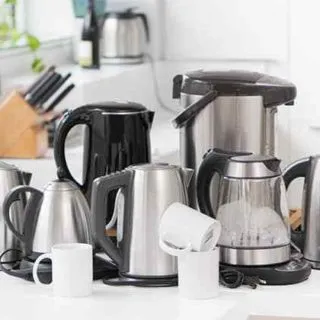 Quality issues and delivery failures impact directly on your supply chain efficiency, profit margins, and brand’s reputation. so buyers set up an effective quality control system to meet quality and safety standards, along with expectations of end-users.
AQI Service provides inspection services for household appliances at every stage: from supplier investigation, audit to the quality control, and final delivery of household appliances during the process.
These products may include but are not limited to kitchen appliances, home care products, personal care products and other appliances.
AQI’s quality experts understand the customer’s requirements, ensure that on-site inspections are properly performed on-site, and finalize clear reports to explain and explain all details.
Throughout the quality control process, we will verify the appearance quality, specifications, functions, safety of your household appliances, and whether it meets the US, EU, and many other specific standards.
During the Pre-shipment inspection, the inspector should find various defects by inspecting the packaging, markings, labels, illustrations, instruction manuals, accessories, barcodes, and the appearance/appearance of the product. During the inspection of household appliances, we found some common major and minor defects, including but not limited to stains, scratches, missing accessories, malfunction, sharp corners, missing labels, incorrect barcodes, poor paint, poor printing, and poor assembly, etc.
Household Appliances Quality Control Approach
AQI Service technical team work closely with your team to create a specific inspection checklist for your products, and our inspector will verify the quality of mass production based on your Acceptable Quality Limites (AQL), perform product function and safety tests, and assess compliance with your products specifications and authorized samples.
Your products’ workmanship is carefully examined, and defects are classified into subcategories to highlight the key improvement areas for production.
We are your eyes in manufacturing and quality control.
Why is it important to Arrange Household Appliances Inspection?
- Identify any issues in product size/specification to save cost and time.
- Reduce defects/flaws in the product and maintain a good brand image of the product.
- Save on possible rework and product recall costs.
- Confirm that the homeware/Kitchenware will not be damaged during packaging and loading.
How to Carry out Quality Inspection for the Household Appliances?
Before conducting inspections, AQI technical engineers need to understand your product characteristics to determine key risks. By combining our Household Appliances Inspection Checklist with your unique product specifications and quality requirements, each inspection can be customized.
We will identify and classify defects based on your Acceptance Quality Limits (AQL), verify the quality of mass production, perform product function and reliability tests on-site, and assess your compliance with product specifications and sizes.
Assess the quality of your product materials and workmanship, using a number of quality control checks and tests, including:
1. Barcode Scanning Test
Ensure that the barcode on the product can be correctly scanned to verify product information accuracy, aiding in inventory management and logistics tracking.
2. Instruction Manual Check
Verify the completeness and accuracy of the instruction manual to ensure that consumers can use the product correctly, avoiding safety hazards from misuse.
3. Internal Construction Check (CDF Check)
Examine whether the internal construction of the product meets design specifications, ensuring that specified components are properly assembled and functioning correctly.d
4. Strain Relief Test
Test the strength of cable anchoring to ensure cables do not get damaged from bending or pulling during use, avoiding potential safety risks.
5. Fatigue Test
Assess the product’s durability during repeated use to ensure it remains functional throughout its expected lifespan.
6. Stability/Wobble Base Check
Verify the product’s stability, especially for large appliances, to ensure they do not tip over during operation.
7. Function Test Check
whether the product operates correctly under all expected conditions and meets promised performance standards.
8. Application/Performance Test
Simulate the product’s performance in real usage scenarios to ensure it can fulfill functional requirements in various environments.
9. Hi-Pot Test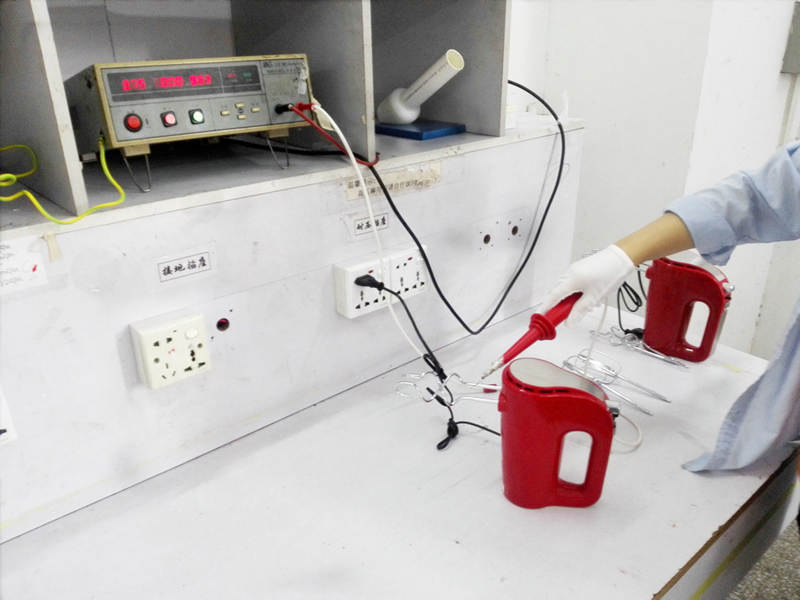
Test the product’s electrical insulation performance to ensure it does not leak electricity at high voltage, ensuring user safety.
10. Earth Continuity Test
Check the stability of the product’s grounding to ensure abnormal currents can be safely discharged, preventing electric shock hazards.
11. Rotation Speed Test
Measure whether the rotation speed of motorized products meets design standards, safeguarding their performance and longevity.
12. Smell Test
Check if the product’s materials and manufacturing processes produce any odors, affecting user experience and product quality assessment.
13. Certification Symbol Check
Verify that all certification symbols on the product comply with relevant regulations and standards, ensuring legal compliance.
14. Noise Check
Evaluate noise levels produced by the product during operation to ensure they are within acceptable ranges and do not affect quality of life.
15. Power Consumption Measurement
Measure the product’s power consumption in various modes to assess its energy efficiency, aiding consumers in choosing energy-saving products.
16. Carton Drop Test
Test the protective performance of the packaging to ensure the product is not damaged during transportation from impacts or drops.
17. Assembly Test
Check the final assembly quality of the product before leaving the factory to ensure every component is correctly positioned and functional.
18. Adhesive Test on Logo and Printing
Test the adhesion of the product’s surface logos and printing to ensure they do not easily peel off during use.
19. Running Test
Conduct long-term running tests to evaluate the product’s reliability and durability under continuous working conditions.
20. Voltage Check
Verify the product’s operation under different voltage levels to ensure its safety and compatibility under various power supply conditions.
Functional Tests and Testing in Laboratory
The performance and safety of household appliances are critical to ensure consumer satisfaction. However, some reliability tests cannot be performed at the inspection site. It requires a specific environment and test equipment to ensure compliance with applicable safety standards and regulatory requirements. AQI Service Inspectors can randomly take samples in production according to customer requirements and forward them to tested by an accredited laboratory.
The laboratory testing services include extensive performance, chemical, and mechanical testing. Depending on the product, the testing time may take 5 to 10 days.
Our partner laboratories offer the following tests but not limited:
- UL 1082
- Reach
- Rhos
- EMC
- EN 1860
- Energy consumption
- IEC 62233
- EN 60335
- IEC 60661
Get in Touch Today!
Ready to grow your business with the help of AQI Service?
